
If you want to compete in Houston, you have three real routes: join a sanctioned league (APA, USAPL, BCA, or VNEA), show up to a weekly house tournament, or aim for a major annual open like the Space City Open. Entry fees for local house events are often low, and Q Billiards Arena hosts both weekly tournaments and league nights on its 25 tables.
TL;DR:
- Joining a sanctioned league offers year-round structure and progression through a handicap system, with dues that vary seasonally and opportunities for bigger tournaments.
- House tournaments are low-cost, single-night events that accept walk-ins and provide casual or semi-competitive play, usually with quick sign-ups and small cash prizes.
- The Space City Open is Texas's largest annual tournament, drawing players from outside the city with multi-day formats, multiple divisions, and large payouts, unlike weekly house events.
- New players should arrive early, bring their own equipment, confirm the format and rules beforehand, and practice specific drills to improve tournament readiness.
- For last-minute entries or up-to-date schedules, check community-driven sites and venue pages like Rack Run Repeat, Houston USAPL, or venue-specific calendars.
Table of Contents
- Where to find Houston pool tournaments: leagues, house nights, and big opens
- How to sign up and what to expect your first night
- Formats and handicaps: what you'll actually be playing
- Where to check schedules and find last-minute tournament boards
- Q Billiards Arena: what we host and how to get in the door
- Tournament etiquette that actually matters in Houston
- Tips for preparing and practicing before you compete
- Prize structures and what you can actually expect to win
- League play or weekly opens: which one fits you?
- Start competing at Q Billiards Arena this week
- Sources
Where to find Houston pool tournaments: leagues, house nights, and big opens
Houston's competitive scene runs on three tracks, and each one serves a different kind of player.
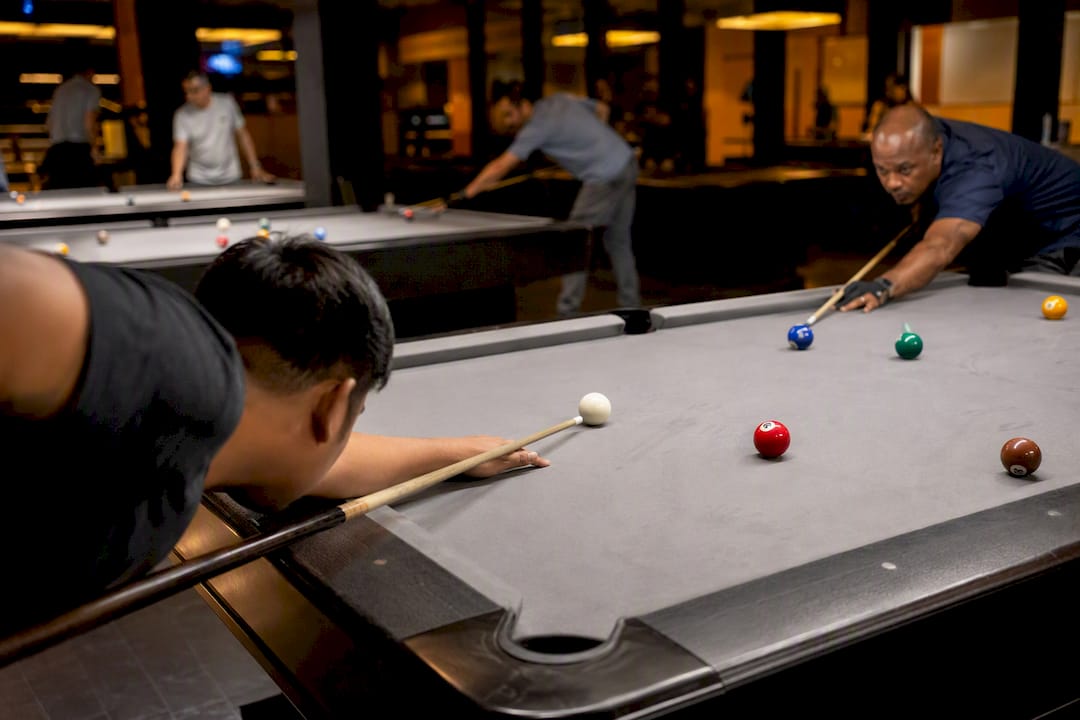
Sanctioned leagues give you the most structure. APA, USAPL, BCA, and VNEA all run active Houston chapters, and each one builds a season around weekly matches, a handicap system, and a path toward regional or national championships. You pay dues, get placed on a team or division, and play a set schedule week after week. That structure is the whole point: your rating moves with your performance, and it opens doors to bigger events later.
Weekly house tournaments are the opposite: low commitment, low cost, and open to walk-ins. Bars and pool halls across the city run these on set nights, often with a small entry fee and a cash payout split among the top finishers.
The big annual events are where Houston's pool scene shows out. The Space City Open is the largest pool tournament in Texas, held every year in early December with multiple divisions and historically large payouts that pull in players from outside the state. That's a different animal from a Tuesday night house event: multi-table, multi-day, and built for players chasing a real title.
- Sanctioned leagues: season-long, handicapped, dues-based, built for progression
- Weekly house tournaments: single-night, low entry fee, casual to semi-competitive
- Major opens (Space City Open, Houston Open): multi-day, multi-division, larger fields and payouts
The difference boils down to time horizon. A league season asks for months of commitment. A house tournament asks for one evening. An open asks you to peak for a weekend.
How to sign up and what to expect your first night
Getting into your first Houston pool tournament is simpler than most people expect, but timing matters more than players realize.
League signups usually happen ahead of a season through the organizing body's website or a local team captain, while house tournament signups happen same-day, on-site. For weekly events, sign-up windows typically open 30 to 60 minutes before the start time, and spots can fill fast if the venue caps the field.
Here's the basic sequence for a first-timer:
- Check the schedule for the night you want, confirm the format (8-ball, 9-ball, etc.), and note the sign-up window.
- Arrive early, at least 30 minutes before the posted sign-up close, with your cue case, chalk, and a valid ID.
- Pay the entry fee at check-in. Many house events run around $5, while league dues are billed per season and vary by organization.
- Check the bracket board once it posts. Most venues run single or double elimination and post match assignments on a physical or digital board near the tables.
Pro Tip: Bring your own chalk and a spare tip repair kit. House cues and chalk get passed around all night, and a dull tip or bad chalk has cost more than one player a rack they should have won.
Formats and handicaps: what you'll actually be playing
Format determines pace and strategy, and Houston venues rotate through four main games.
8-ball is the most common format at weekly house events. It's familiar, fast to rack, and forgiving for mixed skill levels. 9-ball shows up more at league nights and opens because it rewards shot-making and position play at a higher level. 10-ball is less frequent but appears at some sanctioned events as a stricter test of pattern play, since the called-pocket rule eliminates lucky combos. Straight pool is rare outside dedicated leagues, but a few venues still run it for players who want a pure test of position and safety.
- 8-ball: casual to intermediate, most house tournaments
- 9-ball: league and open standard, faster and more punishing
- 10-ball: called-shot precision, occasional sanctioned events
- Straight pool: niche, mostly league-specific
Handicapping is what makes any of this fair across skill gaps. Sanctioned leagues use formal systems, most notably FargoRate, which assigns a numeric rating based on match history so a 500-rated player and a 650-rated player can compete on adjusted terms. APA runs its own skill-level system on a similar principle. House tournaments almost never handicap, which is part of why they attract a wider mix of experience levels.
One detail worth checking every time: house rules on slop shots and break formats vary widely across Houston venues, so confirm the format with the organizer before your first rack.
Where to check schedules and find last-minute tournament boards
Static event pages go stale fast in this scene, so knowing where to look matters as much as knowing what to look for.
- Rack Run Repeat's Houston page aggregates league info and venue listings across the city, which makes it a solid first stop for sanctioned play.
- Houston USAPL's H-Town Central site lists league nights, host locations, and session dates directly from the organizing body.
- do713's event listings publish recurring weekly tournaments with time and entry fee, which is useful for finding a house event on short notice.
- Facebook groups and threads on communities like r/billiards stay active with last-minute announcements and player matchmaking that official calendars miss.
Q Billiards Arena: what we host and how to get in the door
Q Billiards Arena runs on 25 professional-grade tables across 11,000 square feet, making it one of the best event venues in Sugar Land, TX and ensuring there's almost always an open table even on a busy tournament night. We host weekly tournaments and league nights alongside late hours, a food and drink menu, and space built specifically for a tournament atmosphere rather than a converted bar corner.
Joining is straightforward. Check our tournaments and events page for the current schedule, show up during the posted sign-up window, and pay the entry fee at the front desk. Snooker players can do the same through our dedicated snooker events, and Chinese 9-ball players have their own regular slate through our Chinese 9-Ball programming.
Pro Tip: Watch for our free-table promotions tied to equal purchases. Stacking a promo night with a tournament entry is the cheapest way to get real competitive reps in without running up a tab.
Tournament etiquette that actually matters in Houston
Houston's pool culture runs friendlier than a lot of cities, but that only holds because players respect a few unwritten rules.
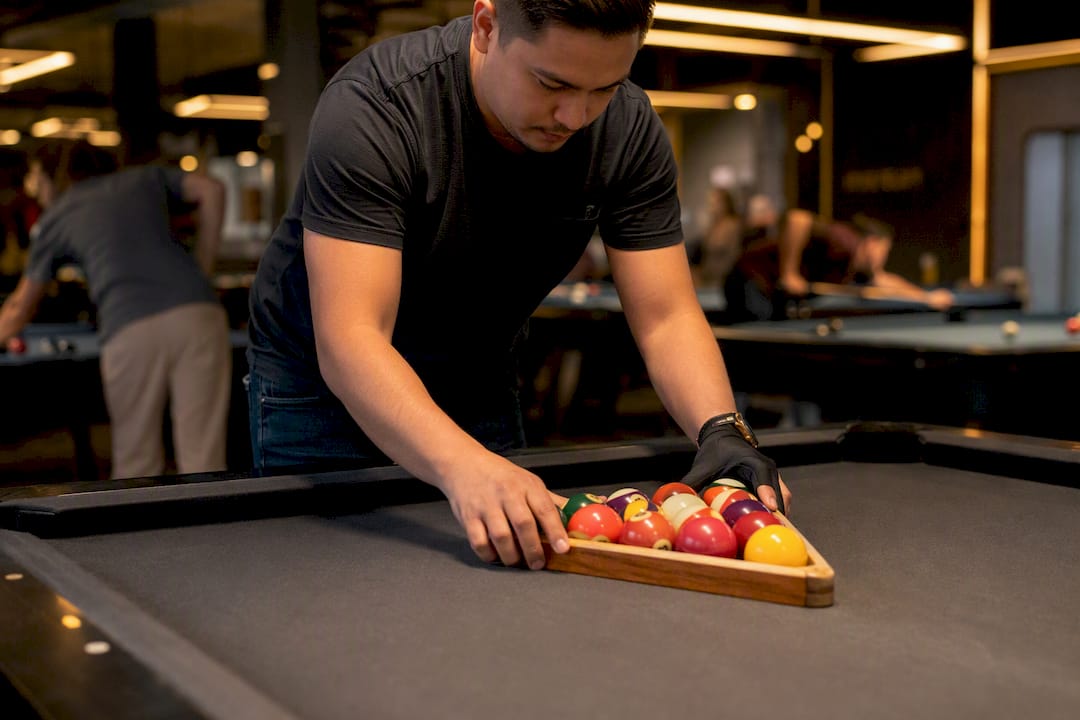
Call your shots clearly, especially in 9-ball and 10-ball where called-pocket rules apply. Nobody wants a dispute over a "lucky" combo mid-bracket. Rack tight when it's your turn, and don't linger over the table when someone else is shooting; slow play is the fastest way to earn a reputation nobody wants at a regular spot.
Respect the bracket board. If your match is called and you're not at the table within a reasonable window, most house tournaments will forfeit the game to keep the night moving. Tip the bar staff if you're at a venue that serves food and drinks tableside, since tournament nights mean heavier volume and slower service than usual.
Spectator etiquette counts too. Stand back from the table during a shot, keep your cue out of another player's line of sight, and save the trash talk for after the rack unless you know the other player well enough to know they're fine with it. Houston's regulars tend to police this informally rather than through posted rules, so newcomers who show up quiet, attentive, and ready to play tend to get folded into the scene fast. Showing up sober and on time still counts as etiquette, even if nobody says it out loud.
Tips for preparing and practicing before you compete
Practice with intent beats practice with volume. Running racks alone for two hours builds stroke consistency, but it doesn't teach you how to handle pressure when a rack actually matters.
Set specific drills instead of freeform practice. Ten racks of ball-in-hand position play, or a set number of break-and-run attempts, tells you more about tournament readiness than an aimless hour on an empty table. If you're aiming for league play, stick to one format, either 8-ball or 9-ball, for a few months so your rating has time to stabilize before you start chasing regional qualifiers.
Play against people better than you whenever possible. A house tournament full of mixed skill levels is a good low-stakes place to test shots you wouldn't normally try in a casual game. Track your own results informally, even in a notes app, so you can see whether your break percentage or safety play is actually improving over a season rather than guessing.
Sleep and hydration matter more than most players admit, especially for multi-day events like the Space City Open, where mental fatigue by round six or seven decides more matches than raw skill does.
Prize structures and what you can actually expect to win
Payouts in Houston scale directly with entry fee and field size, so don't expect house tournament winnings to resemble open payouts.
Weekly house tournaments typically split a small pot among the top two or three finishers, calculated from that night's entry fees. With a $5 buy-in and a modest field, a winner might clear enough to cover a bar tab, not much more; the value is the competition and reps, not the money.
Major opens work differently. The Space City Open runs multiple divisions with separate payout pools for each, and its historically large purses are part of why it draws players from outside Texas. Bigger fields and multi-day formats mean the money climbs fast, but so does the competition level.
League play sits in between. You're not typically playing for a big weekly purse, but strong regular-season and playoff performance can qualify you for regional or national events where the payouts and stakes both increase significantly. Think of league dues less as tournament entry and more as a season pass toward those bigger paydays.
League play or weekly opens: which one fits you?
Leagues make sense if you want structured improvement and a real shot at regional play. The season format forces consistency, and a handicap system like FargoRate gives you an honest read on whether you're actually getting better, not just winning against weaker fields.
Weekly opens make more sense if you want low-stakes reps and social competition without a season-long commitment. There's no wrong answer here, but there is a wrong starting point: jumping straight into league play before you've played under any pressure at all.
A reasonable first path: play a few house tournaments to get comfortable with bracket pressure, pick one format and stick with it, then join a league once you have a realistic sense of your own skill level.
— Q
Start competing at Q Billiards Arena this week
Q Billiards Arena gives you a direct alternative to hunting across scattered Facebook posts and bar flyers for your next match. Every table, food order, and tournament entry happens under one roof with 25 tables, so you're never stuck waiting an hour for a table to open up on league night.
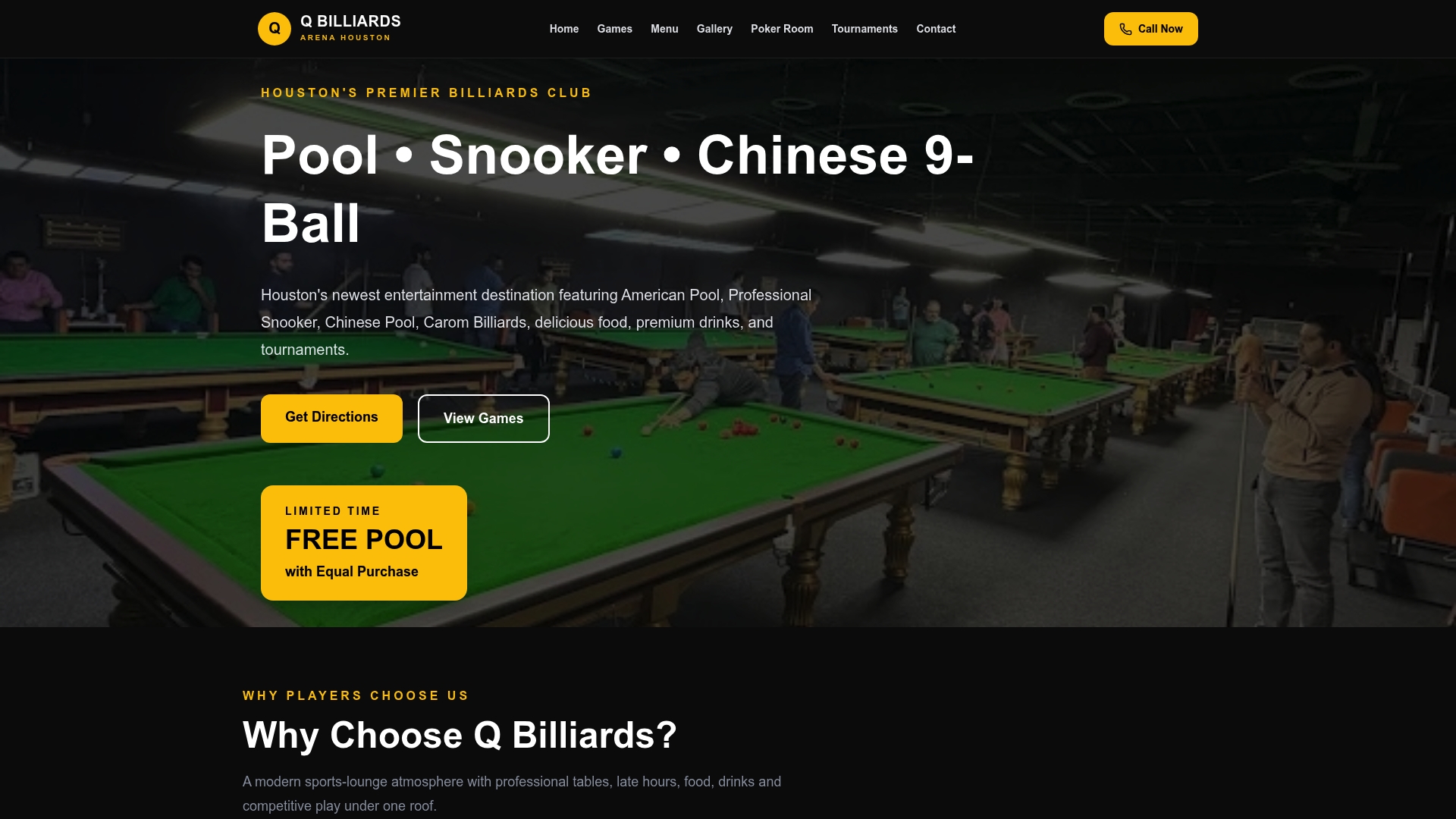
Check the current schedule on our tournaments and events page and note the sign-up window for the format you want to play. Show up during that window with your cue, chalk, and entry fee, or contact us ahead of time if you're planning to reserve a private tournament or a poker room rental for a group event. Table rates and current promotions are listed on our games and pricing page, and the kitchen stays open late so a night of tournament play doesn't mean skipping dinner.
Sources
- Pool Tournament in Houston at Texas T Tavern
- Space City Open
- Houston — Rack Run Repeat
- Houston USAPL – H‑Town Central