For home tables, Simonis 860 is the clearest pick. For high-traffic bars and commercial rooms, Championship Tour Edition or a treated Championship line makes more financial sense. Tournament-focused players and serious league rooms should default to Simonis 860, with Simonis 760 reserved for speed specialists.
The core difference comes down to this: Simonis is a premium worsted cloth milled to tight tolerances, while Championship offers a broader lineup at lower price points, trading some consistency for durability and cost-effectiveness.
- Home table (casual to intermediate): Simonis 860 — balanced speed, long lifespan, minimal maintenance headaches
- Home table (advanced/speed-focused): Simonis 760 — noticeably faster, best for players who know what they're asking for
- League room or club: Simonis 860 or Simonis 860HR — tournament-standard feel, broad player acceptance
- High-traffic bar or commercial room: Championship Tour Edition (CLTE) or Championship cloth — lower replacement cost, Teflon-treated options for spill resistance
- Tournament practice table: Simonis 860 — the cloth most tournament venues use, so practice on what you'll compete on
One caveat worth stating upfront: installer quality and room humidity can shift any cloth's performance enough to change this recommendation. A poorly tensioned Simonis 860 will play worse than a well-installed Championship bolt.
Table of Contents
- How does Simonis compare to Championship cloth?
- What makes Simonis and Championship play differently?
- How long does each cloth last, and what does maintenance look like?
- What does each cloth cost, and where do you buy it in the U.S.?
- How do you decide which cloth is right for your table?
- How does a real venue choose cloth for its tables?
- Key Takeaways
- The cloth choice most players get wrong
- Play on cloth that's been chosen for the game
- Useful sources
How does Simonis compare to Championship cloth?
| Dimension | Simonis 860 | Simonis 760 | Simonis 860HR | Championship Tour Edition | Championship (general) |
|---|---|---|---|---|---|
| Play speed & roll | Medium-fast, consistent | Fast to very fast | Medium-fast | Medium-fast (varies by run) | Slow to medium (varies by grade) |
| Ball control / feel | Excellent, predictable | Precise but demanding | Good | Good on quality runs | Adequate; less consistent |
| Durability / spill resistance | High; resists burn marks | Moderate; higher nylon wears differently | High | Good; Teflon-treated options available | Good; treated grades resist stains |
| Maintenance needs | Low; brush regularly | Moderate | Low to moderate | Low to moderate | Low; more forgiving of spills |
| Price / value | Premium | Premium | Premium | Significantly more affordable | Most affordable tier |
| Best use | Home, league, tournament | Advanced/specialist | Versatile club use | Commercial, bar, high-traffic | Budget recovery, high-turnover venues |
| Color / nap | 28+ colors, nap-free | Nap-free | Nap-free | Multiple colors, some nap | Wide decorative range, some nap |
Simonis strengths:
- Mill-consistent quality run to run
- Nap-free finish means no directional bias in play
- Long lifespan when maintained, making the higher upfront cost defensible
Simonis weaknesses:
- Noticeably more expensive per recover
- 760 is unforgiving for casual players
Championship strengths:
- Lower cost per recover, which matters when you're replacing cloth twice a year on busy tables
- Teflon-treated options handle spills without immediate damage
- Wide color selection for themed or decorative setups
Championship weaknesses:
- Quality can vary between mill runs, particularly with the Tour Edition
- Some blends are more sensitive to humidity, which can produce a heavier, slower feel in warm or damp rooms
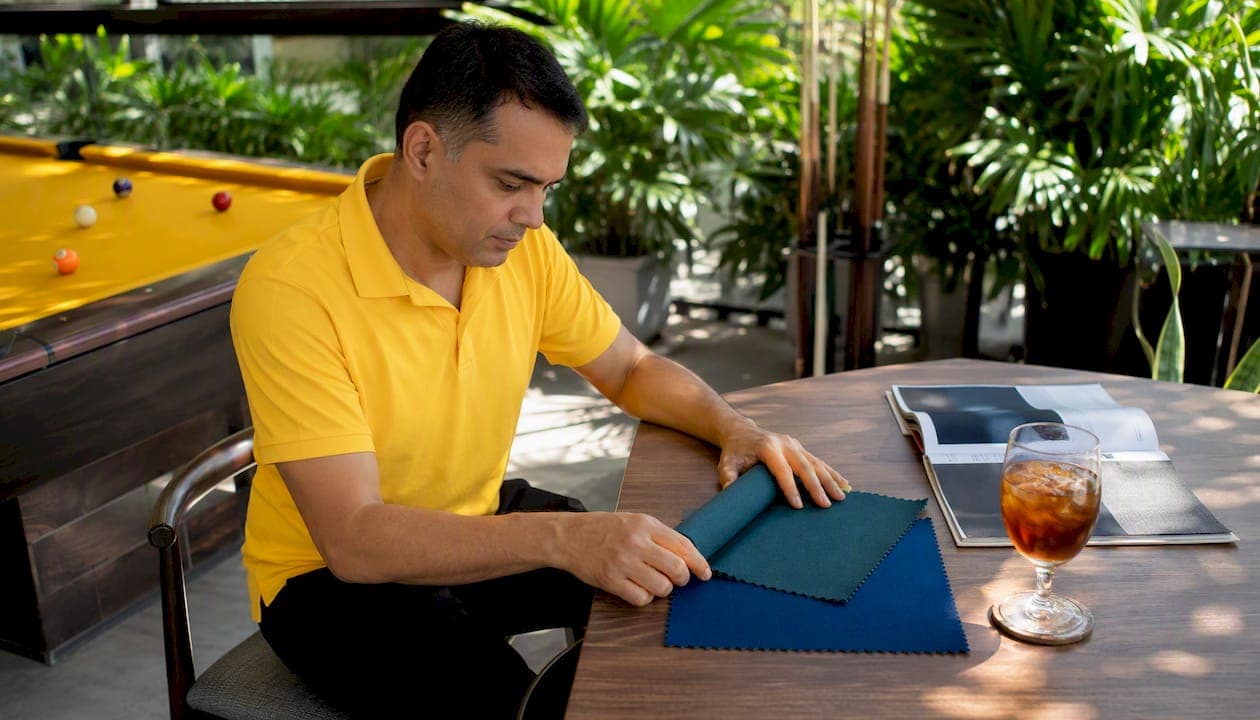
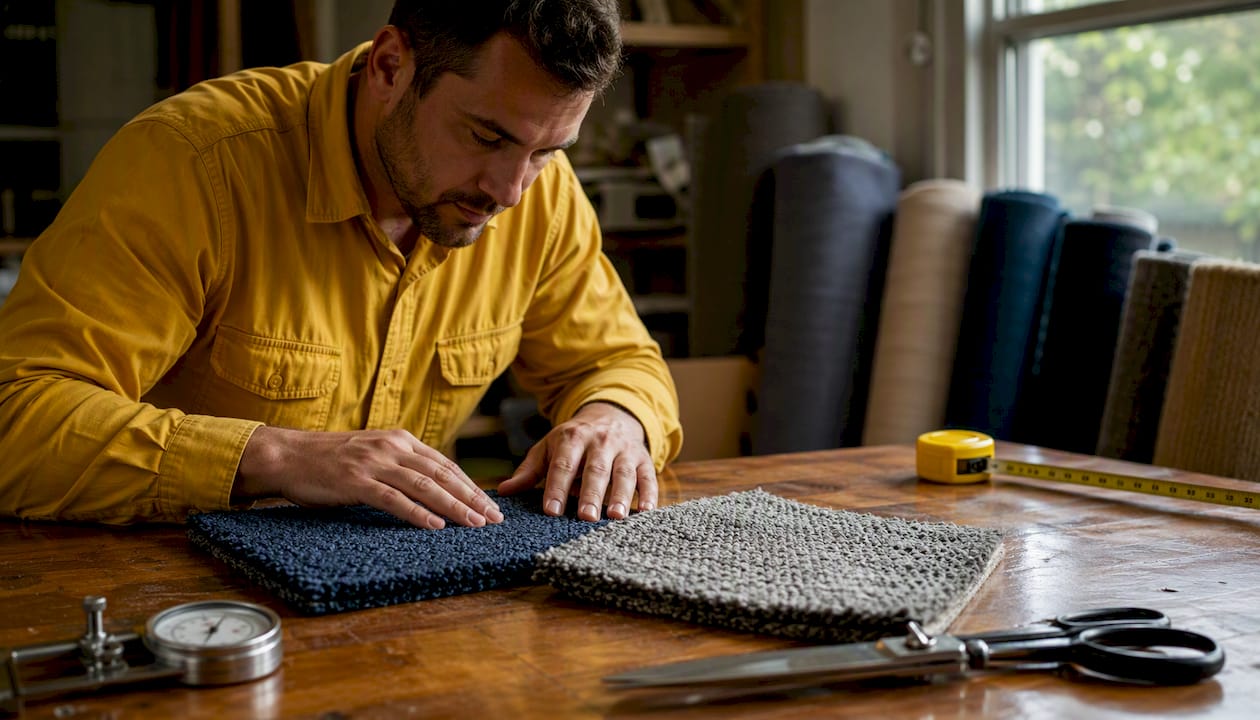
Pro Tip: Before committing to any cloth, ask your installer for a small sample swatch and do a dry-run roll test on a flat surface. A ball rolled across a sample held taut will show you directional bias and surface texture before you spend money on a full recover.
What makes Simonis and Championship play differently?
The answer starts in the fiber blend. Simonis 860 is 90% wool and 10% nylon, weighing approximately 23 oz, with a high thread count and a combed worsted construction. "Worsted" means the fibers are combed parallel before weaving, which produces a tight, smooth, nap-free surface. Balls roll true, without the slight directional drag you get from a napped woolen cloth.
Simonis 760 pushes the nylon content to 30% (70% wool), dropping the weight to roughly 21 oz. That higher nylon ratio is what creates the glass-like speed players describe. It's significantly faster than the 860 and was originally developed for 9-ball, where speed and precise cue ball control matter most. The trade-off: it's less forgiving for players who haven't dialed in their stroke weight.
Simonis 860HR sits between the two, blending the 860's durability with a touch more speed. It's the right call for venues that want one cloth across all their tables without splitting the difference between house and tournament setups.
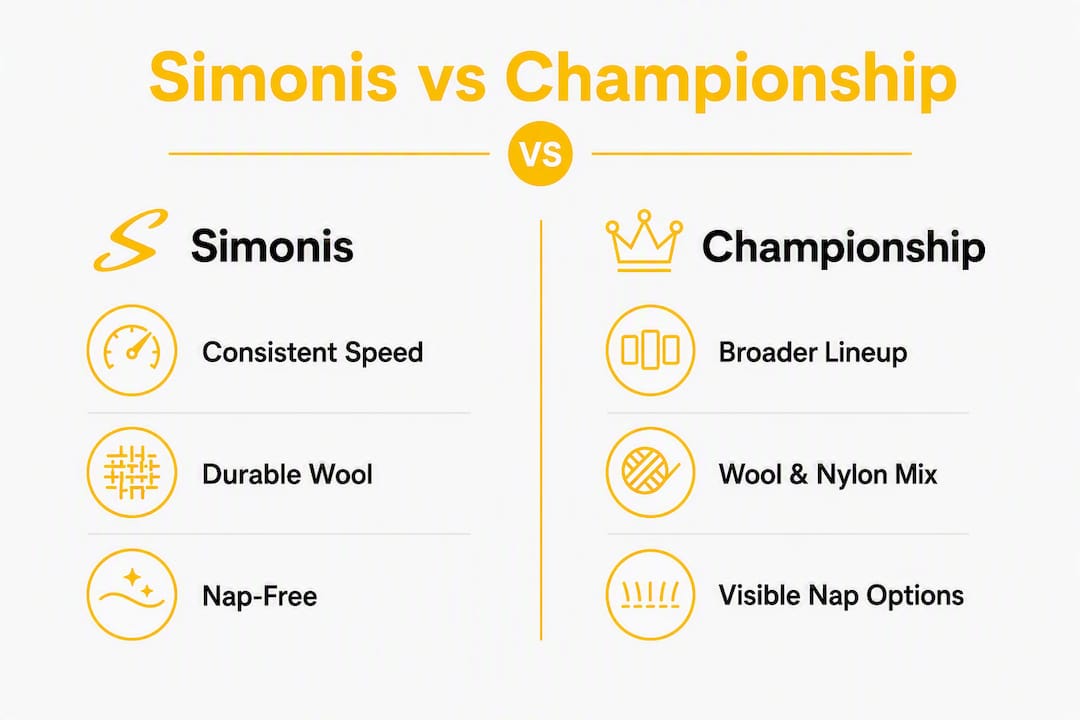
Championship's lineup is broader and less standardized. The Tour Edition aims for performance, and on good runs it can match or slightly exceed Simonis 860 in raw speed. But forum discussions and user reports consistently flag variability across Championship bolts that Simonis players rarely encounter. One bolt plays crisp; the next from a different mill run feels heavier. For a home table you recover once every several years, that's manageable. For a club buying in bulk, it's a real operational variable.
Championship also offers woolen blends and specialty fabrics with visible nap. These play slower and feel softer underfoot, which some casual players prefer, but they're not suited to competitive play.
How long does each cloth last, and what does maintenance look like?
Lifespan depends heavily on traffic, but here are realistic estimates:
- Home table (light use, 5–10 hours/week): Simonis 860 can last 5–10 years with proper care. Championship cloth in the same conditions typically runs 3–6 years.
- League room (moderate traffic): Simonis 860 or 860HR, 2–4 years. Championship Tour Edition, 1–3 years depending on use intensity.
- High-traffic commercial or bar table: Any cloth degrades faster here. Championship treated grades may need recovering every 6–12 months; Simonis can stretch to 12–24 months with disciplined maintenance.
The math matters for commercial operators. Championship Tour Edition is significantly more affordable than Simonis 860, but if you're recovering twice a year versus once, the cost gap narrows. Some operators model this as cost-per-year rather than cost-per-recover, and the answer sometimes flips in Simonis' favor when maintenance is enforced.
Maintenance checklist:
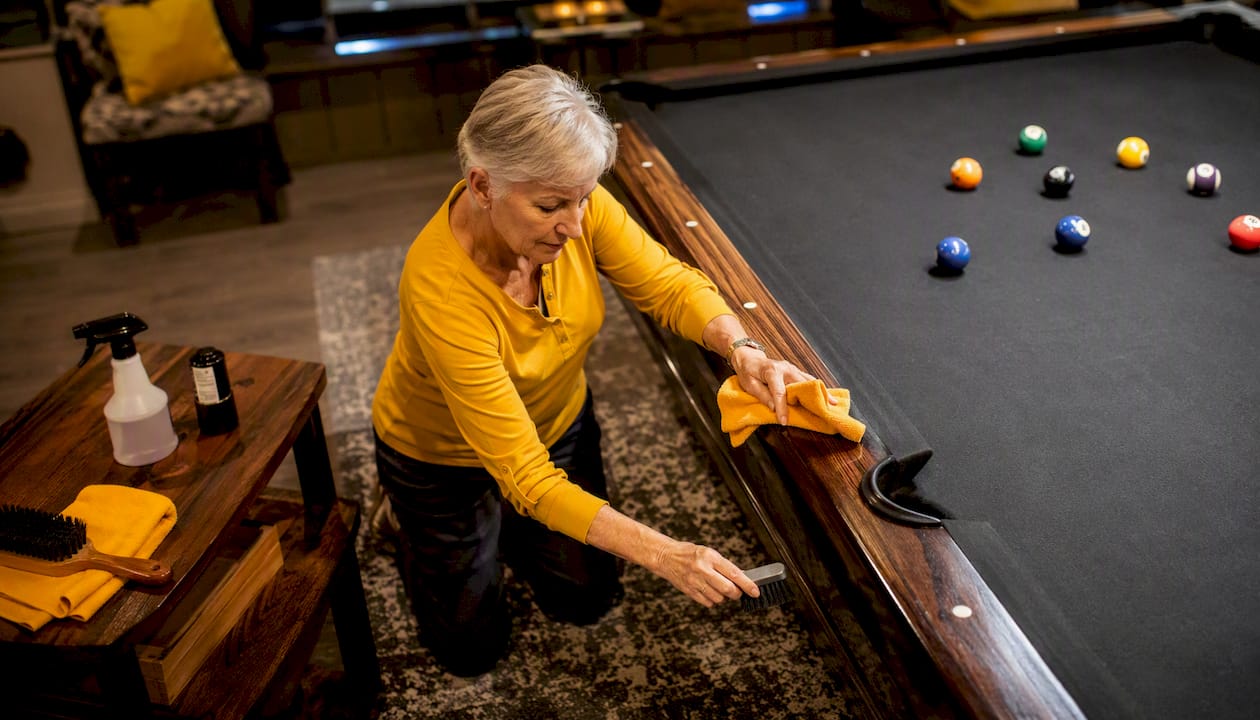
- Brush the cloth after every session with a dedicated billiard brush, always in one direction (toward the foot rail)
- Vacuum lightly once a week on commercial tables; monthly on home tables
- Address chalk buildup immediately — it accelerates fiber wear and affects ball roll
- Avoid wet cleaning unless using a cloth-safe product; moisture is the enemy of most wool blends
- Keep room humidity below 60% if possible; Championship's nylon-wool blends are more sensitive to moisture than Simonis, and a humid room can noticeably slow play
Simonis' nap-free construction resists pilling and shedding better than woolen Championship grades. Ball burn marks (from hard shots or miscues) show up on any cloth, but Simonis' higher wool content and tighter weave tend to absorb them without immediate visible damage.
Pro Tip: Schedule professional cleaning and re-stretching every 12–18 months on a commercial table, even if the cloth looks fine. Loose cloth develops dead spots that affect play long before the fabric visibly wears out.
What does each cloth cost, and where do you buy it in the U.S.?
| Cloth | Typical price range (per table recover, cloth only) | Availability |
|---|---|---|
| Simonis 860 | Higher end; premium pricing | Widely stocked at billiard specialty retailers and installers |
| Simonis 760 | Premium; similar to 860 | Available at specialty retailers; may require order |
| Simonis 860HR | Premium | Less commonly stocked; may need special order |
| Championship Tour Edition | Significantly more affordable than Simonis | Widely available at billiard shops and online |
| Championship (general series) | Most affordable tier | Widely available; broadest retail distribution |
Specific street prices shift with retailer and region, so treat the table above as relative positioning rather than fixed quotes. What holds consistently: Championship cloth plays well and can wear better than expected, making it attractive where replacement frequency and spills are real concerns.
Buying notes:
- Always ask your installer to confirm the exact model and lot number of the cloth being installed. "Championship" without a specific edition name is a red flag — the general series and the Tour Edition play differently.
- Labor typically adds $150–$300 to a recover depending on table size and your market. Cloth cost is only part of the budget.
- For Simonis, buying through an authorized dealer or installer protects against counterfeit cloth, which does circulate in the U.S. market.
- Championship cloth is broadly distributed and easier to source locally, which matters when you need a fast turnaround on a commercial table.
How do you decide which cloth is right for your table?
Work through this checklist before you call an installer:
- Who plays on this table? Casual home players and beginners benefit from Simonis 860's forgiving, consistent roll. Advanced players chasing speed should consider Simonis 760. Mixed-skill league rooms almost always land on 860.
- How many hours per week does the table run? Under 10 hours: Simonis is worth the premium. Over 30 hours: Championship Tour Edition's lower replacement cost starts making real sense.
- Are spills a realistic risk? Bar tables and entertainment venues need Teflon-treated Championship cloth or at minimum a spill-resistant grade. Simonis is not designed for spill-heavy environments.
- What's your climate? High-humidity rooms (above 60% relative humidity) can slow Championship blends noticeably. Simonis handles humidity better, though no cloth is immune.
- Are you practicing for tournaments? If you compete on Simonis 860, practice on Simonis 860. The muscle memory built on one cloth doesn't transfer perfectly to another.
Questions to ask your installer before signing off:
- Can you show me a sample of the exact bolt you'll install?
- What's your tensioning method, and do you offer a warranty on the installation?
- Have you installed this specific cloth model before?
- What's your policy if the cloth develops a seam issue within 30 days?
Red flags to watch for:
- Installer quotes "championship cloth" without specifying Tour Edition or another named grade
- No sample available before installation
- No warranty offered on labor
- Vague answers about stretch and tensioning method
How does a real venue choose cloth for its tables?
A busy U.S. pool hall faces a different set of priorities than a home owner. Uptime is revenue. A table that's out of service for a recover costs money, so the cloth decision is partly a scheduling and logistics question, not just a performance one.
The practical split most experienced operators land on: Championship Tour Edition for high-traffic house tables, Simonis 860 for dedicated league and tournament tables. The reasoning is straightforward. House tables take the most punishment — casual players, food and drinks nearby, high hourly turnover. Championship's durability and lower replacement cost absorb that reality. League and tournament tables need consistency that players can rely on week to week, and Simonis delivers that.
Installation quality is the variable most operators underestimate. A skilled installer who tensions cloth correctly and accounts for the table's slate condition will get more life out of any cloth than an inexperienced one working with premium material.
Pro Tip: Schedule recovers during your slowest week of the month, not reactively when cloth fails. Proactive replacement keeps tables in consistent condition and avoids emergency downtime during league nights.
At Qbilliardshtx, which runs 25 professional-grade tables across American pool, snooker, and Chinese 9-ball, the cloth selection follows exactly this logic. Tournament and league tables get the cloth that matches competition conditions. House tables get durable, maintainable cloth that holds up through heavy nightly use without constant recovery cycles.
Key Takeaways
Simonis 860 is the right default for most home and league tables; Championship Tour Edition is the smarter financial choice for high-traffic commercial rooms where replacement frequency and spill resistance matter more than premium consistency.
| Point | Details |
|---|---|
| Home and league tables | Simonis 860's 90% wool / 10% nylon construction delivers consistent, tournament-standard play for most players. |
| Commercial and bar tables | Championship Tour Edition's lower cost and Teflon-treated options make it the practical choice where spills and heavy traffic are constant. |
| Speed vs. control | Simonis 760 (70% wool / 30% nylon) is significantly faster than 860; reserve it for advanced players who specifically want that. |
| Lifecycle cost matters | A cheaper cloth recovered twice a year can cost more annually than a premium cloth maintained properly over multiple years. |
| Qbilliardshtx approach | Q Billiards Arena uses tournament-appropriate cloth on league tables and durable grades on house tables across its 25 professional-grade tables in Houston. |
The cloth choice most players get wrong
The most common mistake isn't picking the wrong brand. It's picking the wrong model within the right brand, or letting the installer make the call without asking the right questions.
Players upgrading a home table for the first time often hear "Simonis" and assume faster is better, so they ask for the 760. Then they spend six months wondering why their cue ball control feels off. The 860 is the tournament default for a reason: it's fast enough for serious play and forgiving enough that your stroke mechanics, not the cloth, determine the outcome. Speed is only an advantage when you can use it.
On the commercial side, the mistake runs the other way. Operators buy Simonis for every table because it sounds like the premium choice, then discover they're recovering tables more often than budgeted because the maintenance discipline isn't there. Championship's treated grades exist precisely for that environment. Using them isn't settling; it's matching the cloth to the actual operating conditions.
The deeper issue is that most cloth discussions online treat this as a brand loyalty question rather than a use-case question. Simonis and Championship aren't competing for the same customer. They're solving different problems, and the right answer depends entirely on what your table actually does.
Play on cloth that's been chosen for the game
If you want to feel the difference between a well-maintained Simonis 860 and a quality Championship surface before committing to a recover, the most direct way is to play on both. Qbilliardshtx runs 25 professional-grade tables in Houston across American pool, snooker, and Chinese 9-ball, with cloth selected specifically for each table type and use pattern. Tournament and league tables are maintained to competition standards; house tables are kept in consistent playing condition for casual and competitive sessions alike.
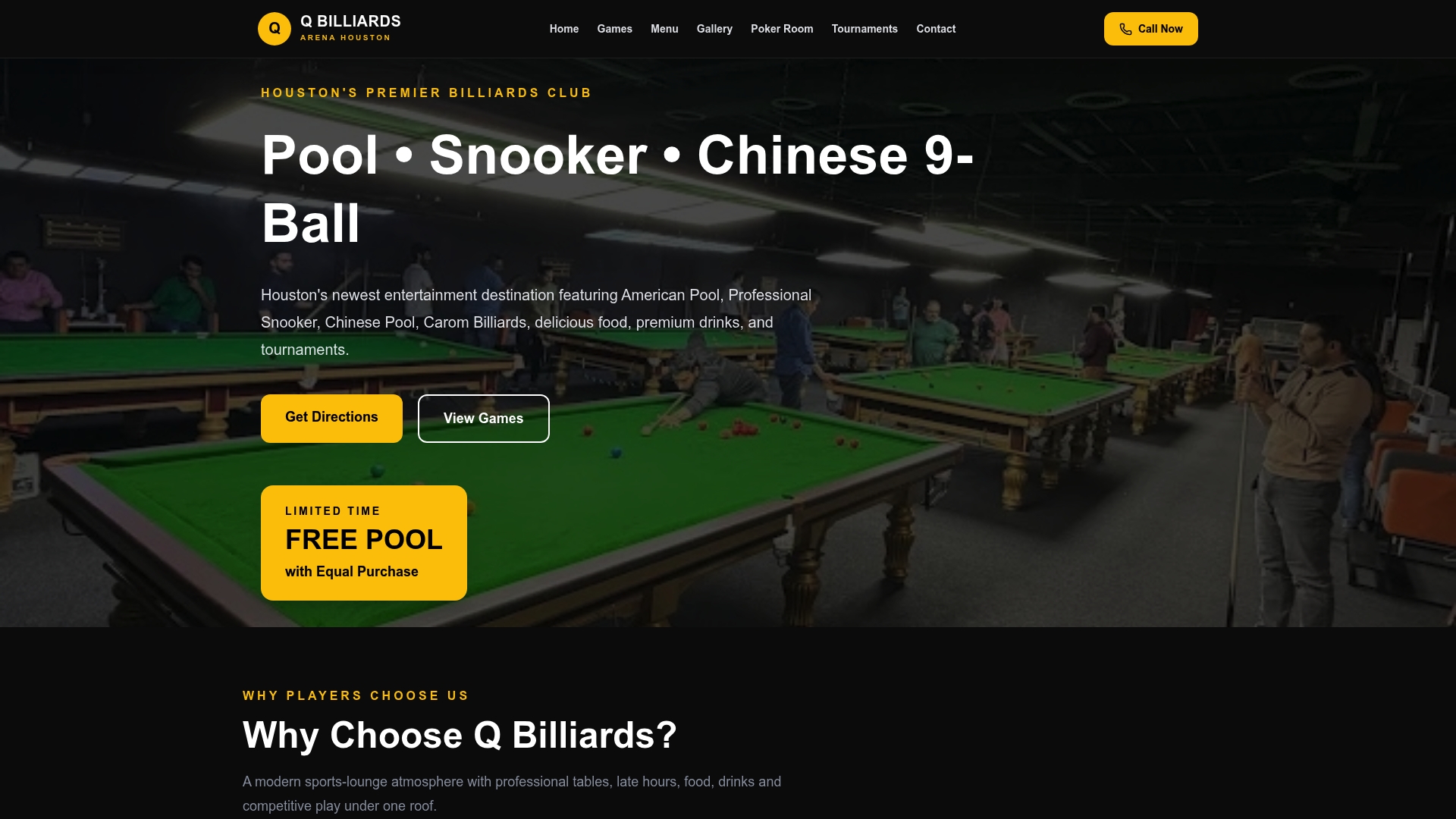
Whether you're deciding what to put on your home table or figuring out what a league-quality surface actually feels like, come play a session at Q Billiards Arena. Check games and pricing and book a table, or stop in during late-night hours when the tables are running at their best.
Useful sources
For readers who want to verify specs or dig into forum discussions before making a purchase decision:
- Simonis 860® product page — Iwan Simonis: Official spec sheet covering construction, wool/nylon ratios, width options, and the full 28-color range.
- Simonis spec library — SimonisUS: Side-by-side model comparisons for 860, 760, and other Simonis lines, including recommended use cases.
- Championship Tour Edition vs Simonis — AZBilliards forum: Long-running thread with installer and player perspectives on real-world performance and variability.
- Championship vs. Simonis — AZBilliards (older thread): Earlier community discussion covering durability and value comparisons.
- Championship vs. Simonis Fabric — Black Label Billiards: Shop-level observations on wear performance and cost-effectiveness of Championship grades.
- Simonis 760 vs 860 — PingPongBros: Practical buyer guide explaining why faster isn't always better and when to choose each model.