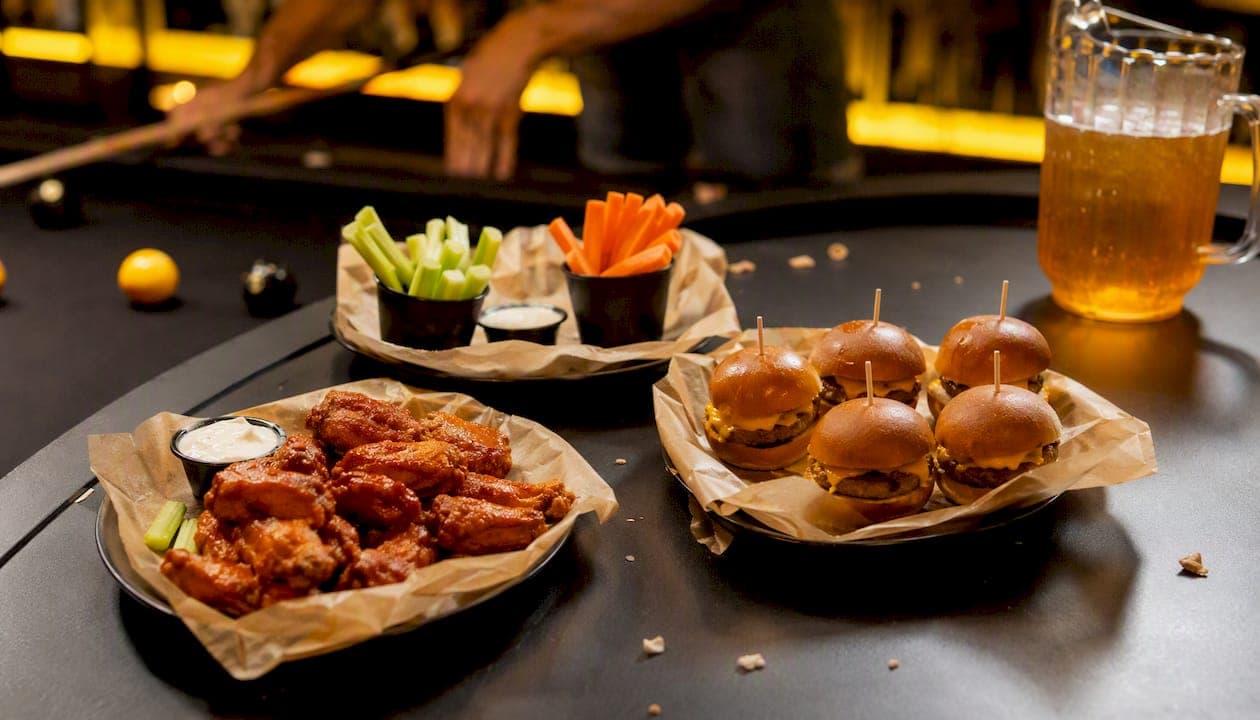
The winning strategy for snacks for pool night is simple: go handheld, keep it low-mess, and make everything shareable so players stay at the table instead of hunting for forks.
At a venue like Q Billiards Arena, where matches run late and focus matters, the food you choose can either support your game or quietly wreck it. Here's what that means in practice:
- Handheld and utensil-free so players can grab a bite between shots without disrupting the table
- Low sugar to avoid the energy spike-and-crash cycle that kills concentration mid-rack
- Protein and fat forward (cheese sticks, nuts, meat snacks) for steady focus across long sessions per billiards community nutrition guidance
- Single-bite when possible to minimize grease on hands near cue sticks
- Chilled pitcher drinks over individual cans to reduce clutter and keep service fast
The USDA's time-temperature rule applies here too: perishable items left out more than 2 hours (or 1 hour when the room is above 90°F / 32°C) should be pulled and replaced.
Pro Tip: Label every dish with its main allergens before the first player arrives. It takes five minutes and prevents a lot of awkward mid-game interruptions.
Key Takeaways
The single most important rule for pool-night snacks: handheld, low-mess, and replenished in small batches keeps players at the tables and the food safe all night.
| Point | Details |
|---|---|
| Handheld and utensil-free | Choose single-bite items like sliders, wings, and veggie cups to minimize table disruption. |
| 2-hour safety window | Pull perishables after 2 hours out (1 hour if the room exceeds 90°F / 32°C). |
| Small-batch replenishment | Refill trays every 60–90 minutes rather than setting out one large portion at the start. |
| Label allergens upfront | Mark every dish with its top allergens before the first player arrives. |
| Qbilliardshtx as your venue | Q Billiards Arena in Houston offers on-site food, tournament hosting, and 25 pro-grade tables. |
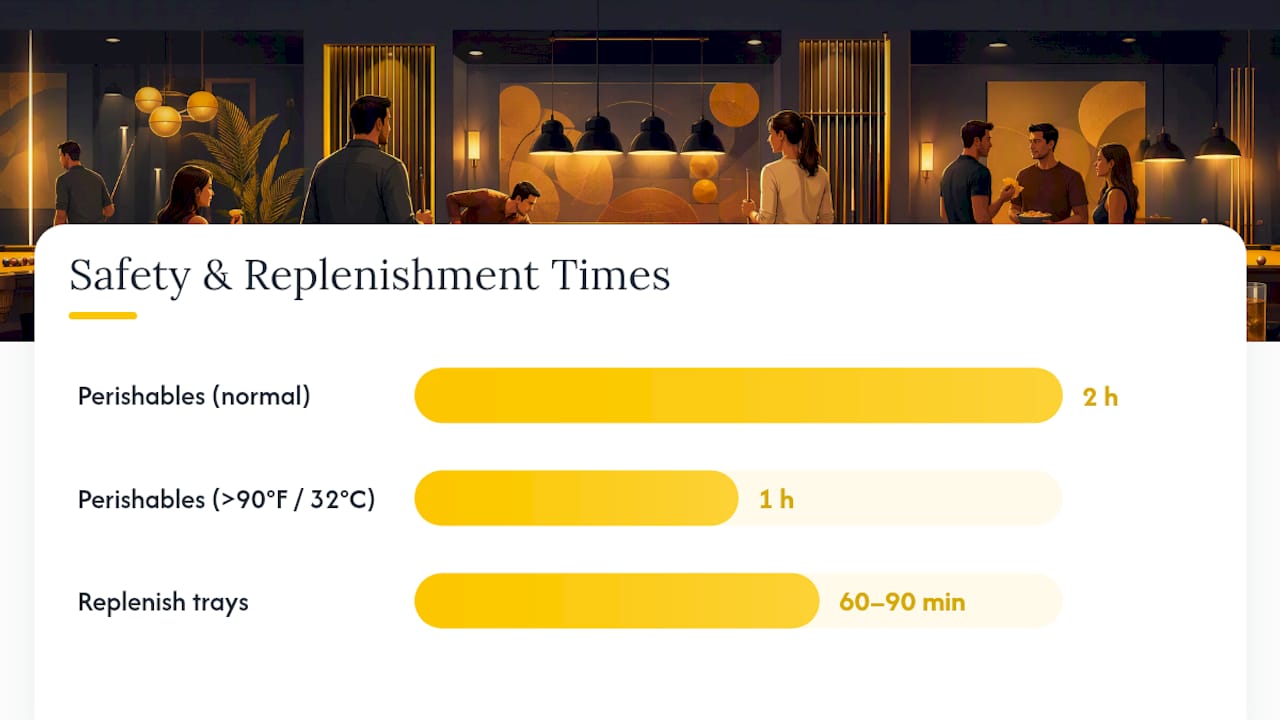
Table of Contents
- What are the best snacks for pool night?
- Why handheld, low-mess bites are the right call for cue-sports nights
- How do you keep pool-hall snacks safe during long events?
- How should you set up food service to keep play continuous?
- Sample menus for small groups, league nights, and tournaments
- What should you ask the venue when ordering food for pool night?
- What actually works when you run food for a pool night
- Q Billiards Arena handles the food so you can focus on the game
- Sources
What are the best snacks for pool night?
The items below are proven crowd-pleasers at cue-sports venues. Each one earns its place by being easy to eat standing up, low on mess, and practical to hold at temperature.
Hot items (order from the venue or caterer):
- Chicken wings — the classic pool-hall finger food. Order boneless for less mess; toss in dry rub instead of wet sauce to keep hands cleaner. Hot-hold in a covered warming tray; serve within 90 minutes of cooking.
- Mini sliders — two-bite size is ideal. Beef, turkey, or pulled pork all work. Make ahead and wrap individually; reheat in foil at 325°F for 10–12 minutes.
- Pulled pork sliders — a step up from basic sliders. Make the pork a day ahead; it actually improves overnight. Set up a small build station with buns, slaw, and sauce on the side.
- Nachos / DIY nacho station — chips stay crisp longer when toppings are served separately. Set out warm queso, jalapeños, and salsa in small ramekins so players build their own. Best for groups that want something interactive.
Cold items (easy to prep ahead or order):
- Chips and chunky salsa or guacamole — the zero-effort anchor of any game-night spread. Buy restaurant-quality salsa in bulk; guac browns fast, so prep it close to serve time or use a store-bought version with citric acid.
- Veggie cups — pre-portioned cups with carrots, celery, and cucumber spears plus a ranch or hummus dip cup. Zero cooking, allergy-friendly, and they keep for hours on ice.
- Shrimp cocktail cups — individual cups with 4–5 chilled shrimp and a cocktail sauce ramekin. Elegant, protein-rich, and completely utensil-free. Keep on crushed ice; discard after 2 hours.
- Pasta salad — make it 24 hours ahead so the flavors develop. Use a vinaigrette base (not mayo) for safer holding at room temperature during shorter events.
- Fruit skewers — grapes, strawberries, and melon chunks on a 6-inch pick. Refreshing between matches and naturally low sugar compared to candy or dessert bars.
Quick no-prep picks for players packing their own fuel:
- Beef jerky, string cheese, mixed nuts, and granola bars are the go-to fuel foods reported by competitive players for preventing mid-session energy dips during long matches.
Why handheld, low-mess bites are the right call for cue-sports nights
Greasy fingers on a cue shaft change your grip. That's the most practical reason to skip the loaded nachos with extra cheese sauce and the saucy ribs. But the food-choice logic goes deeper than grip.
High-sugar snacks (candy, soda, pastries) cause a blood-glucose spike followed by a crash that lands right in the middle of a rack. Deep-fried, heavy foods slow digestion and create the kind of physical discomfort that makes it hard to hold a steady stance. Billiards Gods' competition nutrition guide specifically flags sugar-based drinks, bagged chips, starchy foods, and deep-fried items as ones to avoid during tournament play, recommending cheese sticks, meat snacks, nuts, hard-boiled eggs, sliced veggies, and fresh fruit instead.
The shareable format matters for a different reason: it keeps players near the tables. When food is plated individually and requires a seat at a separate table, players drift. A grazing station or a tray of finger foods positioned near the play area keeps the social energy where it belongs.
- Avoid wet sauces and dips that require double-dipping or dripping
- Skip anything that requires two hands (corn on the cob, full sandwiches, loaded burritos)
- Prioritize items that can be eaten in one or two bites with a napkin
Pro Tip: Set a personal limit of two to three bites per snack stop between matches. Eating too much mid-session causes bloating that affects your stance and breathing. Small, frequent fuel beats one big plate every time.
How do you keep pool-hall snacks safe during long events?
The core rule: perishable food should not sit out longer than 2 hours at room temperature. If the venue runs warm (above 90°F / 32°C, which can happen in a packed hall in summer), that window drops to 1 hour. This applies to shrimp cocktail, pasta salad, pulled pork, and any mayo-based dish.
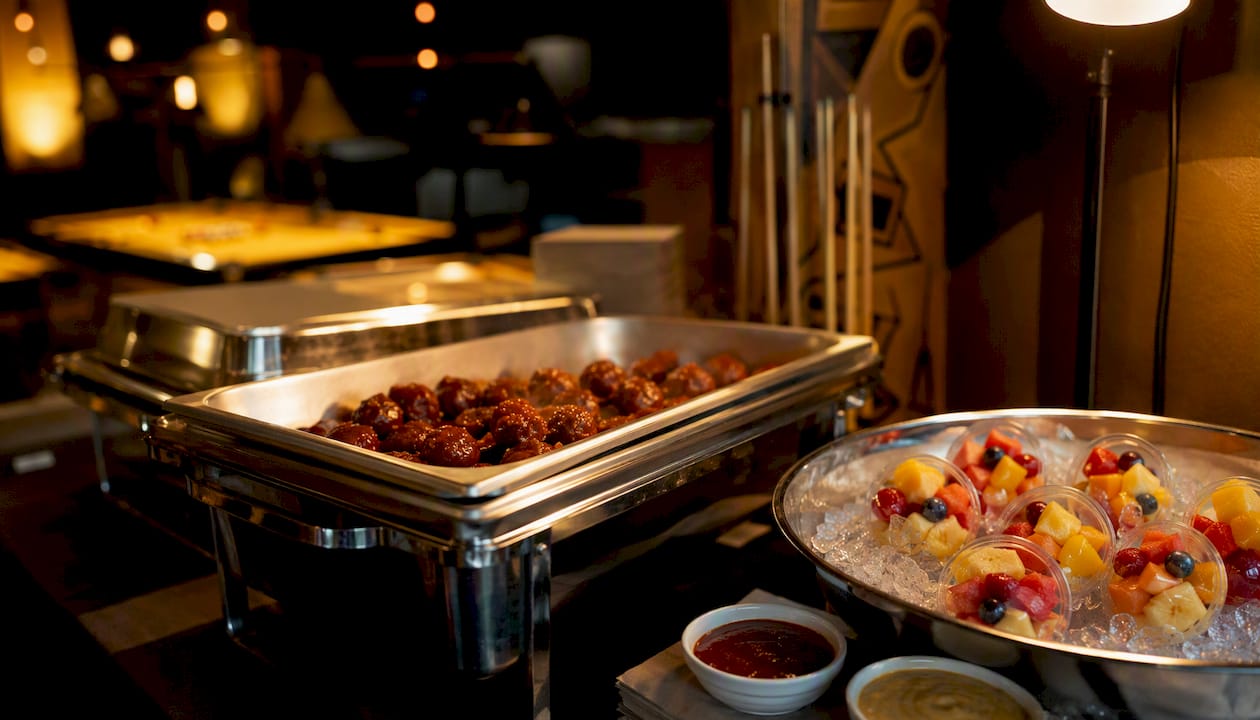
Hot-holding: Wings and sliders should stay above 140°F in a covered warming tray. After 90 minutes in a tray, quality drops noticeably even if the food is technically safe. Replenish in small batches rather than dumping a full tray at once.
Cold-holding: Shrimp cups, veggie cups, and pasta salad should sit in shallow bowls nested in crushed ice. Check the ice level every 45 minutes; it melts faster than you expect in a busy room.
Safety checklist for hosts and venue staff:
- Label every dish with its name and top allergens (gluten, dairy, shellfish, tree nuts)
- Rotate small batches every 60–90 minutes rather than refilling one large tray
- Keep a discard log: note when each item was set out and pull it at the 2-hour mark
- Never mix fresh food into a tray that already has older food sitting in it
Pro Tip: For mayo-based pasta salads and shrimp cocktail, use a double-pan setup: a serving pan sitting inside a larger pan packed with ice. It holds temperature far longer than a single bowl on a table, and you can refresh the ice without moving the food.
Venues that invest in proper cold-holding equipment (under-counter refrigeration, a quality ice machine) make this much easier to manage. Pool Hall Pros' bar setup guide recommends ice machines capable of producing 250–400 lbs per day for venues running active food and beverage service.
How should you set up food service to keep play continuous?
The goal is food that players can reach without leaving the game area and without creating a bottleneck.
Grazing table layout:
- Position the table within 15–20 feet of the playing area but not directly beside a table (chalk dust and food don't mix)
- Place napkin dispensers and small trash bins at both ends of the table, not just one
- Use signage cards for each dish: name, allergens, and whether it's hot or cold
DIY station ideas that reduce staff pressure:
- Nacho bar: warm queso in a small slow cooker, chips in a basket, toppings in labeled ramekins
- Slider build station: buns in a basket, pulled pork in a covered tray, condiments in squeeze bottles
- Wing toss station: pre-portioned picks (6 wings per cup) with sauce choices on the side
Single-serve cups for veggie sticks and shrimp cocktail eliminate the need for serving utensils entirely. Toothpick-friendly bites (fruit skewers, caprese skewers, mini meatballs) let players serve themselves cleanly.
Pro Tip: Instead of one large service table, use two or three smaller stations spread around the room. It cuts wait times, prevents crowding in one spot, and keeps players closer to their tables between turns.
Sample menus for small groups, league nights, and tournaments
Small group (4–8 players)
- 12 mini sliders (beef or pulled pork)
- 2 lbs chicken wings (boneless, dry rub)
- 2 quarts salsa with 2 large bags of tortilla chips
- 8 individual veggie cups with ranch
- 1 fruit skewer tray (16 skewers)
- 2 pitchers of iced tea or lemonade
League night (12–30 players)
Serve fresh at the halfway point of the session rather than all at once.
- 36 mini sliders or a full pulled pork tray with buns
- 6 lbs wings, replenished in two batches
- Full DIY nacho station (queso slow cooker, 4 lbs chips, 3 topping options)
- 24 shrimp cocktail cups on ice
- One large pasta salad (vinaigrette-based, made the day before)
- 4–6 pitchers of drinks (iced tea, lemonade, water with citrus)
Tournament day (50+ players and spectators)
Make-ahead items carry the load here. Order wings and sliders from the venue or a caterer; set up cold items yourself.
- Budget roughly 6–8 finger-food pieces per person per 2-hour block
- Pre-ticket meal bundles (slider + chips + drink) to control waste and speed service
- Offer labeled grab-and-go packs (jerky, nuts, granola bar) for players who want quick fuel between rounds
- Coordinate with the venue's tournament team on warming tray availability and replenishment timing
For group bookings and event logistics, confirming food service details 48 hours in advance prevents last-minute gaps.
What should you ask the venue when ordering food for pool night?
A short conversation with the venue before the event saves a lot of scrambling on the night. Here's what to confirm and how to phrase it.
Sample phrases to use:
- "Can you hold the shrimp cocktail and pasta salad under ice and replenish every hour?"
- "Do you have covered warming trays for wings and sliders, or should we bring our own?"
- "Can you label each dish with its allergens before service starts?"
- "What's the pitcher size for drinks, and can we get a mix of iced tea and lemonade?"
- "Do you offer a bundle deal combining table time with a food package for our group?"
Pre-event checklist to confirm with the venue:
- Warming trays or chafing dishes for hot items
- Ice buckets or crushed-ice pans for cold items
- Disposable plates, napkins, and serving utensils (or confirmation that players bring their own)
- Trash stations near the food area
- A staff contact for refill timing and emergency restocking
- Allergen labeling for all dishes
Venues that have integrated food and beverage operations, with proper POS and inventory systems, handle these requests more smoothly. Pool Room Business Plan's F&B guide notes that venues using unified table-and-F&B management tools can coordinate service timing far more reliably during multi-table events.
Food and beverage sales can account for roughly 50–65% of a billiard hall's total revenue, which means a well-run venue has every reason to get this right. Ask for a tournament food package — most venues with active event programs offer one.
What actually works when you run food for a pool night
The biggest mistake hosts make is treating pool-night food like a dinner party. You don't need a full spread. You need the right four or five items positioned correctly, replenished on a schedule, and labeled clearly.
At Q Billiards Arena, the crowd-pleasers are consistently the simplest ones: wings, sliders, chips and salsa, and cold drinks in pitchers. The DIY nacho station gets used more than any plated item because players can grab exactly what they want in ten seconds and get back to the table. The one logistics lesson that matters most: don't put all the food in one spot. Split it across two stations and watch the lines disappear.
For late-night events and group bookings, the same principle holds. Keep it simple, keep it accessible, and replenish in small batches.
Q Billiards Arena handles the food so you can focus on the game
Sourcing, holding, and replenishing food for a pool night is a real operational task, and doing it well at a venue with 25 professional-grade tables across 11,000 square feet takes coordination. Q Billiards Arena in Houston already has that infrastructure in place: on-site food and drinks, tournament hosting experience, and late-night hours that match the pace of serious cue-sports nights.
Whether you're planning a casual group session, a league night, or a full tournament, Q Billiards Arena can support the food and beverage side so your players stay fueled and focused. Check games and pricing or visit Qbilliardshtx to ask about tournament food packages and book your next event.
Sources
- Recommended Foods for Competition — Billiard Gods
- Fuel foods for pool players | AzBilliards Forums
- Pool Room Bar: Entertainment and Refreshment Setup - Pool Hall Pros
- Elevating Your Billiard Hall with Food and Alcohol Services - Pool Room Business Plan - Free Download