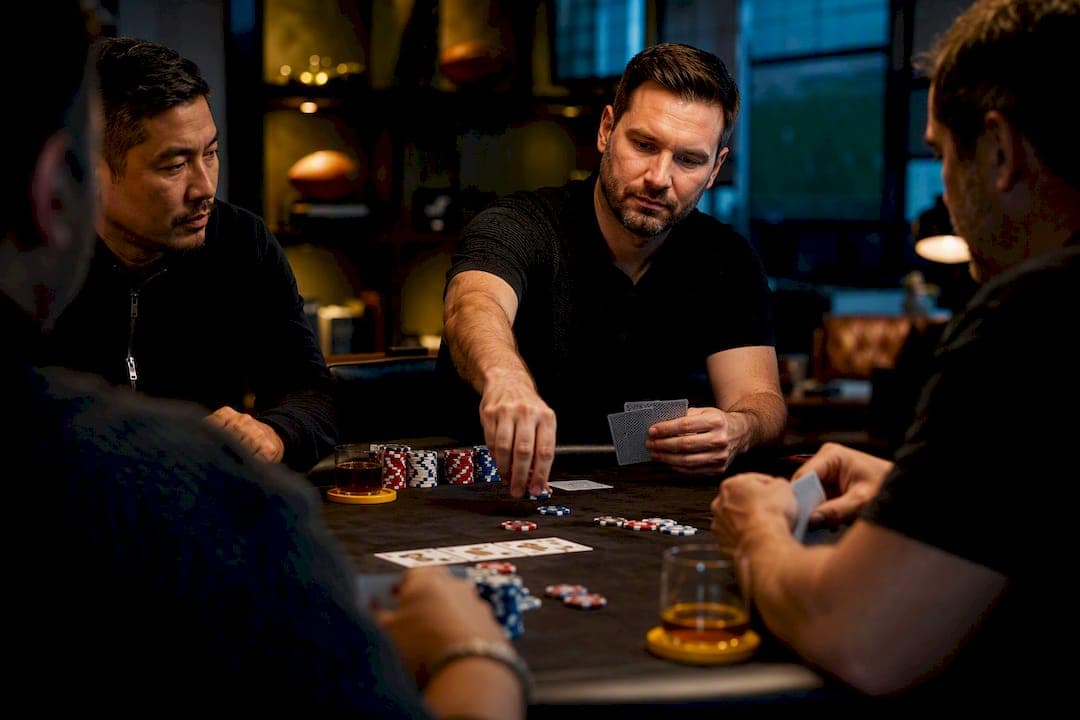
Follow these core rules tonight: act only when it's your turn, protect your cards with a card protector, avoid angle shooting, string bets, and slow rolling, respect the posted house rules and time clock (typically 30 to 60 seconds per decision), and treat the host's ruling as final during the hand.
TL;DR:
- Acting only in turn and verbalizing big bets help prevent confusion and ensure fair play at the table.
- Clear house rules on buy-ins, rebuy timing, and dispute procedures minimize disputes and streamline game management.
- Proper chip handling, protecting your cards, and keeping bets neat are essential to maintain transparency and avoid disputes.
- Enforcing procedural rules like no acting out of turn, slow rolling, or angle shooting keeps the game fair and respectful.
- Maintaining table manners such as face-down phones, proper food rules, and sportsmanship fosters a friendly and repeatable poker environment.
Table of Contents
- What Is Poker Home Game Etiquette?
- Quick Checklist: 10 Rules to Follow Tonight
- Host Responsibilities: Set the Game Up to Avoid Arguments
- At-the-Table Behavior: The Procedural Rules That Matter Most
- Betting, Buy-Ins, and Money Rules
- Dealing, Misdeals, and Table Mechanics
- Handling Disputes, Penalties, and Problem Players
- Etiquette and Table Manners That Keep People Coming Back
- What to Bring and How to Prepare
- Host Perspective: What Actually Reduces Disputes
- A Short Note on Keeping Poker Social
- Want a Dedicated Room Instead? Q Billiards Arena Rents One
- Sources
- FAQ
What Is Poker Home Game Etiquette?
Poker home game etiquette is the set of unwritten social rules and procedural habits that keep a casual cash game fair, fast, and pleasant. It sits alongside the formal house rules for poker (buy-ins, blinds, straddle policy) that a host posts before the first deal. Where the rulebook governs money and structure, etiquette governs behavior. Both matter, and confusing the two is where most home games run into trouble.
At a casino, a dealer and floor staff enforce the rules automatically. At someone's kitchen table, there's no floor. That's why good etiquette matters more, not less, in a home setting. Acting in turn, protecting your hand, and respecting a 30 to 60 second time clock aren't formalities. They're what let ten strangers or friends play for four hours without anyone storming off.
Quick Checklist: 10 Rules to Follow Tonight
Print this or screenshot it before you sit down.
- Act only in turn. Acting early telegraphs information to the table. Say "I'm out" only when the action reaches you.
- Use verbal declarations for big actions. Say "raise to 40" out loud before pushing chips, so there's no confusion about intent.
- Protect your cards. A chip or card protector on top of your hand prevents an accidental muck by the dealer.
- Bet chips in one motion. Sliding forward, pulling back, and sliding again reads as a string bet. Push once.
- Never splash the pot. Stack your bet neatly in front of you so the pot count stays visible and verifiable.
- Don't slow roll. If you have the winning hand at showdown, show it. Dragging it out is considered a real insult at the table.
- Keep big chips visible. Buried or hidden stacks make it impossible for others to judge bet sizing.
- Phones face down when you're in a hand. Say "give me a second, I'm folding this one" if you need to step away.
- Follow the posted buy-in and rebuy rules. If rebuys are only allowed between hands, don't ask mid-hand.
- Tell the host early if you can't make it. A quick text ("can't make it tonight, sorry") saves someone an empty seat and a wasted buy-in.
Host Responsibilities: Set the Game Up to Avoid Arguments
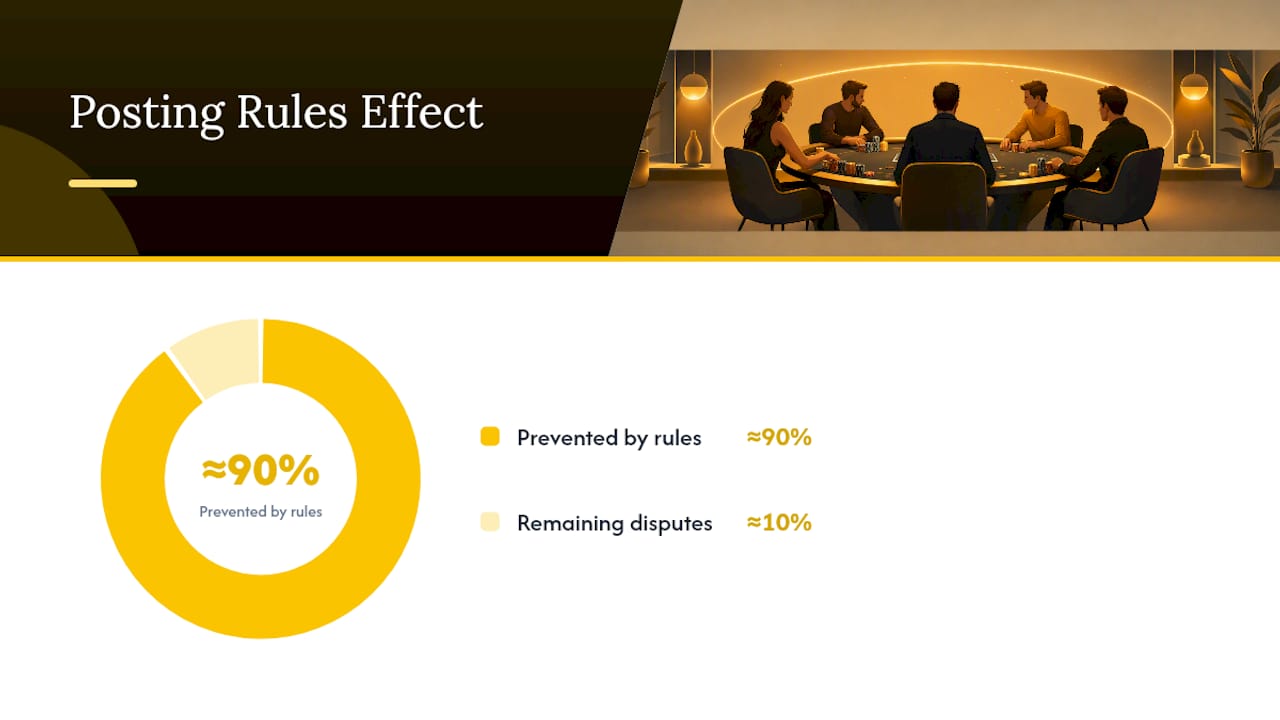
Posting house rules before dealing the first card resolves about 90% of home-game disputes before they happen. A rules sheet taped near the chip tray turns "I thought we agreed on X" into "check the sheet." That single habit does more for a smooth night than any amount of table policing.
Before players sit down, decide and post:
- Game variant and blind structure (No Limit Hold'em, $1/$2, blinds increasing or flat).
- Buy-in and rebuy policy (minimum and maximum buy-in, whether rebuys happen only between hands).
- Straddle and run-it-twice rules, if you allow them at all. Optional variants confuse new players fast, so spell them out.
- Late-join cutoff (after which hand or time does the door close for new players).
- Hard-stop time so nobody's guessing when the night ends.
Banking matters just as much as rules. Designate one banker, log every buy-in, rebuy, and cash-out with a timestamp, and settle with each player the moment they leave. A phone note or simple spreadsheet works fine, and a single banker with immediate records eliminates nearly every money dispute at the end of the night. If you're deciding whether to allow optional variants, a resource like this breakdown of straddle rules in home games is worth reading before you post your final sheet.
Pro Tip: Name a backup arbiter before the game starts, someone who isn't in the hand when a dispute happens. If the host is stuck in the pot being argued over, a neutral second voice keeps the ruling fair and fast.
At-the-Table Behavior: The Procedural Rules That Matter Most
This is where most home-game friction actually lives. Casino etiquette translates almost directly to poker room etiquette at your kitchen table, minus the dealer to enforce it.
Acting out of turn happens when a player folds, calls, or raises before the action reaches them. The fix: wait, watch the player to your right, and act only after they've acted. If someone jumps the gun, a simple "hang on, it's not on you yet" resets things without drama.
String bets occur when a player pushes chips forward in multiple motions instead of one, or reaches for more chips after already betting. Requiring a verbal declaration first ("raise to 30") before touching chips removes the ambiguity almost entirely, since most home-game confusion comes from unclear actions rather than bad intent.
Angle shooting covers a wide range of borderline moves: pretending to muck a winning hand to see a reaction, acting confused about whose turn it is to gain information, or moving chips in a way designed to mislead. If you catch it, call it plainly: "That's an angle, let's not do that again."
Slow rolling means holding the winning hand at showdown and delaying the reveal for dramatic effect. The standard fix is the "show one, show all" rule: once one player shows a card at showdown, everyone else at the pot has to show theirs too, which discourages theatrics.
- A coin, chip, or dedicated card protector on your hole cards prevents an accidental muck by the dealer.
- House rule for exposed cards at showdown: if a hand hits the muck before it's tabled, most homes rule it dead.
- Stack chips by denomination, front row visible, so opponents can judge your stack size at a glance.
Most guides agree on a 30 to 60 second window for a normal decision. Complex spots, like a big river call, warrant calling the clock rather than tanking silently for two minutes.
Betting, Buy-Ins, and Money Rules
Table stakes is the concept that you can only play with the chips in front of you at the start of a hand. You can't dig into your wallet mid-hand to cover a bet, and understanding this rule is what makes table-stakes poker function fairly for everyone at the table.
- Buy-in size: many home games set a range around 50 to 200 big blinds, but the exact number is entirely the host's call.
- Rebuy timing: rebuys happen only between hands, never mid-hand, and capping the rebuy amount keeps stack sizes from spiraling out of control.
- Side pots: when a player goes all-in, everyone else keeps betting into a separate side pot; the all-in player can only win the main pot.
- Banking: one designated banker, every transaction written down or photographed on the spot, no exceptions for "I'll remember."
Dealing, Misdeals, and Table Mechanics
Most home games rotate dealing duties around the table, one hand each, unless someone volunteers to deal all night.
- Exposed card during the deal: pick one method ahead of time and announce it. Some games redeal entirely; others treat the exposed card as an extra burn card and keep going. Either works. Consistency is what prevents arguments.
- Deck replacement: swap decks if cards are visibly marked, bent, or sticking together, and always shuffle at least four times with a cut before dealing.
- Seating and the button: rotate the dealer button clockwise every hand to keep position fair across the session, especially in longer games where blinds add up.
Handling Disputes, Penalties, and Problem Players
The host's job during a hand is simple: make a quick, reasonable call and keep the game moving. Full discussion happens after the hand, not during it.
- Warn first. Most infractions are accidental. A polite reminder solves it: "just a heads up, wait for your turn next time."
- Kill the hand and return bets when a genuine angle or rule violation affects the outcome and there's no fair way to continue.
- Remove a repeat offender. If the same player keeps causing problems after warnings, ending their night is fair to everyone else at the table.
- Call the clock by simply saying "clock, 60 seconds," starting a phone timer, and having the table vote if the player still hasn't acted when time runs out.
- Log incidents. A quick note after the game ("John slow rolled twice, warned once") helps a host make fair seating calls next time.
Etiquette and Table Manners That Keep People Coming Back
Procedural rules keep the game fair. Table manners keep people wanting to come back next week.
- Phones: face down while you're in a hand; step away from the table entirely for calls.
- Food and drink: use a side table or coasters, since one spilled drink can end a game and ruin a deck or a set of chips. Keep greasy snacks off the felt.
- Sportsmanship: don't berate bad players for their decisions. A simple "nice hand" after a big pot, win or lose, keeps the tone right.
- Volunteer dealers: if someone's dealing all night instead of rotating, tip them or cover their buy-in. It's a small gesture that keeps people willing to do it again.
Pro Tip: If tempers flare after a big pot, call a two-minute break before the next hand. It costs nothing and defuses far more than any rule enforcement will.
What to Bring and How to Prepare
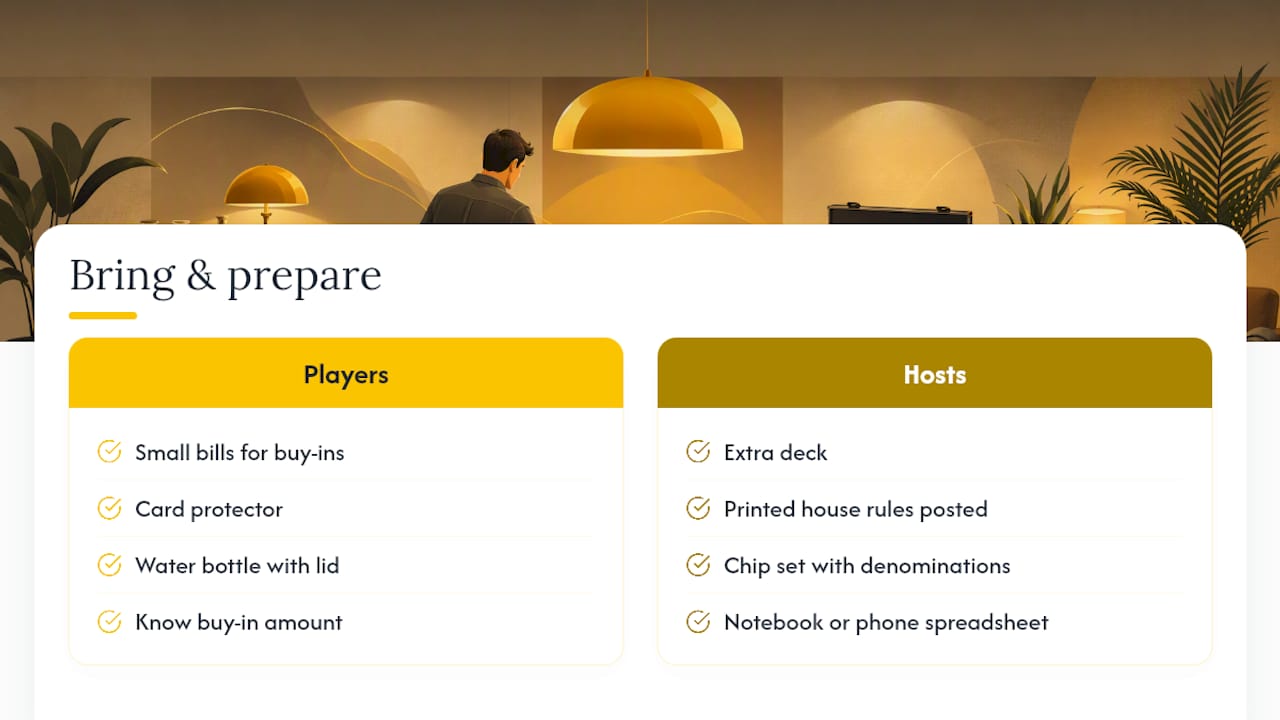
Players should bring small bills for buy-ins, a card protector, and a water bottle with a lid. Know your buy-in amount before you arrive so the banker isn't doing math at the door.
Hosts should have an extra deck on hand, the printed house rules taped up, a chip set with enough denominations for the buy-in range, a notebook or phone spreadsheet for tracking money, and a phone timer ready for the clock. A side table for snacks and coasters at every seat protects the felt and the cards alike.
Host Perspective: What Actually Reduces Disputes
Running games in a dedicated space makes the pattern obvious fast: rules posted where everyone can see them, plus one person clearly in charge of both the bank and the ruling, ends nearly every argument before it starts. A staging area for buy-ins and cash-outs, separate from the playing surface, keeps money handling calm even during a busy night. Comfortable seating and food within reach do more for repeat attendance than any rule change ever will, a pattern that holds whether you're running a home game or a full poker room checklist for a bigger event.
A Short Note on Keeping Poker Social
Home poker only works because people want to come back. Enforcing rules evenly, including on your friends and even when you're stuck in the hand, protects the thing that actually matters: a table people look forward to. Posted rules plus a host acting as final arbiter is a simple combination, and it's the one that keeps nights running smoothly year after year.
— Q
Want a Dedicated Room Instead? Q Billiards Arena Rents One
Hosting solves the social side of poker night, but it comes with real costs: your dining room becomes a poker room for the night, you're the banker, the dealer, and the cleanup crew, and a spilled drink is your carpet's problem. An alternative for hosts who'd rather skip the logistics and just play is renting a private poker room that offers dedicated tables, food and drink service brought to you, a staging setup for buy-ins and cash-outs, and no cleanup at the end of the night.

Such rooms often include a quiet space away from the main floor, allowing groups to set their own pace without background noise from the rest of the venue. If you're already comparing games and pricing for a bigger group night, or thinking about running it as a small tournament instead of a straight cash game, check tournaments and events for format ideas. To lock in a date, visit the poker room rental page and check availability for your next game night.
Sources
- Poker House Rules to Keep the Game Moving
- Home Game Etiquette
- Homegame Etiquette
- Home Poker Game Rules & Etiquette (Cash Game Host)
FAQ
What Is Bad Etiquette in Poker?
Bad etiquette includes angle shooting, string betting, splashing the pot, slow rolling at showdown, and acting or commenting out of turn. All five show up repeatedly as the leading causes of tension in home games.
What Is the 80/20 Rule in Poker?
There's no single agreed definition tied to home-game etiquette specifically, so it's best treated as a general strategy heuristic rather than a fixed rule for how home games should run.
What Is the Best Structure for a Home Poker Game?
There's no single best structure, but most successful home games post their blind schedule, buy-in range, and rebuy policy before the first hand, then stick to it. A hard-stop time and a designated banker round out the essentials for a smooth night.
What Should You Never Do at a Poker Table?
Never act out of turn, never splash the pot, never slow roll a winning hand, and never touch your chips before verbally declaring your action. Each one causes confusion that a simple verbal habit prevents entirely.
How Long Should a Player Have to Make a Decision?
Most home games use a 30 to 60 second window for typical decisions, extending it only for genuinely complex spots where a player can call the clock formally.