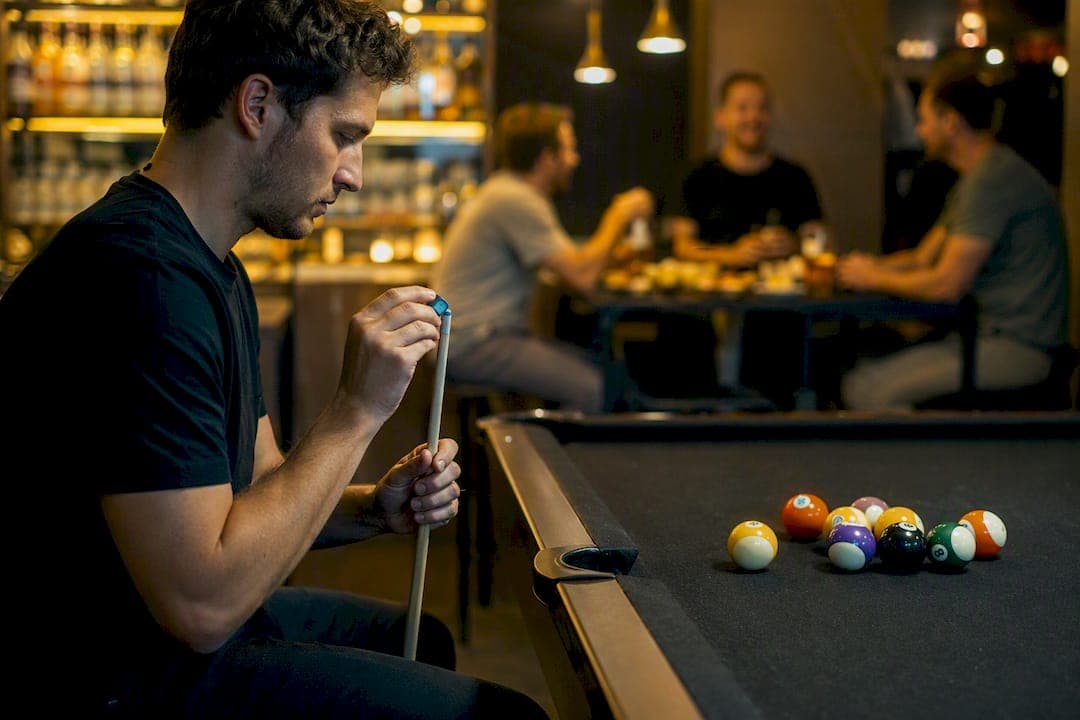
The fastest way to win more racks is simple to state and hard to master: plan backward from the 8-ball, minimize how far the cue ball travels between shots, solve your trouble balls while you still have options, and play a safety anytime your shot has a low chance of success. That last rule alone separates recreational players from league-level ones. Most players think offense; strong players think sequence.
Before your next visit, run three checks. First, look at both groups and find which one has a clear key ball leading to the 8. Second, pick a short run, ideally three shots or fewer, rather than the flashiest single pot. Third, if a shot feels like a coin flip, take the safety instead of the gamble.
- Identify the group with the cleanest path to the 8, not just the easiest first ball
- Choose the shortest reliable run-out sequence you can see
- Below a 70% make chance, play safe rather than shoot
Pro Tip: Count your outs before your first shot, not after you miss. If you can't name your last three balls before the 8, you're not ready to shoot yet.
Key Takeaways
| Point | Details |
|---|---|
| Plan backward from the 8 | Identify the 8's pocket, then your key ball, then the key-to-key ball, before shooting. |
| Choose groups by path, not pot | Pick the group with the cleanest route to the 8 and fewest clusters over the easiest first shot. |
| Use the 70% rule | Play a safety anytime your realistic make chance falls below roughly 70%. |
| Minimize cue-ball travel | Small, controlled position moves beat long-table cue-ball rolls for consistency. |
| Test strategies at Q Billiards Arena | Book hourly table time or join a league at Q Billiards Arena in Houston to pressure-test these patterns in real match play. |
Table of Contents
- What 8 Ball Strategy Really Means: Choosing Your Group and Planning the Run-Out
- How Do You Control the Cue Ball for Better Position?
- When Should You Play a Safety Instead of Shooting?
- What Break Strategy Gives You the Best Advantage?
- How Do You Break Up Clusters Without Losing Position?
- Mapping Your Shots: How Many Moves Ahead Should You Plan?
- Practicing 8 Ball Strategy: Drills That Actually Build Skill
- Reading Your Opponent: The Table Management Skill Nobody Teaches
- Why Discipline Beats Flashy Shots
- Practice These Strategies at Q Billiards Arena
- Frequently Asked Questions
- Sources
What 8 Ball Strategy Really Means: Choosing Your Group and Planning the Run-Out
After an open break, the group you choose matters more than the ball you sink first. Dr. Dave's strategy guide recommends picking the group with the clearest key-ball path to the 8 and the fewest clusters, even if the other group offers an easier opening shot. A pretty first pot that dead-ends into a cluster three balls later is a losing choice dressed up as a good one.
The "key ball" is the object ball positioned to give you a clean angle on the 8. The "key-to-key" ball is the one before it, the shot that sets up your position on the key ball. Think of it as a short chain: sink ball A so the cue lands on ball B, sink ball B so the cue lands on the key ball, sink the key ball so the cue lands on the 8.
- Walk the table before you shoot and mentally rack your remaining balls in order
- Flag any ball frozen to a rail or buried in a cluster as a problem to solve early, not late
- Identify your key ball and work backward two shots to find your starter
- Commit to the group with fewer unresolved problems, even if it means a harder opening shot
The WPA's playing guide backs this up directly: players who pocket balls without a plan routinely hand their opponent an easier table than the one they inherited.
How Do You Control the Cue Ball for Better Position?
Position play comes down to four basic actions on the cue ball, and knowing which one to use when is what turns a decent shooter into a dangerous one.
- Stop or stun kills forward roll on contact, ideal for a straight-in shot where you need the cue ball to sit still
- Follow (topspin) sends the cue ball forward past the contact point, useful when your next ball is beyond the object ball
- Draw (backspin) pulls the cue ball backward after contact, your go-to when the next shot sits behind you
- Side spin (English) alters the rebound angle off a rail without changing your aim point on the object ball
Speed matters as much as spin. A cue ball that travels six inches is far easier to control than one that rolls the length of the table, so favor the shot that keeps your next position tight over the one that looks more powerful. Picture a simple three-shot run: a stop shot on ball one leaves the cue dead center for ball two, a soft follow on ball two rolls you three inches into position on ball three, and a stun shot on ball three squares you up on the 8. Each move is small on purpose.
Pro Tip: Practice tangent-line thinking by rolling a ball to any spot on the table, then figuring out the natural angle your cue ball would take off it before you ever chalk up. Thin-hit control comes from repetition, not theory.
When Should You Play a Safety Instead of Shooting?
Play a safety any time your realistic make chance drops below roughly 70%, and treat it as an offensive decision, not a retreat. As of 2026, the American Poolplayers Association defines a safety as any shot intended to leave your opponent with no easy legal shot, built around three goals: distance between the cue ball and the nearest object ball, keeping balls away from rails and pockets, and hiding the cue ball behind an obstacle.
- Freeze the cue ball against a rail or another ball so your opponent has no clean stroke
- Hide behind a cluster to force a difficult kick shot or a blind hit
- Tie up loose balls on the rail so nothing sits pocket-ready for your opponent's next turn
If your opponent has only two or three balls left and any miss gives them the table, a calculated risk on offense sometimes beats a safety. But when the math favors your opponent either way, a well-placed safety that also breaks up a cluster does double duty: it protects your turn now and sets up an easier run when you get ball in hand back.
What Break Strategy Gives You the Best Advantage?
A head-on break sends more energy straight down the rack, useful when you want maximum spread and don't mind some risk. A cut break, striking the rack slightly off-center, gives you more control over cue-ball placement afterward at the cost of a slightly tighter spread. Most experienced players favor the cut break for exactly that trade-off.
- Place the cue ball a few inches off the head string rather than jammed against it, giving you room to control rebound and reduce scratch risk
- A controlled break at roughly 70% power that keeps the cue ball centered beats a full-power swing that sends the cue ball bouncing toward a pocket, according to PoolDawg's coaching advice
- On an open table after the break, start mapping your run immediately
- On a clustered table, identify which cluster to attack first before shooting anything else
Rack tightness affects all of this, so a loose or uneven rack changes your break outcome before you even strike the cue ball, which is worth checking every time you set up.
How Do You Break Up Clusters Without Losing Position?
Not every cluster deserves your attention right away. Attack the cluster that's blocking your most direct path to the 8 first, and leave isolated problem balls alone if they're not in your way yet.
- Identify which cluster sits between you and your key ball, and prioritize breaking that one
- Use a low-speed, controlled contact to nudge the cluster apart rather than blasting it, which preserves your table shape for the next shot
- Keep at least one "insurance" ball in reserve, an easy pot you're saving in case your run-out plan falls apart
- When you can't win the exchange outright, consider leaving a blocking ball in place to deny your opponent an easy pocket
An insurance ball works like a backup plan you never mention out loud. If your three-shot sequence to the 8 collapses because of a bad roll, that extra ball gives you something reliable to fall back on instead of forcing a low-percentage shot.
Mapping Your Shots: How Many Moves Ahead Should You Plan?
Strong 8-ball players run through the same mental checklist every time it's their turn: locate the 8's pocket first, then find your key ball, then the key-to-key ball, then your starter shot. That's the sequence in reverse order from how you'll actually shoot it.
- Start with a 3-shot plan if you're still building table vision, then stretch to 5 or more shots as your confidence grows, a progression The Pool Coach recommends for intermediate players
- When two balls are grouped together, decide early whether you'll pocket both or use one as a blocker against your opponent's group
- Route the shot that leaves the shortest, straightest path to your next ball, even if a different shot looks more satisfying to pocket
The most common mistake is shooting the easiest ball on the table without checking where it leaves the cue ball. Before every shot, ask where the cue ball needs to land for the next shot, not just whether this one goes in.
Practicing 8 Ball Strategy: Drills That Actually Build Skill
Reading about position play only gets you so far. These three drills turn the concepts into muscle memory.
- Key-ball run-out drill: Rack five random balls, identify your key ball first, then run the table without touching a rail with the cue ball more than twice
- Three-shot control drill: Set up any three balls and practice landing the cue ball within a hand's width of your intended spot after each shot
- Safety-to-breakout sequence: Practice playing a safety, then immediately plan how you'd break out the resulting cluster on your next turn
Studying pattern libraries and run-out videos speeds up recognition. Watch a rack, pause before the player shoots, predict their next three balls, then compare your read to what actually happens.
Track your numbers over a few weeks: run-out percentage, safety success rate, and how often your break leaves you an open table. Q Billiards Arena's tournaments and league events give you real match pressure to test these drills against, which is a different animal than practicing alone on an empty table.
Reading Your Opponent: The Table Management Skill Nobody Teaches
Every opponent has tendencies, and spotting them early changes how you play the whole rack. Some players always shoot the nearest ball regardless of position. Others get impatient after a long safety exchange and take risky shots they shouldn't. Watch the first two or three innings closely. Does your opponent play position, or do they just pocket whatever's closest? A player who ignores cue-ball control after potting is often beatable with patient safeties, because they'll eventually leave you an opening rather than manufacture one themselves.
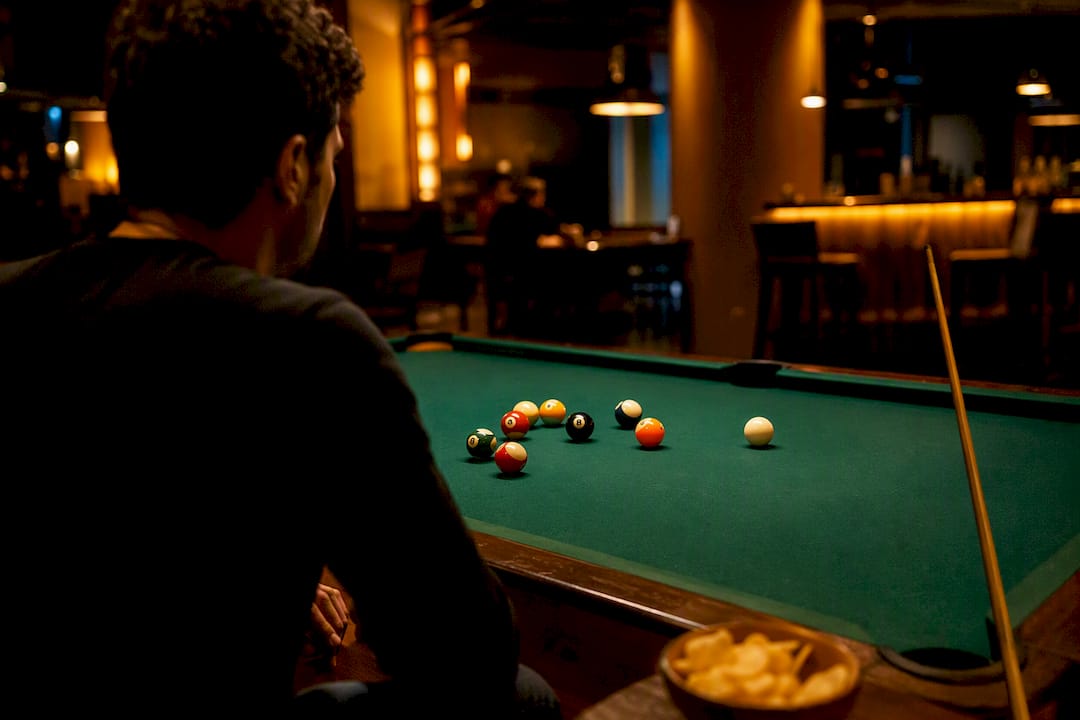
Table management extends to your own composure, too. Missing an easy shot rattles most players into rushing the next one, which compounds the mistake. Slow down after a miss. Recheck your options rather than shooting on instinct to make up for lost ground.
Pace matters more than most players admit. A deliberately slower opponent can pull you out of rhythm, especially if you're used to playing fast. Rather than mirroring their pace out of frustration, stick to your own pre-shot routine every single time, whether you're up or down in the rack. Consistency under pressure is what separates a player who folds after one bad safety exchange from one who grinds out a win.
Watch for patterns in how your opponent handles pressure near the 8-ball specifically. Some players who run out cleanly through a whole rack suddenly tighten up on the 8 itself. If you notice that tendency, a tough safety rather than a defensive give-up shot on your own turn can force the error you're looking for.
Why Discipline Beats Flashy Shots
The strategies here reward patience over highlight-reel shots, and that's precisely why most casual players never adopt them. It's easier to fire at a tough cut for style points than to grind out a three-shot safety exchange. But the players who consistently win racks are the ones who treat every shot as a link in a chain, not a standalone moment.
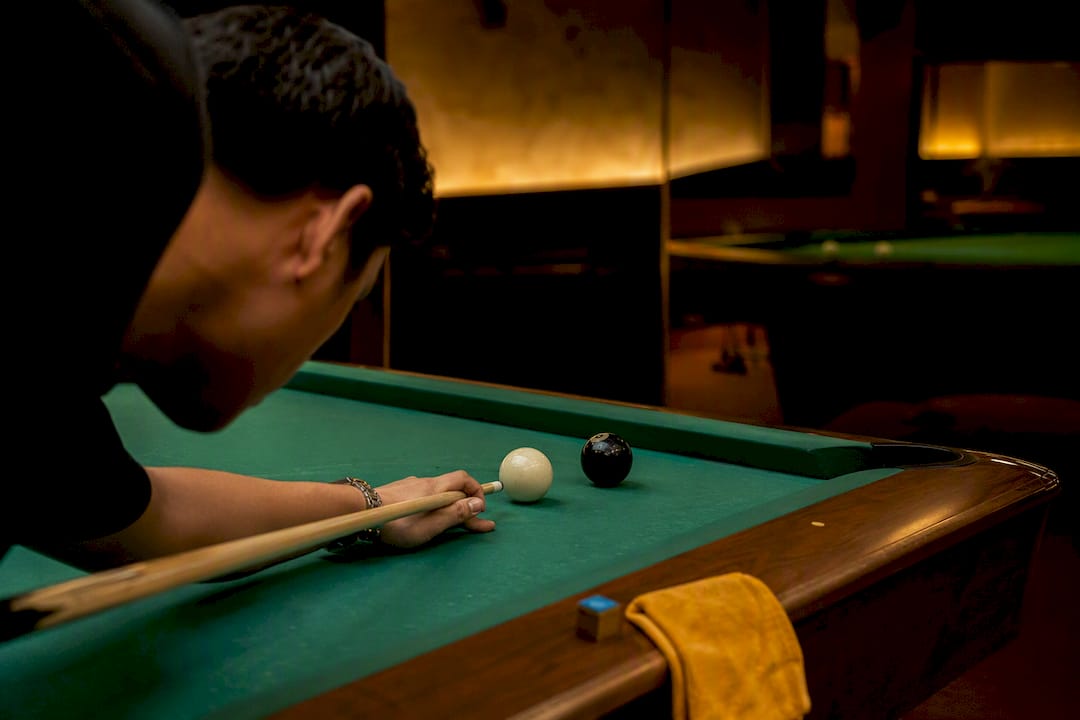
Local leagues and weekly tournaments are the best place to pressure-test this thinking, because a friendly practice session never punishes a bad decision the way a real match does. Q Billiards Arena has built its tournament nights around exactly that kind of competitive repetition, where the mistakes actually cost you something.
Practice These Strategies at Q Billiards Arena
Reading about key balls and safety thresholds only gets you so far. You need table time to make the decisions automatic, and that's where Q Billiards Arena becomes the practical next step rather than another article to bookmark.
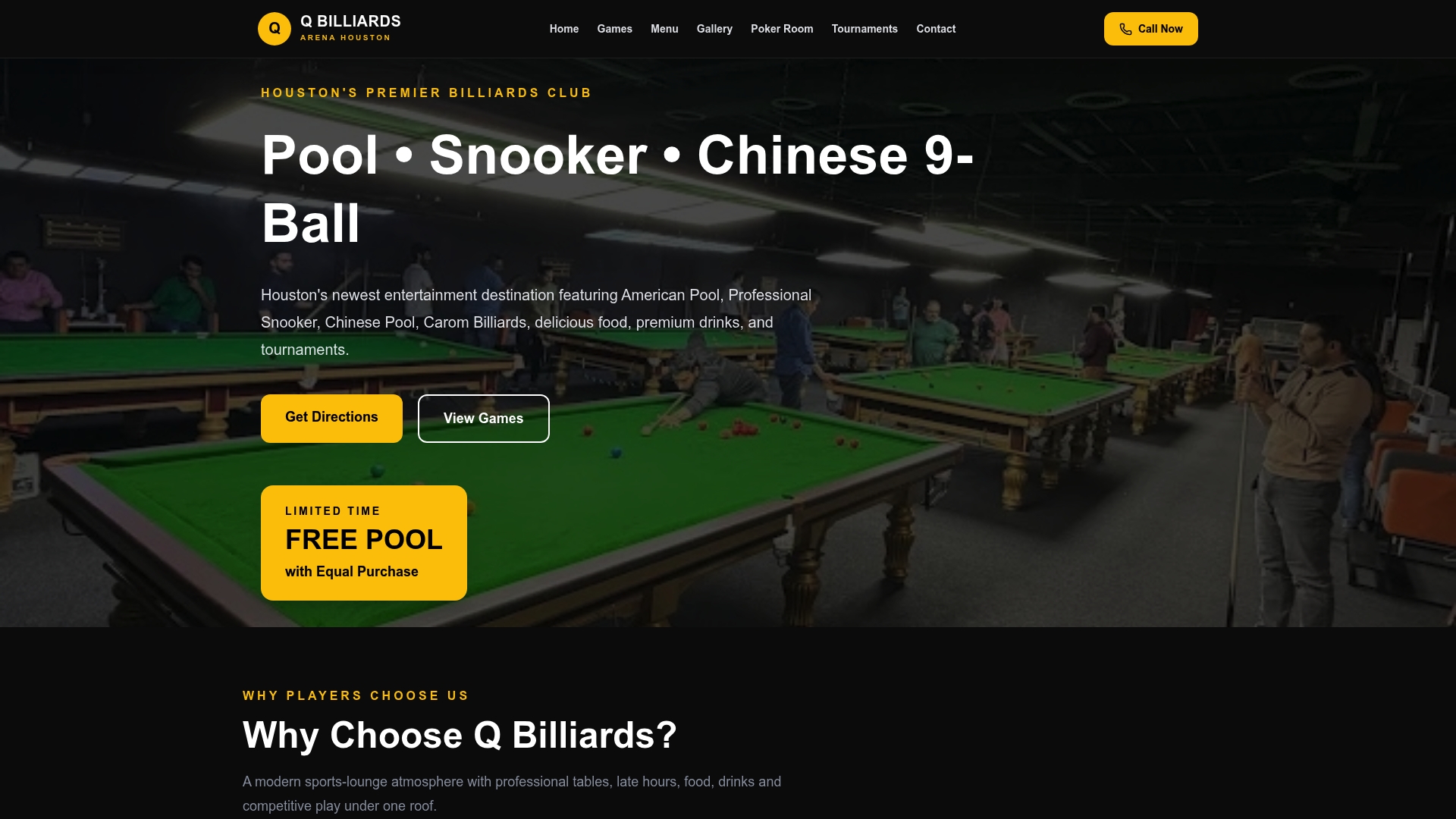
Q Billiards Arena runs 25 professional-grade tables across 11,000 square feet in Houston, with late hours that mean a bad session doesn't have to end just because the clock hit 9 p.m. That matters for drilling: key-ball run-outs and safety-to-breakout sequences take repetition, and a rushed 45-minute rental rarely gives you enough reps to feel the difference. Book a table by the hour through Games & Pricing, or step straight into competitive pressure at one of the weekly tournaments and league events, where the safety-under-70% rule actually gets tested against a real opponent instead of an empty rack. None of this requires joining anything long-term. Reserve a table on the venue's booking page whenever you want to run these drills yourself.
Frequently Asked Questions
What is the single most important 8 ball strategy for beginners? Plan your run backward from the 8-ball before you shoot your first ball. Identify your key ball and the shot before it so every pot you make sets up the next one instead of leaving you guessing.
How do I know when to play a safety instead of shooting? If your realistic chance of making the shot is below roughly 70%, a safety is usually the stronger play. Focus on distance, avoiding rails, and hiding the cue ball behind a blocker.
What's the difference between a key ball and an insurance ball? The key ball is the object ball that sets up your angle on the 8. An insurance ball is a spare, easy pot you keep in reserve in case your planned run-out sequence breaks down.
Should I always break as hard as possible in 8-ball? No.
How many shots ahead should I plan during a rack? Start with three-shot sequences if you're still developing table vision, then expand to five or more shots as your pattern recognition improves.
Sources
- Rules
- 8-Ball strategy — Dr. Dave Pool Info
- Pool Patterns in 8 Ball — The Pool Coach
- How to play 8-ball — WPA
Watching full run-out videos and pausing to predict the next three shots builds pattern recognition faster than reading alone.