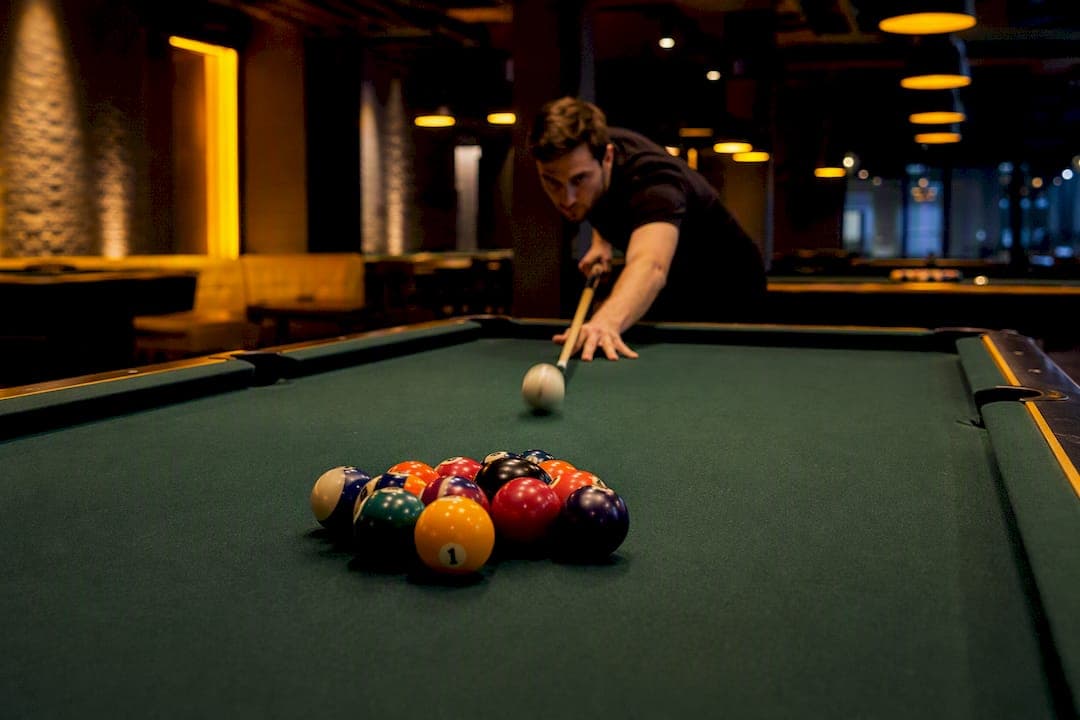
Nine-ball is won by legally pocketing the 9-ball, and the cue ball must strike the lowest-numbered ball on the table first on every single shot. Break rules require either a pocketed ball or a minimum number of balls driven to the rails, typically four under WPA rules. Most fouls, from scratches to hitting the wrong ball first, hand the incoming player ball-in-hand anywhere on the table.
TL;DR:
- Players must hit the lowest-numbered ball first on every shot, with fouls like scratches or wrong-ball contact resulting in ball-in-hand for the opponent.
- A legal break requires hitting the 1-ball first and pocketing a ball or driving at least four balls to the rails under WPA rules; pocketing the 9 on the break wins unless a scratch occurs.
- The push-out shot is only allowed immediately after a legal break, must be declared beforehand, and suspends ball-in-hand or wrong-ball contact rules during its execution.
- Off-table, the 1 through 8 balls are not respotted after being pocketed, only the 9 is reintroduced if pocketed during a foul or push-out, and many fouls result in ball-in-hand.
- Consistent procedural habits, especially declaring push-outs and confirming rack tightness, prevent most disputes and fouls common at league and tournament levels.
Table of Contents
- What Are the Basic 9 Ball Rules for Setup and Play?
- What Makes a Break Legal in 9 Ball?
- When and How Do You Use a Push-Out?
- What Counts as a Foul in 9 Ball, and What's the Penalty?
- How Does Play Continue and When Does the Game End?
- What Tournament Rules Should You Know Before Competing?
- What Do Referees Actually Watch for at Q Billiards Arena?
- Whose Turn Is It After a Foul or a Legal Shot?
- When Do Balls Get Spotted Back on the Table?
- Are Jump Shots and Massé Shots Legal in 9 Ball?
- How Do Combination Shots Work Legally in 9 Ball?
- What Other Fouls Trip Up Even Experienced Players?
- Where to Find the Official 9 Ball Rulebooks
- Why Most Rule Disputes Come Down to One Overlooked Detail
- Sources
What Are the Basic 9 Ball Rules for Setup and Play?
Nine-ball uses nine numbered object balls, one through nine, plus the cue ball. The only ball that matters for winning is the 9. Pocket it legally, at any point in the rack, on any shot, and the game ends in your favor. You don't even have to call it. Under WPA rules, shots in 9-ball don't need to be called the way they do in straight pool, so a lucky combination that drops the 9 counts just as much as a planned one.
The rack itself is diamond-shaped, tighter and smaller than the triangle used in 8-ball. The 1-ball sits at the apex on the foot spot, the 9-ball goes dead center in the diamond, and the rest fill in randomly around them. A loose rack is the single biggest cause of disputes at any pool hall, because a ball that doesn't scatter properly on the break changes the whole shape of the rack and can trigger an argument about re-racking. Tightness matters more than people think.
Before the balls even get racked, someone has to win the break. Most casual games use a coin flip or "loser breaks," but tournaments and serious league play use a lag: both players shoot a ball down table and back, and whoever's ball finishes closest to the near rail without touching a rail wins the choice of breaking. The cue ball starts anywhere behind the head string for the break shot itself.
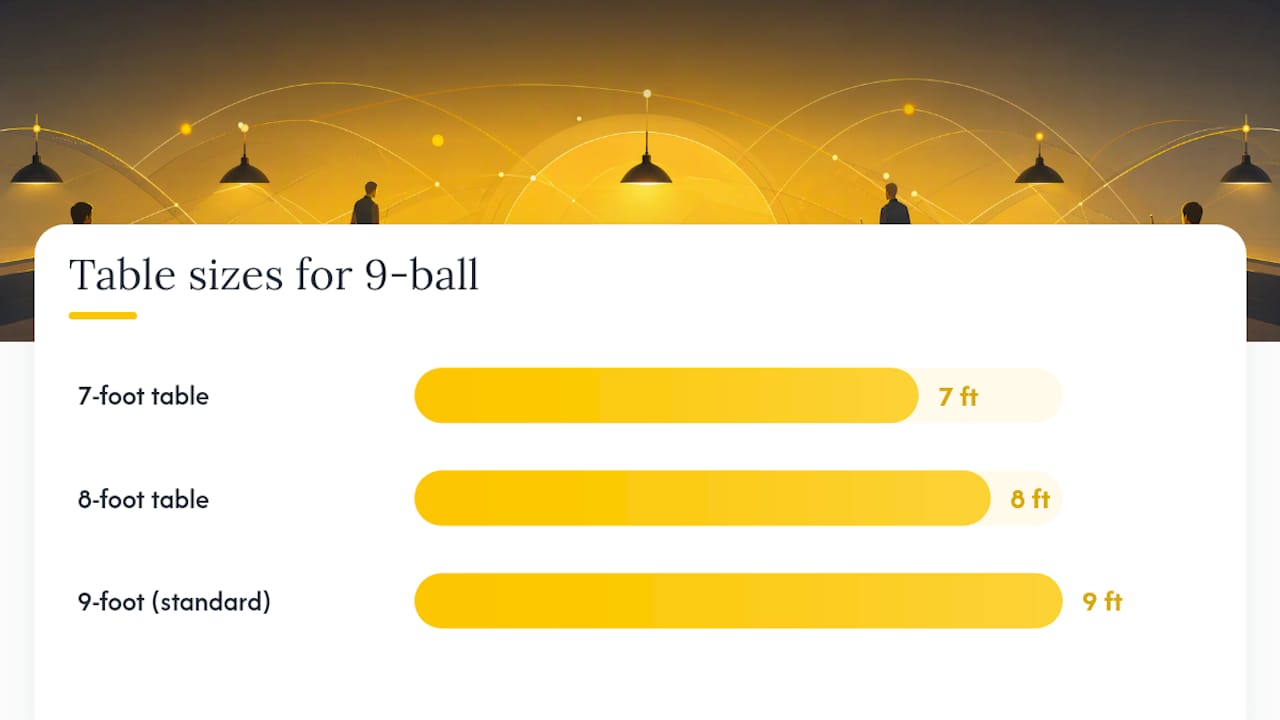
A few equipment basics matter too. Regulation 9-ball is typically played on 7 to 9 foot tables, with 9-foot tables standard for professional and tournament play. Before you break, run through this quick mental checklist:
- Confirm the rack is tight, with all balls touching and the 1 on the apex, 9 in the center
- Set the cue ball anywhere behind the head string
- Check that nobody's leaning on the table or blocking your line
- Know your league's specific break requirements, which vary, before you shoot
Get comfortable with the setup and you'll spend less time arguing about re-racks and more time actually playing. If you want a deeper walkthrough of the rack itself, the mechanics are covered step by step in Racking 9 Ball Right.
What Makes a Break Legal in 9 Ball?
A legal break in 9-ball requires the breaker to hit the 1-ball first, then either pocket at least one object ball or drive a minimum number of balls to the rails. Under WPA rules, that minimum is four object balls contacting one or more cushions. Some leagues loosen that to three.
If you pocket the 9-ball on the break, you win the rack outright, unless the cue ball also scratches on the same shot. Scratch on the break with the 9 down, and the 9 gets spotted back on the foot spot while your opponent picks up ball-in-hand. That single rule trips up more casual players than almost any other, because a hard break that pockets the 9 feels like a win right up until the cue ball follows it into the pocket.
Common break fouls include:
- Cue ball scratching into any pocket
- An object ball jumping completely off the table
- Failing to hit the 1-ball first
- Failing to pocket a ball or send the required number to the rails
Any of these results in a foul, and the incoming player gets ball-in-hand anywhere on the table. That's a significant swing in a game where the break sets up so much of what follows.
A legal break requires either a pocketed ball or a minimum number of balls driven to the rails, which is commonly four under WPA rules.
League play muddies this slightly. Some leagues let the breaker re-rack and break again after an illegal break, others give the opponent the choice of accepting the table as-is or re-racking themselves. The BCA's rule set tracks closely with WPA on this, but small variants exist from league to league, so check your specific rulebook before a tournament rather than assuming.
When and How Do You Use a Push-Out?
The push-out is a one-time option available only on the shot immediately following a legal break. You can push the cue ball anywhere on the table, without needing to hit any particular ball or send anything to a rail, as long as you tell your opponent you're doing it first.
That declaration isn't optional. If you push the cue ball around without announcing it, referees and opponents alike will treat it as a normal shot, meaning ordinary contact and rail rules apply. Fail to hit the lowest ball first on an undeclared push and you've just handed your opponent ball-in-hand for nothing, according to AimGeometry's breakdown of the push-out rule.
Here's how it plays out step by step:
- Immediately after a legal break, the breaker (or their opponent, depending on who's shooting) may declare a push-out before shooting.
- During the push-out, the wrong-ball-first rule and the no-rail requirement are both suspended. Every other foul, scratches, double hits, still applies normally.
- If the 9-ball drops during a push-out, it's spotted back on the foot spot rather than counting as a win.
- After the push-out, the opponent chooses whether to shoot from the new position or pass the table back to the original shooter.
Pro Tip: Use the push-out when the break leaves no clean shot on the lowest ball and no good safety either. Pushing the cue ball into a tough spot for your opponent turns a bad layout into a tactical weapon instead of a wasted turn.
Amateurs underuse this move constantly, either because they forget it exists or because they're too eager to just start shooting.
What Counts as a Foul in 9 Ball, and What's the Penalty?
Most fouls in 9-ball carry the penalty of ball-in-hand anywhere on the table for the incoming player. That single consequence covers a surprisingly long list of infractions, so it's worth knowing the full range rather than just the obvious ones.
Standard fouls include:
- Scratching the cue ball into a pocket
- Hitting a ball off the table entirely
- Contacting the wrong-numbered ball first
- Failing to send any ball to a rail after contact (when required)
- Double-hitting the cue ball with the tip
- Touching any ball with your hand, clothing, or cue outside a legal shot
- Playing a push shot (illegal contact where the tip stays on the cue ball too long)
- Shooting while balls are still moving
- Placing the cue ball incorrectly during ball-in-hand
- Shooting out of turn
- Taking too long on a shot under a timed format
When you get ball-in-hand, you can place the cue ball anywhere on the table, but you have to do it without touching or disturbing any object ball while setting up. Nudge a ball while positioning, and you've committed a foul of your own before you even take the shot.
Under most rule sets, committing three consecutive fouls in the same game without a legal shot in between results in loss of the game. A warning is generally given after the second foul.
That three-foul rule doesn't apply uniformly everywhere. Some world championship events waive it, and plenty of local leagues use their own variation on when the warning kicks in. Serious misconduct, arguing with a referee, deliberately fouling, unsportsmanlike behavior, can result in forfeiture of the game or match entirely at a referee's discretion, independent of the standard foul count.
How Does Play Continue and When Does the Game End?
A shooter who legally pockets any ball keeps the table and keeps shooting. There's no requirement to call your shot or your pocket in 9-ball, so a legal continuation just means you hit the lowest-numbered ball first and something goes in without a foul.
The 9-ball gets special treatment when it comes to spotting. If it's pocketed as the result of a foul, or during a push-out, it goes right back on the foot spot rather than staying pocketed, and play continues with the incoming player getting ball-in-hand. No other object ball on the table gets this treatment.
- Object balls knocked off the table entirely are a foul, and they stay off. They are not respotted.
- Only the 9-ball is ever placed back on the table after being pocketed illegally.
- If the foot spot is occupied when the 9 needs to be spotted, it's placed on the head spot instead, per most rule sets.
The game ends the moment the 9-ball is legally pocketed, on the break, mid-rack, or as the final ball standing. It also ends if a player commits a serious infraction that a referee rules as forfeiture, or loses via the three-consecutive-foul rule where that variant applies. Outside of those two paths, the rack simply continues, shot after shot, until someone sinks the 9 clean.
What Tournament Rules Should You Know Before Competing?
Tournament 9-ball adds a handful of procedural rules that casual play often skips entirely, and not knowing them is a fast way to lose a rack you should have won.
- Lag for the break. Both players shoot simultaneously from behind the head string, and whoever's ball rolls back closest to the rail without touching it earns the choice to break or defer. After the first rack, breaks typically alternate regardless of who wins each game.
- Shot clock. Many leagues enforce a timer per shot, often around a minute, with a warning before time expires, according to UPA's tournament rules. Running out of time counts as a foul resulting in ball-in-hand for your opponent.
- Stalemate handling. If a rack reaches a position where neither player can make progress (both are effectively frozen out), most events have the original breaker re-rack and break again rather than let the stalemate drag on.
- Table etiquette. Inspect the rack visually before the break, but don't touch it. Announce a push-out clearly and audibly. If you're "on two" for consecutive fouls, both players should acknowledge it before the next shot to avoid a dispute later.
None of these rules are universal across every pool room, which is exactly why reading your specific league's rulebook before an event matters more than assuming WPA standards apply everywhere.
What Do Referees Actually Watch for at Q Billiards Arena?
Working the floor at Q Billiards Arena means watching the same handful of moments trip players up, night after night. Illegal breaks are the most common: someone hits the 1-ball at an angle, sends three balls to the rail instead of the required four, and doesn't realize it's a foul until staff calls it. Push-out declarations get missed almost as often, a player pushes the cue ball soft and safe without saying a word, and now it's just a regular shot that happened to violate the wrong-ball-first rule.
Staff at the venue watch for a few specific things when calling fouls: whether the cue ball's first contact was actually the lowest ball on the table, whether a ball genuinely reached a rail after contact, and whether ball-in-hand placement disturbed anything on the table before the shot. When a scratch or a foul 9-ball needs spotting, our floor staff handles it the same way every time, foot spot first, head spot only if the foot spot's occupied, so there's no ambiguity about placement.
The biggest takeaway for players stepping into league night: check the house rules before your first rack, practice declaring a push-out out loud until it's automatic, and rack tight every time. For hands-on racking mechanics, Racking 9 Ball Right walks through the exact steps that prevent most re-rack disputes before they start.
Whose Turn Is It After a Foul or a Legal Shot?
Turn order in 9-ball is simple in theory and where most disputes actually happen in practice. A legal shot, one that pockets a ball without a foul, keeps the table with the same shooter. Miss without fouling, and the turn passes to your opponent, who plays the balls exactly where they lie.
A foul flips the situation further in the incoming player's favor. Instead of just inheriting the table, that player gets ball-in-hand, meaning they can place the cue ball anywhere and shoot from the most advantageous spot available, not just where the previous shooter left it. This is what makes fouls so costly in 9-ball compared to games like straight pool: a single mistake doesn't just end your turn, it hands your opponent a free tactical reset.
There's no rule requiring a player to shoot immediately after gaining ball-in-hand. Take your time setting up, since a rushed placement that nudges an object ball is itself a foul, and now the advantage flips right back. After any shot, legal or not, play always alternates according to the outcome: legal pocket means you continue, a miss or foul means the table passes. The only exception is the push-out, where the opponent gets to choose whether to shoot immediately or pass the table back, rather than the outcome deciding it automatically.
When Do Balls Get Spotted Back on the Table?
Spotting in 9-ball is far more limited than players coming from 8-ball or straight pool tend to expect. The 9-ball is the only ball ever respotted during normal play, and it only happens under two specific conditions: it's pocketed during a foul, or it's pocketed during a declared push-out. In either case, it goes back on the foot spot, or the head spot if the foot spot is occupied, and play resumes with whatever penalty the situation calls for.
Every other object ball on the table follows a much harsher rule. If a 1 through 8 ball gets knocked completely off the table, that's a foul, and the ball stays off. It does not get placed back on the table, spotted, or reintroduced in any way for the rest of the rack. The BCA's official rule PDF is explicit on this point, and it's one of the more common misunderstandings among players who learned 8-ball first, where jumped balls sometimes get spotted depending on house rules.
There's no scenario in standard 9-ball where a pocketed object ball other than the 9 comes back into play. Once a 1 through 8 ball is legally pocketed, it's gone for the rest of the rack, full stop. That asymmetry, where the 9 gets a second life and nothing else does, is central to how the game's endgame tension works.
Are Jump Shots and Massé Shots Legal in 9 Ball?
Jump shots and massé shots are both legal in 9-ball, provided the contact with the cue ball stays within normal shot rules. There's no blanket prohibition against elevating your cue to hop over a blocking ball, and plenty of skilled players use a jump shot specifically to get a clean look at the lowest-numbered ball when a direct path doesn't exist.
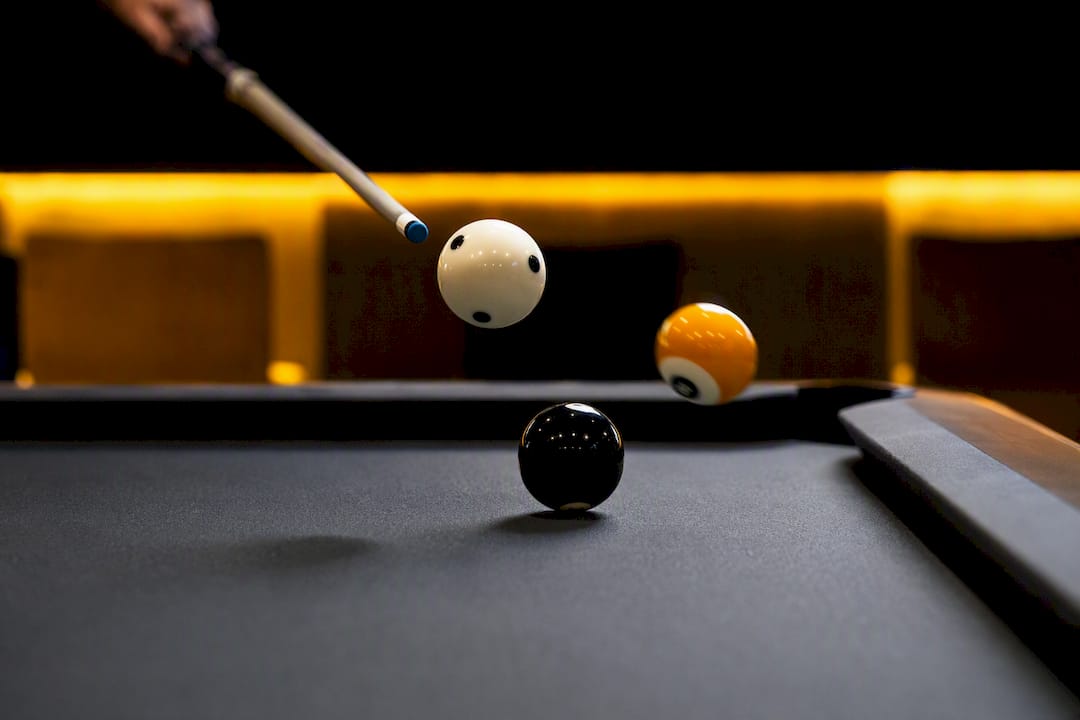
The catch is in how the shot gets executed, not whether it's attempted. A legal jump or massé still requires a single, clean strike of the cue ball with the tip. Drag the tip across the cue ball for too long during an elevated stroke and it becomes a foul, the same double-hit or push-shot violation that applies to any other kind of shot. The elevation of the cue doesn't grant any exception to that rule.
Some venues and leagues do restrict how far you can elevate the cue for safety reasons, since a steep jump shot can damage cloth if struck too hard or miscued. That's a house rule, not a WPA or BCA rule, so it varies by location. If you're planning to practice jump shots regularly, it's worth asking venue staff about their specific policy before you start firing balls into the air. Beyond that local caveat, the core requirement stays the same as any other shot: hit the lowest-numbered ball first, keep the stroke clean, and don't let the tip linger on the cue ball.
How Do Combination Shots Work Legally in 9 Ball?
A combination shot is legal in 9-ball as long as the cue ball's first contact is the lowest-numbered object ball remaining on the table, regardless of which ball actually ends up in the pocket. If the 3-ball is lowest and you use it to knock the 9-ball into a pocket, that's a completely legal, game-winning shot, provided the cue ball hit the 3 first.
This is where a lot of newer players get confused, because it feels counterintuitive that you can "win" by pocketing the 9 through a chain of contact rather than a direct hit. The rule doesn't care about the path the object balls take after that first contact. It only cares about what the cue ball touched first. Hit the 3-ball first, watch it clip the 6, which taps the 9 into the corner, and you've won the rack legally.
Where combinations go wrong is almost always the same mistake: a player lines up a combo, gets excited about the layout, and clips the wrong ball first out of poor aim or a misjudged angle. That's a standard wrong-ball-first foul, no different from missing a direct shot on the lowest ball, and it hands the table to your opponent with ball-in-hand. There's no special leniency for combination attempts just because they're harder to execute. The lowest ball first rule applies with zero exceptions, whether you're shooting directly at it or using it as the first domino in a chain.
What Other Fouls Trip Up Even Experienced Players?
Beyond the fouls covered under general penalties, a few specific infractions catch even experienced players off guard because they're easy to commit without realizing it in the moment.
Failing to drive a ball to a rail after legal contact is one of the most misunderstood. If your cue ball strikes the lowest-numbered ball, but no ball, cue ball included, touches a rail cushion afterward, and nothing was pocketed, that's a foul. It doesn't matter that you hit the correct ball first. The rail requirement kicks in on every shot, not just the break, unless a ball was pocketed on that same shot.
A related and often-missed foul is contact interference, brushing an object ball with your hand, bridge, or clothing while lining up a shot, even accidentally. Referees at most venues will call this even when the touch clearly didn't change the ball's position, because the rule doesn't require proof of an advantage gained, only proof of contact.
Frozen-ball situations create their own gray area. When the cue ball rests directly against another ball, players sometimes struggle to tell whether their tip contact counted as hitting that frozen ball or shooting cleanly past it. League rules generally give some benefit of the doubt to the shooter in genuinely ambiguous frozen-ball situations, but a referee's call in the moment is typically final.
Slow play, taking excessive time between shots without a formal shot clock in place, can also draw a foul call at a referee's discretion in tournament settings, even without a strict timer running.
Where to Find the Official 9 Ball Rulebooks
For the exact wording your league or tournament follows, go straight to the source rather than relying on secondhand summaries. The WPA Rules PDF covers the full international standard, including racking, breaking, push-outs, and fouls. Billiards.com's BCA rules page tracks the same core rules with notes on American league conventions. League-specific pages, including UPA's rulebook, spell out shot clocks and procedural details that WPA leaves to local discretion.
Pick whichever rule set governs your event and stick to it for the night. Mixing rule sets mid-match, especially around break requirements and the three-foul rule, is the fastest way to end up in an argument nobody can settle fairly.
Why Most Rule Disputes Come Down to One Overlooked Detail
The WPA and BCA rulebooks agree on almost everything that matters. Where players actually lose racks they should have won isn't in the big rules, it's in the small procedural habits nobody bothers to practice: declaring a push-out out loud, checking a rack's tightness before the break, confirming which foul count you're on before the third one costs you the game.
Conventional advice treats 9-ball rules as something you memorize once and never revisit. That's backwards. The rules that trip up league players aren't obscure, they're the ones people assume they already know and stop double-checking. Ball-in-hand placement is a good example: plenty of players place the cue ball and immediately start lining up a shot without confirming they didn't nudge an object ball in the process.
If you're serious about tightening up your game, prioritize the push-out and the legal break requirement first. Those two rules generate more disputes at the table than every other foul combined, and they're also the two most players get wrong simply from not practicing them deliberately.
— Q
Ready to put these rules into practice? Q Billiards Arena in Houston has 25 professional-grade tables set up for exactly this kind of play, whether you're running push-out drills solo or testing your break under real tournament conditions during a league night. Grab a table, work through the calls yourself, and check out Games & Pricing to book your session.
Sources
- WPA Rules (2025.09.15) — 9-Ball section
- 9-Ball Rules (BCA PDF)
- AimGeometry — 9-ball push-out rule and strategy