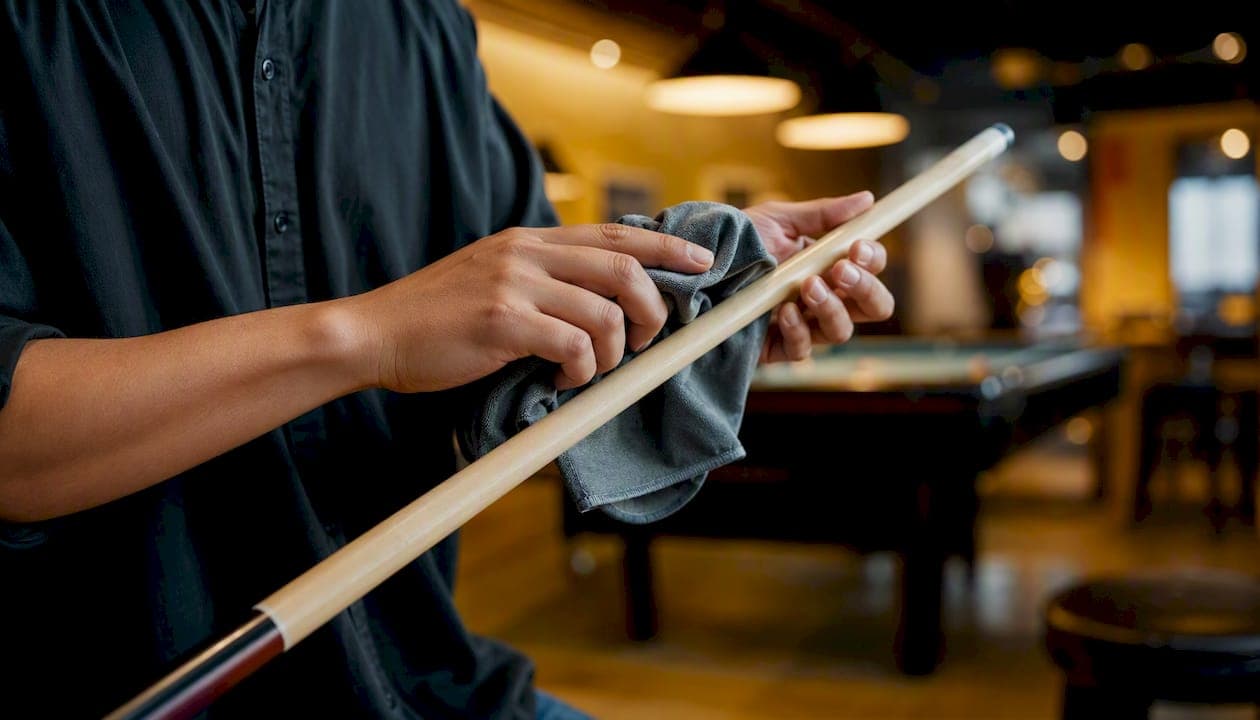
Wipe your shaft with a clean microfiber cloth after every session. If you play on maple, add a weekly deeper clean and a monthly conditioning pass. If you play on carbon fiber or a modern composite, a slightly damp microfiber is usually all you need. That's the whole system in one sentence.
Three things to do right now:
- Grab a lint-free microfiber cloth and wipe the shaft from tip to joint after your next session
- For maple: pick up a dedicated shaft cleaner (Q‑Wiz, Magic Shaft Cleaner, or Cue Silk) for your next weekly clean
- For carbon fiber: order Predator REVO cleaning wipes or keep a damp microfiber on hand; skip the conditioners entirely
The fastest way to ruin a cue shaft is to reach for the wrong product. Furniture polish, WD-40, and lemon oil all feel like they should work — and all of them cause long-term damage. Stick to products made specifically for cue shafts, and your stick will play like new for years.
Key Takeaways
Consistent daily wiping and material-matched products are what keep a cue shaft playing well — the routine matters more than any single cleaner or conditioner.
| Point | Details |
|---|---|
| Daily wipe is non-negotiable | Use a lint-free microfiber after every session to prevent chalk and oil from bonding to the shaft. |
| Maple needs more care than carbon fiber | Wood shafts require weekly deep cleaning and monthly oil-free conditioning; carbon fiber needs only a damp wipe. |
| Match the product to the material | Use maple-safe, oil-free products (Cue Silk, Cue Doctor, Renaissance Wax) on wood; use manufacturer wipes (Predator REVO) on carbon/composite. |
| Avoid household products entirely | WD-40, furniture polish, lemon oil, and silicone sprays all damage shaft finishes and cause long-term tackiness. |
| Qbilliardshtx for in-person play | Players who maintain their cues and want professional-grade tables can book sessions and tournaments at Qbilliardshtx in Houston. |
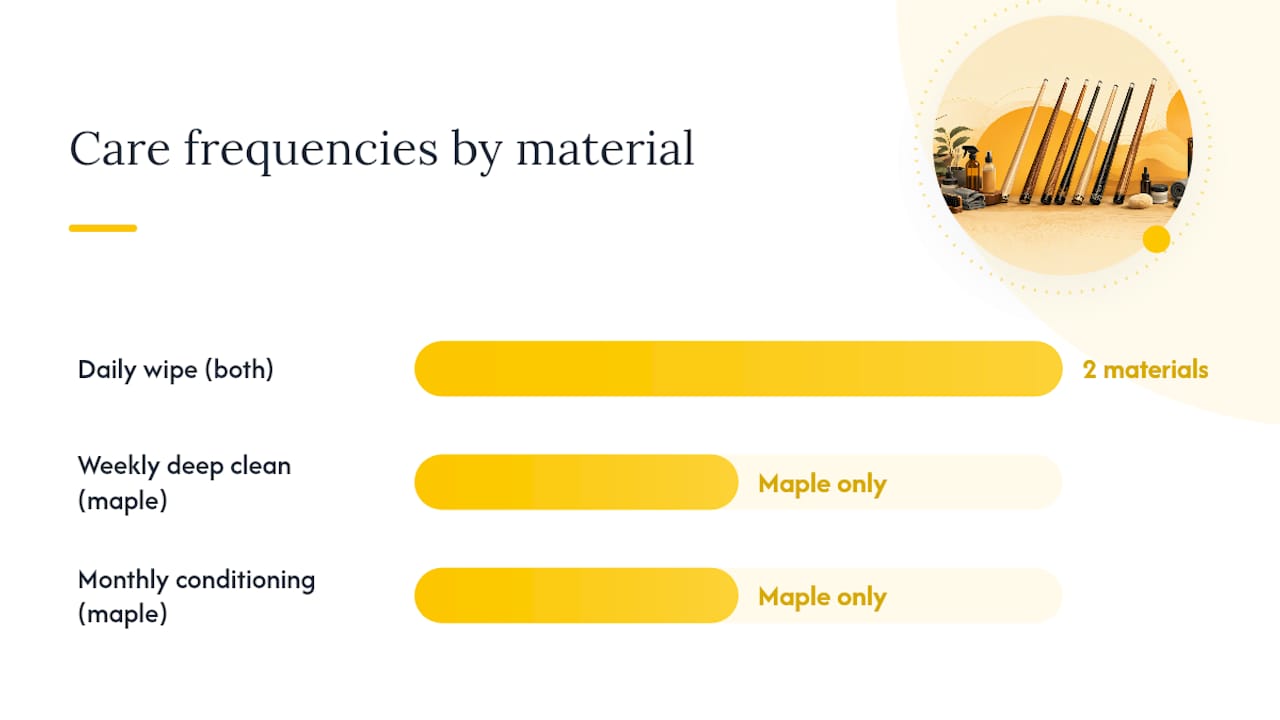
Table of Contents
- How cue shaft cleaning fits into your daily post-play routine
- Deep cleaning a maple or wood shaft the right way
- Cleaning carbon-fiber and composite shafts
- Which cleaners and conditioners should you buy?
- What not to use on your cue shaft
- How often to clean, condition, and store your cue
- Cleaning the joint, ferrule, and threads
- Practitioner-level tips from experienced players and techs
- When to stop DIY and call a professional
- Why consistent maintenance matters more than any single product
- Play better at Qbilliardshtx while your cue is at its best
- Sources
How cue shaft cleaning fits into your daily post-play routine
A 60-second wipe after every session prevents the chalk, skin oil, and sweat that accumulate during play from bonding to the shaft surface. Once that residue hardens, you need a deeper clean. Skip the daily wipe enough times and you're looking at a sticky, slow shaft that throws off your bridge hand.
Here's the routine:
- Lay the cue flat or hold it horizontally so you're not wiping debris toward the tip.
- Fold a clean microfiber cloth into quarters — this gives you a fresh surface with each pass.
- Wipe from the ferrule end toward the joint in smooth, even strokes. Never scrub in circles; that pushes chalk into the grain on maple shafts.
- Feel the shaft with your bridge hand after wiping. It should glide without any drag or tackiness.
- Set the cue aside in a case or upright rack immediately. Never leave it on a table surface.
Microfiber cloths are the right tool for daily maintenance because they lift oils and chalk without scratching the finish. Paper towels are abrasive enough to leave micro-scratches on maple over time, and cotton rags often leave lint behind. Wash your microfiber cloths separately in cold water with no fabric softener — softener coats the fibers and kills their ability to pick up oils.
Pro Tip: Run your bridge hand slowly along the full length of the shaft after wiping. Any spot that drags or feels slightly sticky means residue is still there. That "slow" feeling during play is the same signal — it's not your stroke, it's your shaft telling you it needs attention.
Deep cleaning a maple or wood shaft the right way
Maple is porous. That's both its strength and its vulnerability. The grain gives you a natural, responsive feel, but it also traps chalk and body oil in ways that a simple wipe won't fix. For frequent players, a regular deep clean keeps the shaft playing consistently. Here's the full procedure:
- Inspect first. Roll the shaft slowly on a flat table and look for any warping. Check the ferrule for cracks or discoloration. Don't proceed with cleaning if the shaft has visible structural damage.
- Initial wipe. Use a dry microfiber to remove loose chalk and surface debris before introducing any liquid.
- Apply shaft cleaner. Put a small amount of Q‑Wiz, Magic Shaft Cleaner, or Sil Kleen on a clean cloth — not directly on the shaft. Wipe in long strokes from ferrule to joint. These products are formulated specifically for pool cue finishes and won't strip the wood.
- Isopropyl option for heavy buildup. A microfiber cloth dampened (not wet) with 70% isopropyl alcohol can cut through stubborn oil and chalk deposits. Wipe, then immediately follow with a dry cloth. Never let alcohol sit on the shaft.
- Steel wool if needed. If the shaft still feels rough or has raised grain, fold a small piece of 0000 steel wool and make 3–5 light passes along the grain. This is a once-in-a-while step, not a weekly one. Wipe away all steel wool dust with a dry cloth before conditioning.
- Condition. Apply a thin layer of a maple-safe, oil-free conditioner — Renaissance Wax, Cue Silk, or Cue Doctor all work well here. A little goes a long way. Let it sit for 30–60 seconds.
- Buff. Use a clean, dry microfiber to buff the shaft in long strokes until no residue remains. The shaft should feel smooth and slightly slick, not tacky.
Products that are safe for maple: Renaissance Wax, Cue Silk, Cue Doctor, Q‑Wiz (cleaning side), Magic Shaft Cleaner, Sil Kleen, 0000 steel wool (used sparingly).
Products to avoid on maple: Silicone sprays, lanolin-based conditioners, lemon oil, furniture polish, any petroleum distillate product.
Over-cleaning is a real problem. Using 0000 steel wool every week, or applying conditioner in thick coats, gradually removes the shaft's finish. A shaft that's been over-sanded feels chalky and loses its natural glide. If you notice the wood looks dull or the grain is more visible than it used to be, back off the abrasives and let the conditioner do the work for a few sessions.
Cleaning carbon-fiber and composite shafts
Carbon-fiber shafts are non-porous, which means they don't absorb oils or chalk the way maple does. That's a genuine maintenance advantage. You don't need conditioners, you don't need steel wool, and you definitely don't need to burnish. The routine for carbon fiber is intentionally minimal.
Predator's own guidance for the REVO shaft recommends using purpose-made cleaning wipes and avoiding alcohol-based solvents that could affect the manufacturer's finish. When in doubt, follow the manufacturer's instructions for your specific shaft model — they know the surface chemistry better than any general guide.
Here's what to do:
- After each session, wipe the shaft with a dry or very slightly damp microfiber cloth.
- For heavier buildup, use Predator REVO cleaning wipes or a microfiber dampened with plain water. Wipe from ferrule to joint.
- Dry immediately with a second clean cloth.
- Inspect the surface for any chalk buildup near the ferrule. A gentle second pass with a damp cloth handles it.
Do:
- Use Predator REVO wipes or a lightly damp microfiber for regular cleaning
- Dry the shaft completely after any damp wipe
- Store in a case away from temperature extremes
Don't:
- Apply wood conditioners, Renaissance Wax, or oil-based products to carbon fiber
- Burnish or use steel wool on any composite surface
- Use heavy solvents or alcohol-based cleaners unless the manufacturer explicitly permits them
- Assume a carbon shaft needs the same conditioning schedule as maple — it doesn't
Which cleaners and conditioners should you buy?
The right product depends entirely on your shaft material. Here's a side-by-side look at the main options:
Best for maple: Cue Silk and Cue Doctor are the cleanest options for regular conditioning — both are oil-free and won't soften the wood over time. Renaissance Wax adds a durable protective layer that holds up across multiple sessions.
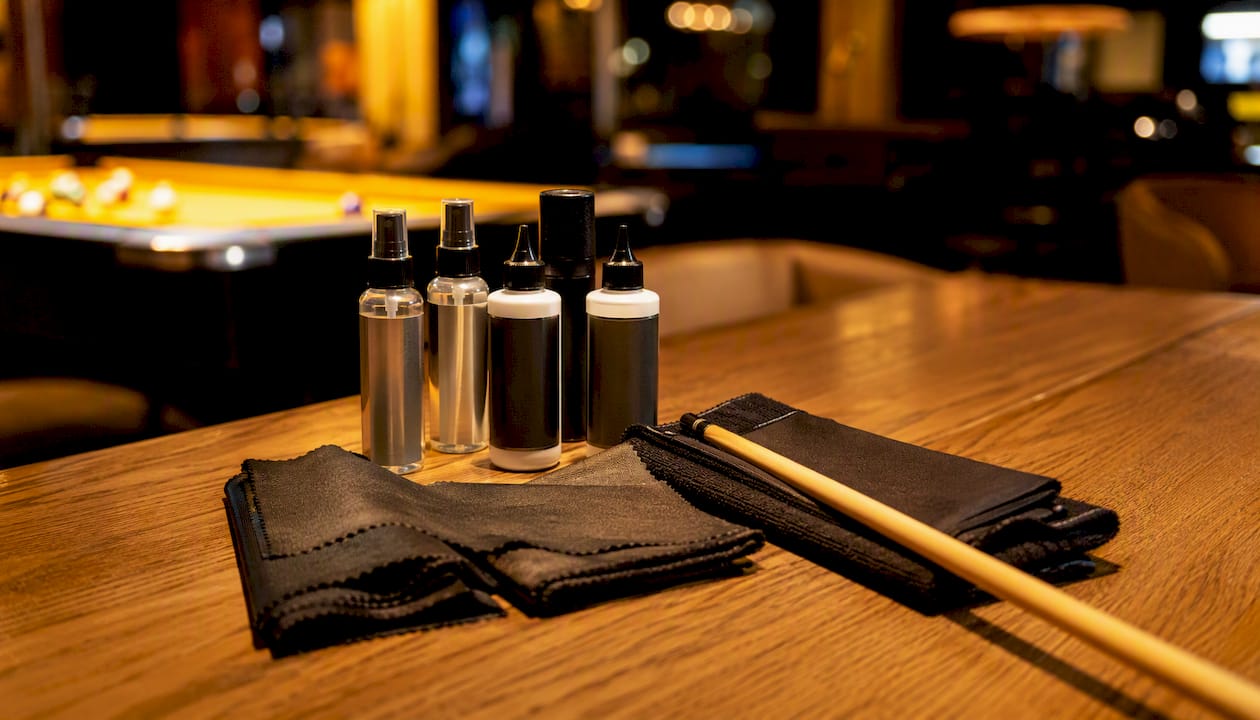
Best for carbon/composite: Predator REVO wipes are the most convenient and manufacturer-aligned choice. A clean damp microfiber costs nothing and works just as well for routine maintenance.
Best budget pick: Microfiber cloths handle daily maintenance for any shaft type and cost almost nothing. A pack of lint-free cloths and a bottle of Q‑Wiz covers most players' needs for months.
When reading ingredient labels, avoid anything listing silicone, lanolin, petroleum distillates, or mineral oil. Those ingredients feel good on first application but cause long-term damage to wood finishes and attract more chalk buildup over time.
What not to use on your cue shaft
Some of the most common mistakes come from reaching for household products that seem like they should work.
The rule is simple: if it wasn't made for a cue shaft, don't put it on one. Household cleaning and polishing products are formulated for furniture, floors, and metal — not for the specific finish chemistry of a billiards shaft.
Products that damage shafts:
- WD-40: Penetrates wood grain, softens the finish, and leaves a petroleum residue that attracts chalk. One application can take weeks to fully clear.
- Furniture polish (Pledge and similar): Contains silicone and waxes that build up on the shaft surface, creating a sticky layer that ruins your bridge feel.
- Lemon oil: Marketed as a wood conditioner, but it softens maple grain over time and leaves an oily residue that's hard to remove.
- Household silicone sprays: Create an immediate slick feel that players mistake for clean — but the silicone bonds to the finish and eventually causes tackiness.
- Mineral oil and lanolin: Both penetrate porous maple and soften the wood structure. A shaft treated with lanolin repeatedly will feel mushy and lose its natural snap.
- Paper towels: Abrasive enough to leave micro-scratches on finished maple with regular use.
Common technique mistakes are just as damaging. Soaking a cloth until it's wet (rather than damp) introduces moisture that can raise the grain on maple or seep into the joint. Over-sanding with steel wool removes finish permanently. And scrubbing in circles, rather than wiping along the grain, pushes chalk deeper into the wood rather than lifting it.
How often to clean, condition, and store your cue
Maintenance frequency depends on how often you play. Here's a practical schedule based on play intensity:
After every session:
- Wipe the full shaft with a dry microfiber cloth
- Wipe down the butt and wrap area
- Store in a case or upright rack
Weekly (frequent players — multiple sessions per week):
- Full deep clean with Q‑Wiz, Magic Shaft Cleaner, or a damp isopropyl cloth
- Inspect the tip for mushrooming or wear
- Check the joint for chalk or debris
Monthly (maple shafts):
- Apply a thin coat of Cue Silk, Cue Doctor, or Renaissance Wax
- Buff to a smooth finish
- Inspect the ferrule for micro-cracks
Quarterly (heavy players and tournament participants):
- Full joint inspection and thread cleaning
- Tip replacement evaluation
- Consider a professional inspection if the shaft has been playing differently
Humidity swings are the main cause of warping in maple shafts. A cue stored in a car trunk through a Texas summer will warp. A hard case with a desiccant pack handles most environments.
For storage longer than 30 days:
- Deep clean and condition the shaft before putting it away
- Prep the tip (shape and scuff if needed)
- Add a desiccant pack inside the case
- Store horizontally or vertically in a stable, climate-controlled location — never leaning against a wall at an angle
Cleaning the joint, ferrule, and threads
The joint is the part most players ignore until something goes wrong. A dirty joint causes wobble, cross-threading, and premature wear on both the pin and the receiver.
- Unscrew the shaft from the butt completely.
- Use a soft-bristle brush (a clean toothbrush works) to sweep chalk and debris from the threads on both sides.
- Follow with a short burst of compressed air to clear any remaining particles from the pin receiver.
- Inspect the threads visually. Any flattened or crossed threads mean the joint needs professional attention before the next session.
- Apply a very thin coat of beeswax or a dedicated joint protector to the male pin only. This lubricates the connection without attracting dirt the way oil-based lubricants do.
- Reassemble slowly and hand-tighten only — never force the joint.
For the ferrule, wipe with a damp cloth and inspect for hairline cracks, especially around the base where it meets the shaft. Chalk stains on ivory or white ferrules respond to a cotton swab with a tiny amount of isopropyl alcohol — test a small area first and wipe dry immediately.
A cracked ferrule is not a DIY repair. If you see a crack running along the ferrule or notice the tip sitting at a slight angle, stop playing with that cue and take it to a technician. Playing through a cracked ferrule accelerates the damage and can split the ferrule entirely, which is a more expensive fix.
Practitioner-level tips from experienced players and techs
The difference between a clean shaft and a well-maintained shaft comes down to a few habits most players skip.
Testing feel after cleaning: After any cleaning session, run your bridge hand slowly along the full shaft length. Then make a few practice strokes. The shaft should feel neutral — not slick enough to feel coated, not rough enough to drag. If it feels slightly tacky after conditioning, you used too much product. Buff again with a dry cloth.
- 0000 steel wool technique: Fold the steel wool into a small pad and make passes with the grain, not across it. Three to five light passes is usually enough to knock down raised grain. More than that and you're removing finish. Always follow steel wool with conditioning — never leave a shaft bare after abrading it.
- Product layering: Clean first, then condition. Never apply conditioner over a dirty shaft — it seals the chalk and oil in rather than lifting it. The sequence is always: clean → dry → condition → buff.
- Burnishing for maple: After conditioning, some techs do a final burnish by wrapping a clean leather or denim patch around the shaft and rubbing briskly. The friction closes the grain slightly and gives a smoother, faster feel. This works on maple only — never on carbon fiber.
- Frequency calibration: If your shaft feels fine after a session, the daily wipe is still worth doing. Residue that you can't feel yet is still there. The wipe takes 30 seconds and prevents the buildup that makes weekly cleans harder.
Pro Tip: Keep a dedicated cleaning cloth in your cue case at all times. Players who have to hunt for a cloth skip the post-session wipe. The cloth being right there removes the friction from the habit.
When to stop DIY and call a professional
Most maintenance issues respond to the routines above. A few don't.
Signs that a shaft needs professional service:
- Visible warping: Roll the shaft on a flat table. Any wobble or arc means the wood has warped. Conditioning won't fix this.
- Persistent tackiness after a full deep clean: If the shaft still drags after cleaning with isopropyl and conditioning, the finish may be compromised or contaminated with a product that bonded to it.
- Cracked ferrule: Any visible crack, even hairline, requires a ferrule replacement by a technician.
- Cross-threaded joint: If the shaft doesn't seat smoothly when assembling, stop. Forcing it strips both sides of the joint.
- Severe finish damage: Deep gouges, large areas of missing finish, or a shaft that has been sanded through to bare wood needs professional refinishing, not more conditioning.
Replacement vs. repair: A professional refinish typically costs less than a new shaft, but not always. If the shaft is warped beyond a certain degree, or if the wood has been damaged by moisture or the wrong products, refinishing won't restore playability. A good technician will tell you honestly which situation you're in. Bring the full cue, note the shaft material and age, and describe exactly what products you've used — that information helps the tech diagnose faster.
Before contacting a tech, note the shaft material (maple, carbon fiber, composite), the approximate age of the cue, what cleaning products you've used, and what the shaft feels or looks like now. That context cuts the diagnostic conversation in half.
Why consistent maintenance matters more than any single product
Here's the honest take from the floor at Qbilliardshtx: the players whose cues consistently play well aren't using the most expensive products. They're the ones who wipe down after every session without thinking about it. The habit is the maintenance plan.
The product debates — Renaissance Wax vs. Cue Doctor, Q‑Wiz vs. Cue Silk — matter at the margins. What matters more is whether you're wiping after every session, whether you're conditioning monthly, and whether you're storing the cue in a stable environment. A $15 bottle of Cue Silk used consistently beats a $40 product used twice a year.
The other thing worth saying: carbon-fiber shafts have changed the maintenance conversation significantly. Players switching from maple to a composite shaft sometimes over-maintain it out of habit, applying conditioners and burnishing a surface that doesn't need it. The carbon fiber guidance is genuinely minimal — a damp wipe and a dry cloth. Trusting that simplicity is harder than it sounds.
At Qbilliardshtx, staff check the professional-grade tables and house cues regularly, and the same principle applies: consistent light maintenance prevents the kind of damage that takes a cue out of rotation. If you're playing in tournaments or league events, your cue's condition directly affects your game. A shaft that drags costs you shots you shouldn't be missing.
Play better at Qbilliardshtx while your cue is at its best

Qbilliardshtx is Houston's dedicated billiards arena, with 25 professional-grade tables across American pool, snooker, and Chinese 9-ball. If you've just put your cue through a proper cleaning routine and want to put it to work, this is the place. The venue runs weekly tournaments for players at every level, with late-night hours and a full food and drink menu on-site. No membership required — just show up, rent a table, and play. Check games and pricing and book your next session at Qbilliardshtx.
Sources
- Pool Cue Maintenance: Professional Care Guide | Pool Hall Pros
- How To Properly Do Pool Cue Maintenance - Pearson Cues
- Best way to clean and maintain a wood shaft - Cuejitsu Pool Lessons
- Pool Cue Maintenance Guide: How to Care for Your Cue | HDMPool
- How to Clean a Pool Cue | J Flowers Cues