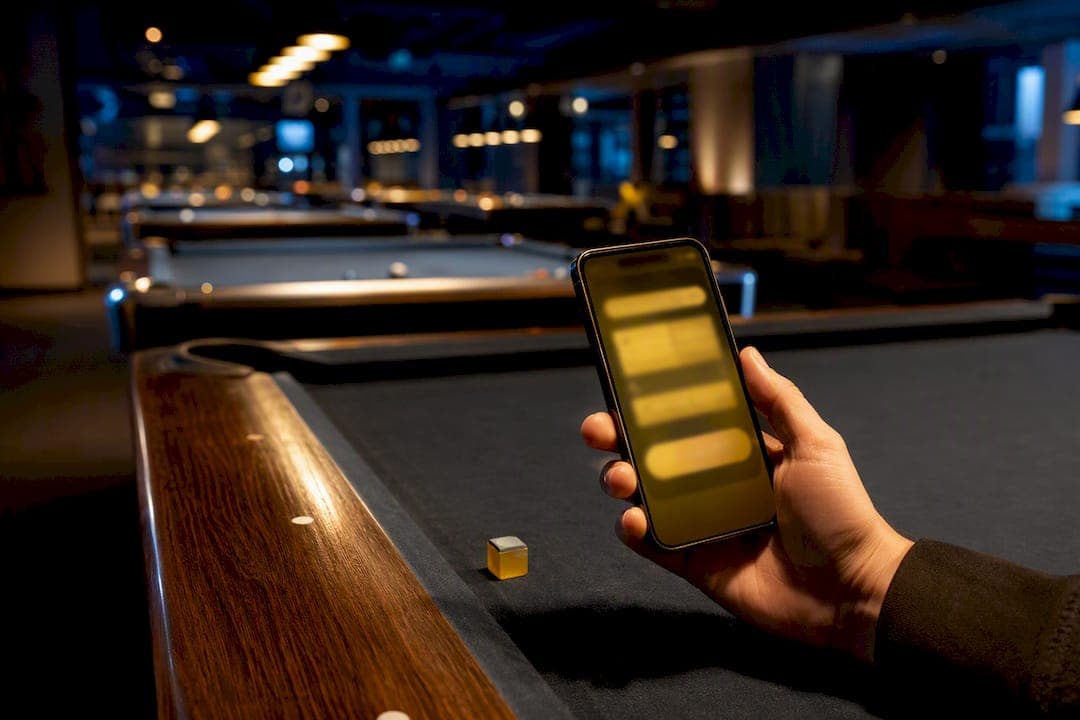
The fastest way to reserve a pool table is through a venue's online booking widget or app, which locks in your slot in under two minutes. A phone call works nearly as well if you need a same-day confirmation. Whichever route you pick, ask about the cancellation policy and grace period before you hang up or click confirm, and if you're bringing a group of ten or more, request a private room or event booking instead of a standard table.
TL;DR:
- Booking online or via app is the fastest way, typically locking in a table within two minutes, but check for cancellation policies and grace periods upfront.
- Private lounges and members-only rooms often require app-based access and are better suited for larger groups or events, usually costing less than walk-in rates if reserved in advance.
- Reservation rules such as 15-minute grace periods, group size caps, cancellation fees, and equipment deposits are common; knowing them beforehand prevents cancellations or fees.
- Arriving prepared with your cue, ID, and understanding venue policies ensures a smooth experience and helps avoid delays or misunderstandings during your reservation.
Table of Contents
- Where Can You Book a Pool Table?
- How Do You Actually Book a Table?
- What Reservation Rules Should You Check First?
- What Will a Reservation Actually Cost?
- How Much Room Does a Pool Table Actually Need?
- What Should You Bring, and How Should You Act?
- What Does Booking Look Like at Q Billiards Arena?
- A Real Booking Walkthrough
- Ready to Book Your Table at Q Billiards Arena?
- Sources
- FAQ
Where Can You Book a Pool Table?
Not every venue handles reservations the same way, and picking the right type of provider matters as much as picking the right time slot. Standard pool halls and sports bars are built for walk-in traffic first, reservations second. Private lounges flip that priority, and portable rental companies operate on an entirely different model built around one-time events rather than recurring visits.
- Public pool halls and sports bars. Most take hourly table reservations through a website form or over the phone, but plenty still run on a first-come, first-served floor, especially on weeknights. Good for casual games where you're flexible on timing.
- Private pool lounges or members' rooms. These are built for groups, dates, or focused practice sessions. Many use app-based entry, meaning your phone becomes the key, and a digital pass or QR code confirms your slot at the door, similar to how apps like Sharks Pool handle contactless bookings for private tables.
- Portable pool-table rentals. These are flat-fee event setups, not table reservations at a venue. A company delivers a table, balls, rack, chalk, and typically two cues to your location for a party, corporate event, or backyard tournament.
Regional pool halls and snooker clubs increasingly push customers toward booking online to guarantee a table, often with member rates that undercut walk-in guest pricing. That pattern shows up across the industry: reserving ahead almost always costs less friction and sometimes less money than showing up and hoping.
If you're weighing a private room against a standard table, the decision usually comes down to group size and how much you value privacy over convenience. A party of four splitting one table rarely needs a private booking. A birthday group of fifteen almost always does.
How Do You Actually Book a Table?
Booking mechanics differ slightly by channel, but the goal is the same everywhere: lock in a specific table type, time, and headcount before you show up.
- Website or app booking. Pick your date and time, select the table type (American pool, snooker, Chinese 9-ball, whatever the venue offers), enter your player count, and add a card if the venue requires one to hold the slot. Save the confirmation email or QR code, since some venues use it as your actual entry pass.
- Phone booking. Tell staff the table type you want, your party size, and your arrival time. Ask directly about the grace period and whether a deposit or card-on-file is required. This step gets skipped constantly, and it's the one that saves you from losing your table.
- Walk-in strategy. Weeknights before 7 p.m. are usually loose enough to grab a table without booking. Friday and Saturday nights after 8 p.m. are a different story. If you're arriving during peak hours, treat booking as mandatory, not optional.
- Confirm before you hang up. Cancellation policy, grace period in minutes, minimum spend, and any private-room rules (deposits, food and drink minimums, age restrictions). These four items decide whether your reservation actually holds when you're running five minutes late.
Pro Tip: Screenshot your confirmation the moment you get it. Venue Wi-Fi at a busy pool hall on a Saturday night is not something you want to rely on when a host is asking for proof of your booking.
Event rental companies handle this differently since there's no walk-in option at all. If you're renting a portable table for a party, companies recommend booking well ahead of weekends and holidays because delivery slots fill up fast during peak party season, particularly around graduation weekends and the December holidays.
What Reservation Rules Should You Check First?
Every venue writes its own reservation rules, but a handful of patterns show up again and again, and knowing them ahead of time keeps you from losing a table over something avoidable.
- Grace periods typically run around 15 minutes. Miss that window and the table can go to the next party in line, even if you paid a deposit. Confirm the exact number rather than assuming.
- Group-size cutoffs are common. One representative sports bar reservation page caps standard table bookings at two to nine guests and requires a private-event booking for anything larger.
- No-show fees and cancellation windows vary widely. Some venues charge nothing if you cancel two hours out; others keep your deposit if you cancel same-day.
- Food and drink minimums show up mostly on private-room bookings, where the venue is trading table space for a guaranteed spend rather than hourly rent.
- Equipment deposits apply at venues that let you check out a personal cue rack or use house equipment for an extended session.
None of these rules are dealbreakers on their own. The problem is finding out about them after you've already shown up fifteen minutes late with a party of twelve expecting a standard table.
What Will a Reservation Actually Cost?
Pricing splits into three rough shapes, and knowing which one you're paying matters more than the number itself.
Hourly table rates are the most common model at pool halls: you pay by the hour per table, sometimes with a small per-player cover added on top. Private-room minimums replace the hourly rate with a guaranteed spend, usually a food and drink minimum that covers the room regardless of how many hours you stay. Portable event rentals work on a flat fee instead of an hourly clock at all.
A short-term portable pool-table rental typically runs about $299.99 for a party or corporate event, which usually covers the table, balls, rack, chalk, and two cues for the day.
That flat rate is worth comparing against an evening of hourly table time at a pool hall, especially if you're hosting eight or more people who'd otherwise need two or three tables running simultaneously. Vendors that specialize in event-focused portable rentals also tend to offer multiple table sizes, which changes the price depending on how much floor space your venue or backyard actually has.
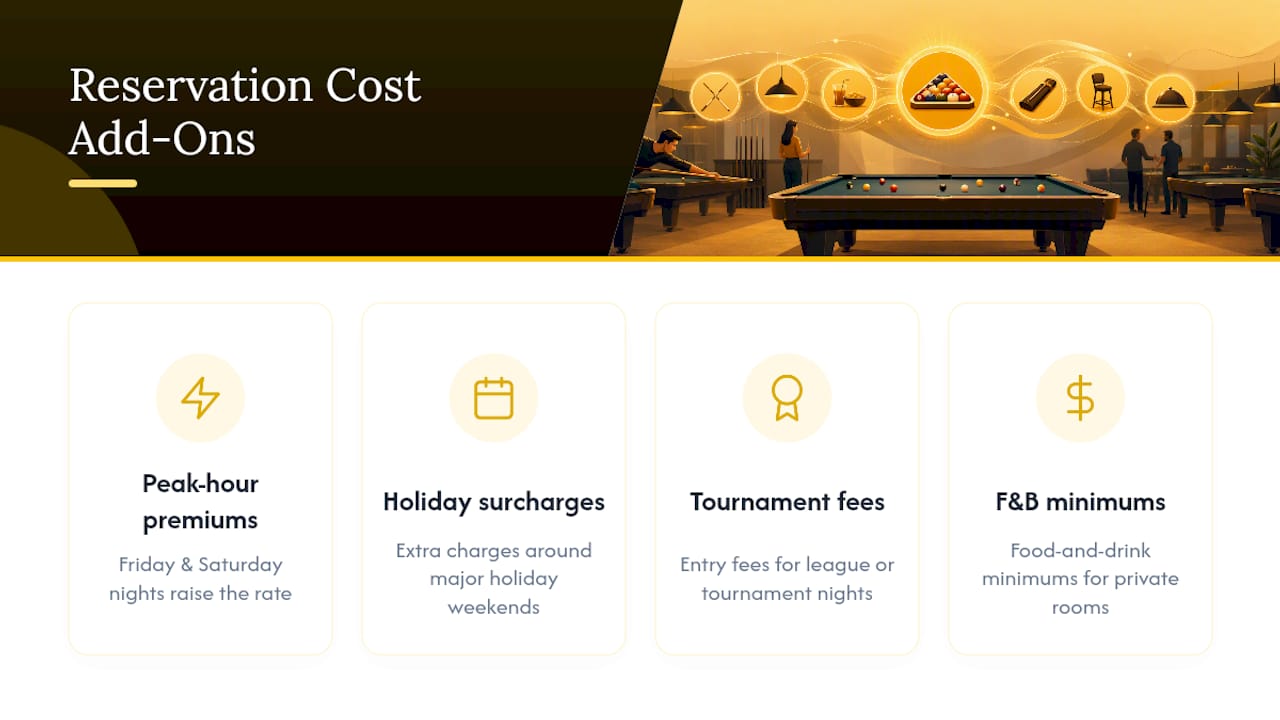
Beyond the base rate, expect a few add-ons to move the final number: peak-hour premiums on Friday and Saturday nights, holiday surcharges around major weekends, tournament entry fees if you're joining a league night instead of casual play, and food and beverage minimums tied to private-room bookings. Check the venue's games and pricing page before you commit if published rates are available. It saves an awkward conversation at checkout.
How Much Room Does a Pool Table Actually Need?
Space gets overlooked until the table shows up and doesn't fit, which is the single most common regret with portable rentals and private-room bookings alike.
- Regulation clearance for cueing requires roughly five feet of open space on all four sides of the table so players can take a full stroke without hitting a wall or furniture.
- Portable rental footprints run smaller than a full regulation setup. One rental vendor lists a setup space requirement of about 16 by 13.5 feet for their standard event table, cue swing included.
- Access logistics matter just as much as floor space. Rental companies will ask about stairs, door widths, and elevator access before delivery, since a table that won't fit through a doorway is a problem discovered on arrival, not before.
If you're unsure whether your room clears these numbers, a pool table sizing guide walks through the math for different table dimensions before you book anything.
What Should You Bring, and How Should You Act?
Showing up prepared makes the difference between a smooth session and a scramble at the front desk.
- Bring your own cue and chalk if you have a preference; most venues rent house cues, but serious players usually notice the difference.
- Carry ID and whatever payment method you used to book, since some venues match reservations against the card on file.
- Respect the clock on shared tables. If you're running long and someone's waiting, offer to wrap up the game in progress rather than starting a new one.
- Tip the staff who rack, serve, or manage the floor, especially during tournament nights when they're running multiple tables at once.
- Confirm house rules in advance: whether food is allowed near the table, smoking policy, and whether outside equipment is permitted.
A quick look at a venue's dress code and floor expectations before a first visit also helps you avoid showing up under or overdressed for a tournament night.
What Does Booking Look Like at Q Billiards Arena?
Q Billiards Arena in Houston gives a useful real-world model because it publishes the details most venues leave vague. The venue features a large space with multiple billiards tables across different game types, plus a weekly tournament schedule and a food and drink menu available during play.
- Table variety by game. Instead of one generic pool table type, you're choosing between disciplines, which matters if your group has both casual players and someone who wants a real snooker match.
- Late hours. Venues with extended hours can attract players looking for tables later at night.
- Private poker room rental. For groups wanting privacy rather than a standard table, the poker room rental option covers events and private sessions separately from hourly table bookings.
- Tournament and league nights. Competitive players can check the tournament schedule before booking a casual slot, since league nights sometimes reduce open-table availability.
Published pricing and clear booking rules matter most for groups and tournament regulars, because they remove the guesswork that trips up a first-time visitor booking for six friends on a Saturday night.
A Real Booking Walkthrough
Here's what a clean reservation looks like in practice. You book online for a 7 p.m. slot on a Thursday, pick American pool as the table type, enter a party of four, and get a confirmation email with a QR code attached. You arrive at 6:52, show the code at the front desk, and you're at your table before 7:05.
Problems still come up. Running fifteen minutes late? Call ahead rather than hoping the grace period stretches for you. Want to extend past your booked hour? Ask the moment you sit down, not twenty minutes before your slot ends, since the next reservation may already be locked in. Group grew from four to eleven between booking and arrival? Call and switch to a private room before you show up, not after the host tells you standard tables cap out at nine.
— Q
Ready to Book Your Table at Q Billiards Arena?
Q Billiards Arena skips the guesswork that comes with venues that don't publish their rates or their rules. You get 25 tables across American pool, snooker, and Chinese 9-ball, late hours that outlast most Houston pool halls, and a published games and pricing page so you know the cost before you show up.
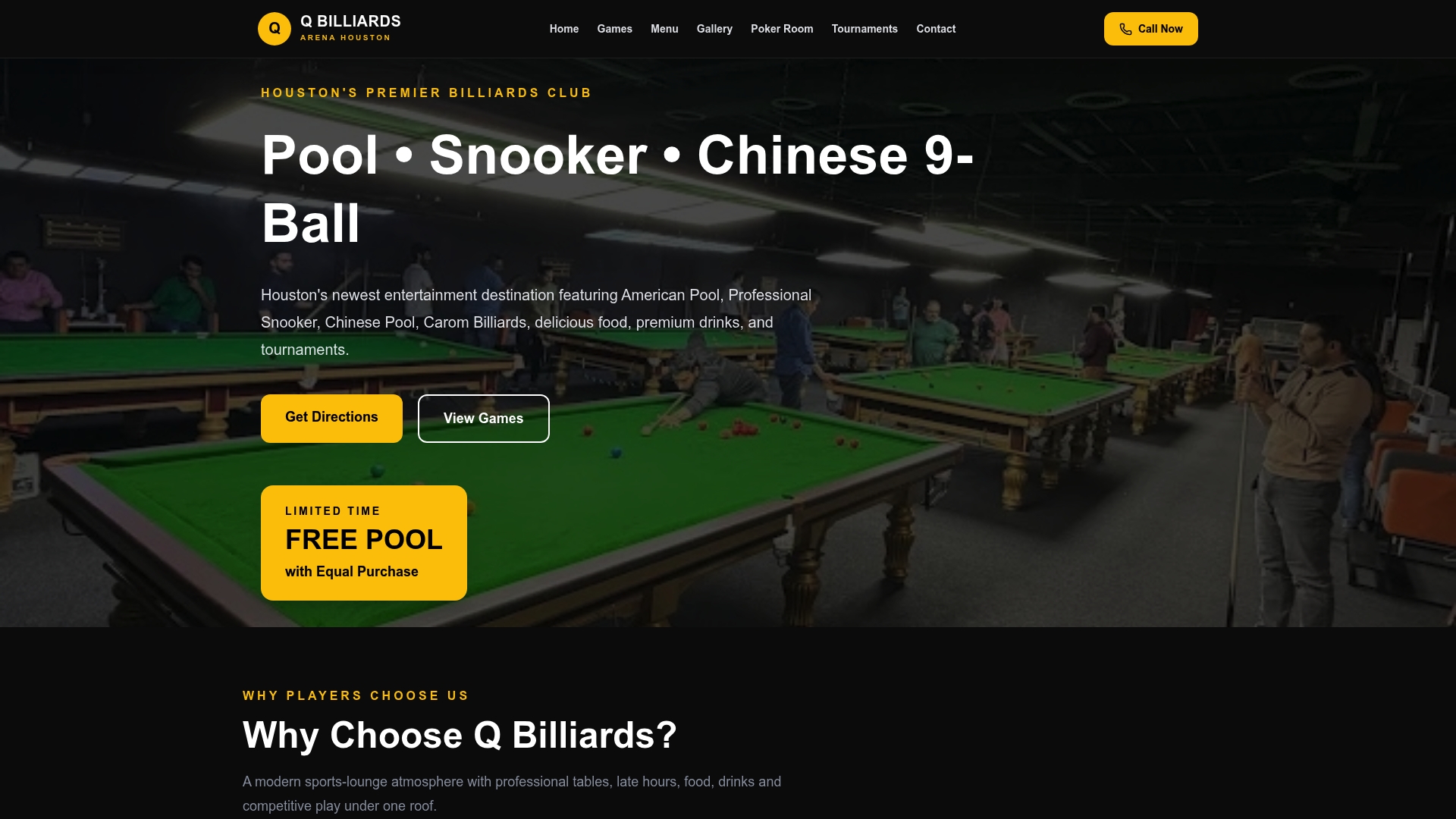
If your group is bigger than a standard table can handle, the poker room rental page covers private bookings with their own minimums and setup, separate from hourly table reservations. Competitive players should check the tournament schedule before locking in a casual slot, since league nights run on their own table allocation. The venue may offer promotions worth asking about when you call to confirm your reservation. If you're coordinating transport for a larger group event, a party bus rental can simplify getting everyone there at once. Head to the Q Billiards Arena homepage to check table availability and lock in your slot for tonight or this weekend.
Sources
- Portable Pool Table Rental | Carolina Fun Factory
- Arcade games to rent — Snap Entertainment
- Pooltablerentals
- Reserve a Pool Table - Center Pocket Sports Bar - Sports Bar in Bowie, MD
FAQ
Can You Rent a Pool Table for a Day?
Yes. Portable rental companies offer flat-fee, single-day setups that typically run around $299.99 and include the table, balls, rack, chalk, and two cues delivered to your event.
What Is the 30-Second Rule in Pool?
A timed rule (sometimes called a shot clock) limits how long a player can take between shots in timed competitive matches, usually enforced during tournaments rather than casual play. Rules vary by league and venue, so confirm the specific format if you're entering a tournament night.
How Much Should You Pay for a Pool Table Reservation?
Expect hourly table rates at most pool halls, with private-room bookings running on a food and drink minimum instead. Checking a venue's published games and pricing page before booking avoids surprises at checkout.
How Much Does It Cost to Rent a Pool Table for an Event?
A standard portable pool-table rental for a party or corporate event costs about $299.99, typically covering delivery, setup, and basic equipment for the day. Larger events or multiple tables will raise that total based on the vendor's rate structure.