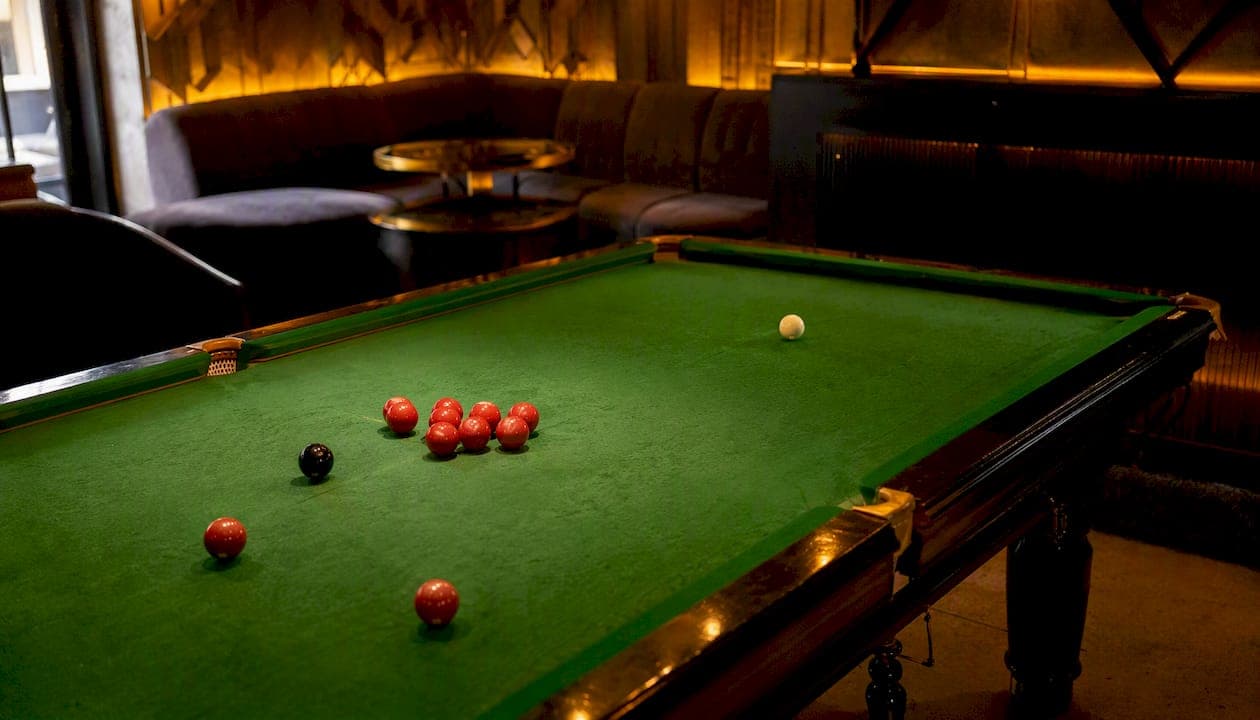
A snooker century break is a score of 100 or more points in a single, uninterrupted visit to the table. Not across a frame. Not combined with your opponent's fouls. One visit, one continuous run of pots, 100 points minimum — that's the standard, as defined by the sport's governing body.
A few facts worth knowing before anything else:
- The standard maximum break is 147 (15 reds each followed by a black, then all six colors in sequence).
- The current professional record is 153, made by Ronnie O'Sullivan at the 2026 World Open using a free-ball start.
- O'Sullivan leads all players in career centuries with more than 1,300 professional breaks at that level.
- The World Professional Billiards and Snooker Association (WPBSA) maintains official records; CueTracker and snooker.org track live tournament tallies.
- Judd Trump set the single-season record with 107 century breaks in 2024–25.
Pro Tip: Scoring 100 points in a frame is not a century. The entire 100-plus must come in one unbroken visit — the moment you miss or leave the table, the break ends, regardless of your frame total.
Key Takeaways
A snooker century break requires 100 or more points in one uninterrupted visit, demands at least 25 consecutive pots in the standard sequence, and separates consistent break-builders from occasional high-scorers.
| Point | Details |
|---|---|
| Single-visit requirement | All 100-plus points must come in one unbroken visit; frame totals and opponent fouls don't count. |
| Breaks above 147 | A free-ball start can push the maximum to 155; O'Sullivan's 153 (March 20, 2026) is the professional record. |
| Career leader | Ronnie O'Sullivan holds more than 1,300 professional centuries; Judd Trump set the season record with 107 in 2024–25. |
| Where to track stats | Use snooker.org for event tallies, CueTracker for career totals, and the WPBSA site for official records. |
| Key practice focus | Cue-ball control and two-shots-ahead planning separate consistent century-makers from occasional high-scorers. |
Table of Contents
- How does a snooker century break actually get scored?
- What are the biggest records in professional snooker centuries?
- Who leads the all-time century rankings?
- How do you actually build a century break?
- Where can you track live century tallies and career stats?
- Why century breaks matter more than the scoreboard shows
- Sources
How does a snooker century break actually get scored?
The scoring sequence in snooker is strict, and understanding it explains both why centuries are hard and how breaks above 147 are even possible.
The standard sequence
- Pot a red (1 point). Reds are worth 1 point each; there are 15 on the table at the start.
- Pot a color (yellow = 2, green = 3, brown = 4, blue = 5, pink = 6, black = 7). After a red is potted, the nominated color is respotted until all reds are gone.
- Repeat — red, color, red, color — until all 15 reds are cleared.
- Pot the colors in sequence (yellow through black) to finish the break.
A perfect 147 uses all 15 reds with the black each time (15 × 8 = 120), then all six colors in order (2 + 3 + 4 + 5 + 6 + 7 = 27), totaling 147. To reach 100 without a maximum, you need a mix of high-value colors — mostly pinks and blacks — across your reds. The math works out to a minimum of roughly 25 consecutive pots for a century, though the exact number depends on which colors you choose.
The single-visit rule is what separates a century from a high-scoring frame. Fouls committed by your opponent add points to your score, but they do not count toward your break. The break resets to zero the moment you miss.
Free balls and breaks above 147
When a player commits a foul on the opening shot and leaves the incoming player snookered with no direct path to any red, the referee awards a free ball. That free ball can be nominated as a red, effectively adding a 16th red to the sequence. With 16 reds (each followed by the black) plus the six colors, the theoretical maximum climbs to 155. A 155 has been recorded in practice but never in a professional tournament.
In competition, O'Sullivan's 153 at the 2026 World Open is the highest ever recorded. He received a free ball, nominated a color as a red, then ran through the remaining reds and colors in near-perfect sequence. BBC Sport's match report explains the exact circumstances, and Guinness World Records officially recognizes the 153 as the highest professional break in history.
Pro Tip: If you're watching a match and see a break total climbing past 147, a free ball was almost certainly awarded at the start of that frame. Listen for the referee's call — it changes the entire math of what's possible.
What are the biggest records in professional snooker centuries?
Career totals
Ronnie O'Sullivan's career total of more than 1,300 centuries is in a category of its own. No other player is close. Judd Trump, John Higgins, Neil Robertson, Stephen Hendry, and Mark Selby all sit in the top tier of career century-makers, but the gap between O'Sullivan and the rest reflects both his longevity and his consistency at the highest level. Wikipedia's century break article tracks the career leaders with sourced totals.

Season record
Judd Trump's 107 centuries in the 2024–25 season broke the previous single-season record. That figure is staggering when you consider that most elite players average somewhere between 30 and 70 centuries per season. Trump's 2024–25 output means he was making roughly two centuries per tournament match across the entire season.
The 153 and the 147 club
The 147 maximum break has been made dozens of times in professional competition. O'Sullivan's first, at the 1997 World Championship, remains the fastest ever recorded in a major tournament. His 153 on March 20, 2026, confirmed by ESPN's match coverage, surpassed every previous professional total.
Historic firsts
- First televised century: Joe Davis made the first televised century break in 1955, establishing the milestone as a broadcast event.
- First 100-century season: The threshold of 100 centuries in a single season was first crossed in the modern era as the professional tour expanded and prize money grew.
- Fastest tournament century: Tony Drago potted his way through a century in 3 minutes 31 seconds at the 1996 UK Championship — a speed record that still stands.
A century in 3 minutes 31 seconds means Drago was averaging roughly 8–9 seconds per pot across 25-plus consecutive balls. At that pace, there's almost no time for positional thinking — it's pure instinct and muscle memory.
Who leads the all-time century rankings?
The table below reflects career totals as publicly tracked through the 2024–25 season. O'Sullivan's total continued to grow in 2026.
Stephen Hendry's 775 career centuries came across a shorter competitive window than O'Sullivan's, which makes the comparison between them genuinely interesting. Hendry dominated the 1990s with a style built almost entirely around break-building; O'Sullivan added longevity and variety. Neil Robertson and Judd Trump represent the current generation pushing those totals upward every season.
The distinction between official tournament centuries and practice or exhibition totals matters here. CueTracker and snooker.org track only sanctioned professional events. A player might make 50 centuries in practice for every one that appears in the official record — those don't count.
Pro Tip: When comparing players across eras, check whether a source is counting ranking events only, all professional events, or including exhibition matches. The numbers shift significantly depending on the scope.
How do you actually build a century break?
The gap between a player who occasionally pots a long red and a player who regularly makes centuries comes down to one thing: cue-ball control and planning two shots ahead. Potting ability gets you started. Position keeps you going.
The step-by-step approach
- Survey the table before you play your first shot. Identify which reds are "on" (directly pottable), which are tied to cushions or clustered, and where the cue ball needs to be for the next shot.
- Choose your opening red based on position, not just potability. The easiest pot isn't always the right one. Play the red that leaves you on your best color and closest to your next planned red.
- Use colors to move the cue ball, not just score points. The black is worth 7 points, but sometimes the pink or blue gets you to a better area of the table. Think of each color as a positional tool.
- Keep an "escape" red available. Professionals deliberately leave one accessible red near the middle of the table as a safety valve. If position breaks down, that red gives you a way back into the break.
- Open clusters early, not late. Reds bunched near the pink or black spots need to be separated while you still have other reds to work with. Trying to develop a cluster when you're down to three reds is a recipe for a missed century.
- Play the colors in sequence when the reds are gone. Yellow, green, brown, blue, pink, black — in that order. By this point, the table is open and the pots are straightforward. The century is won or lost in the red-and-color phase.
Drills that build century-level consistency
SnookerCentral's break-building guide outlines several practice routines used by club and professional players:
- Progressive red-and-color drill: Place three reds in open positions and practice potting each with a nominated color, focusing on landing the cue ball in a specific zone after each color. Add reds as your positional accuracy improves.
- Cluster-development exercise: Set up a tight cluster of four or five reds near the pink spot and practice opening them with a single color shot, leaving yourself on a red. This is the skill most amateur players skip — and it's where most century attempts die.
- Timed build-up: Set a 20-minute timer and attempt as many consecutive red-and-color pots as possible without missing. Track your personal best. The goal isn't speed; it's sustaining concentration across a long sequence.
The mental side is underrated. Most players miss a century not because they can't pot the balls, but because they tighten up around 60 or 70 points. The break starts to feel precious. That's when tempo slows, pre-shot routine shortens, and mistakes happen.
Mental and tempo guidance
Stay in your pre-shot routine on every single ball. Walk the same path to the shot, take the same number of practice swings, breathe before you pull the trigger. The routine is what keeps the nervous system calm when the scoreboard starts climbing. If you feel the table pressure building around 80 points, slow down rather than speed up. The balls aren't going anywhere.
Cue-ball control under pressure is also where shot-planning principles from other cue sports overlap with snooker — the discipline of thinking one or two shots ahead applies whether you're playing 9-ball or building a snooker century.
Where can you track live century tallies and career stats?
Three sources cover the landscape for fans who want real-time and historical century data.
| Source | What it covers | Best used for |
|---|---|---|
| Snooker | Event-specific tallies, World Championship centuries archive | Tracking centuries at the Crucible and other specific tournaments |
| CueTracker | Career and season century totals by player, match-by-match records | Comparing players across seasons, checking career milestones |
| World Snooker (WPBSA) | Official tournament results, ranking events, prize money | Confirming official records and current rankings |
Snooker.org's Crucible century archive is particularly useful during the World Championship. It tracks every century made at the Crucible since the tournament moved there in 1977, making it the most complete single-event database available.
CueTracker updates match results post-session rather than in real time during play, so there's usually a short lag between a century being made and appearing in the database. For live match updates, the WPBSA's own broadcast partners and the official World Snooker app are faster.
One important caveat: none of these trackers include practice or exhibition centuries. A player's official career total on CueTracker will always be lower than their actual lifetime century count. The gap can be substantial for players who spend significant time in practice or exhibition circuits.
Pro Tip: During the World Championship, bookmark snooker.org's Crucible centuries page. It's updated throughout the event and lets you see at a glance which players are on a century-making run — useful context for understanding momentum in a long match.
Why century breaks matter more than the scoreboard shows
The first century a player makes in competition changes something. It's not just a number — it's confirmation that the technical work has reached a level where sustained, high-quality break-building is possible under match pressure. Players who've been through it describe it as a shift in self-perception, from someone who plays snooker to someone who competes at it.
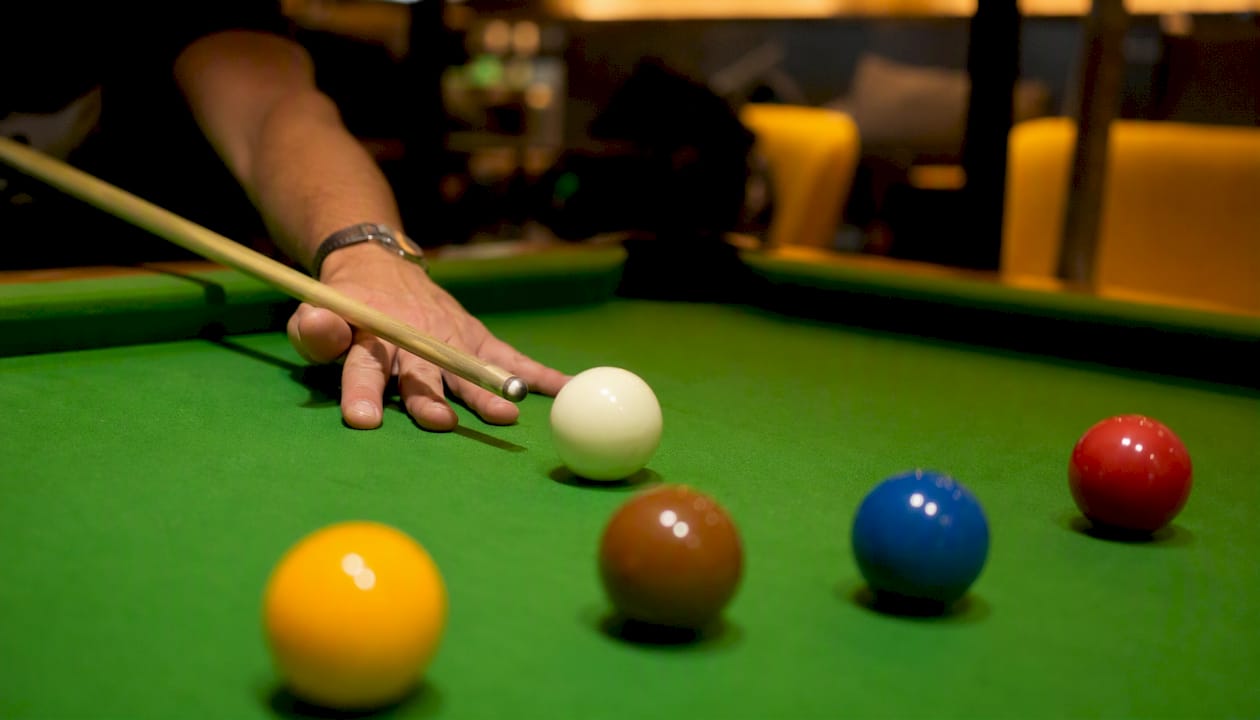
For fans, centuries are the clearest signal that a player is in full control of a frame. A 40-point lead can evaporate in one visit; a century means the opponent barely got to sit down. That's why crowds react to a century differently than to a frame won on safety play — it's dominance made visible.
The records matter too, but not just as trivia. Watching Judd Trump's 107-century season in 2024–25 told you something about how the modern game has evolved: faster play, more attacking snooker, and a generation of players who treat a century as a baseline expectation rather than an achievement. Stephen Hendry's 775 career centuries came in an era when the tour was smaller and the schedule less demanding. O'Sullivan's 1,300-plus came across a longer career in a more competitive field. Neither total is more impressive than the other — they're just different stories about what elite consistency looks like in different eras.
For anyone practicing at a venue like Qbilliardshtx's snooker club in Houston, the century is the right target to aim for. Not because it's easily reachable, but because the discipline required to build one — positional thinking, cluster management, mental composure — makes you a better player at every level below it.
Sources
- Century break - Wikipedia
- World Open: Ronnie O'Sullivan makes highest-ever professional break with historic 153 - BBC Sport
- Highest break in snooker | Guinness World Records
- Ronnie O'Sullivan makes highest-ever professional break (153) - ESPN
- Century (snooker) rules explained - BilliardsBase
For players who want to go deeper on technique: SnookerCentral's break-building library and BilliardsBase's rules explainer are the two most practical starting points. For records and live tracking, snooker.org and CueTracker together cover everything from single-event tallies to full career histories.
Ready to put the theory into practice? Q Billiards Arena in Houston runs professional-grade snooker tables, weekly tournaments, and a dedicated snooker club — the kind of setup where you can work on positional drills, attempt your first century, and watch serious players build breaks in real time. Check table availability and pricing and see what's on the tournament calendar before your next session.