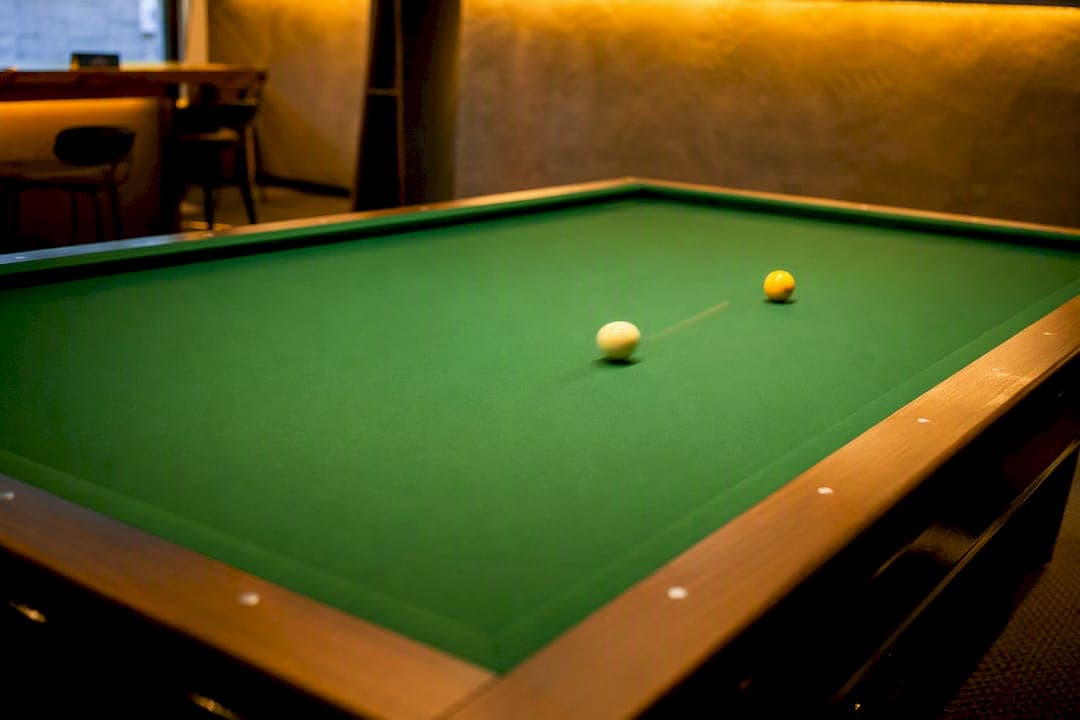
A three-cushion point counts when your cue ball touches both object balls and has hit the rails at least three times before that final object-ball contact. Order doesn't matter, and the three cushion impacts don't need to happen on three different rails. What matters is that the count is met before the cue ball touches the second object ball, not after.
That's the entire rule in one sentence, but it's the sentence people argue about most at the table. Here's what actually governs the call:
- Cushion impact: any contact between the cue ball and a rail counts, including a ball that rides or grazes the cushion.
- Order flexibility: you can hit three cushions first, then both balls, or hit one ball first and pick up your three cushions afterward.
- The one fixed rule: you cannot touch both object balls and then go collect your three cushions. The count has to be finished before the last contact.
- Match scoring: tournaments commonly play to 15, 20, 25, 30, or 40 points depending on format.
For the full text, check the Official US Billiard Association Rules of Play or the international standards published by the Union Mondiale de Billard (UMB).
Key Takeaways
A legal three-cushion point requires contact with both object balls plus at least three cushion impacts completed before the final contact, with no restriction on order or which rail gets hit.
| Point | Details |
|---|---|
| Core scoring rule | Cue ball must hit both object balls and log three or more cushion impacts before the last contact. |
| Order doesn't matter | Cushions can happen before, between, or mixed with object-ball contacts, just never entirely after both. |
| Same rail counts | Three hits on one cushion satisfy the rule just as well as three hits on different rails. |
| Break requires red first | Missing the red object ball on the break is an automatic foul that ends the inning. |
| Fouls end the inning | Jumped balls, touched balls, and shooting on moving balls all pass the turn and may require spotting. |
Table of Contents
- Table, Balls, and Cue Assignment
- What Counts as a Point? Plain-Language Scoring Rules
- Step-by-Step Shot Sequences and Concrete Examples
- Common Fouls and What They Cost
- How Matches Are Played: Innings, Breaks, and Match Flow
- Practical Positioning and High-Percentage Tactics
- Frequently Asked Questions
- Sources
Table, Balls, and Cue Assignment
Three-cushion is played on a pocketless carom table, standard size 10 feet by 5 feet. No pockets means every shot has to work through geometry and spin, since there's nowhere for a mediocre shot to hide.
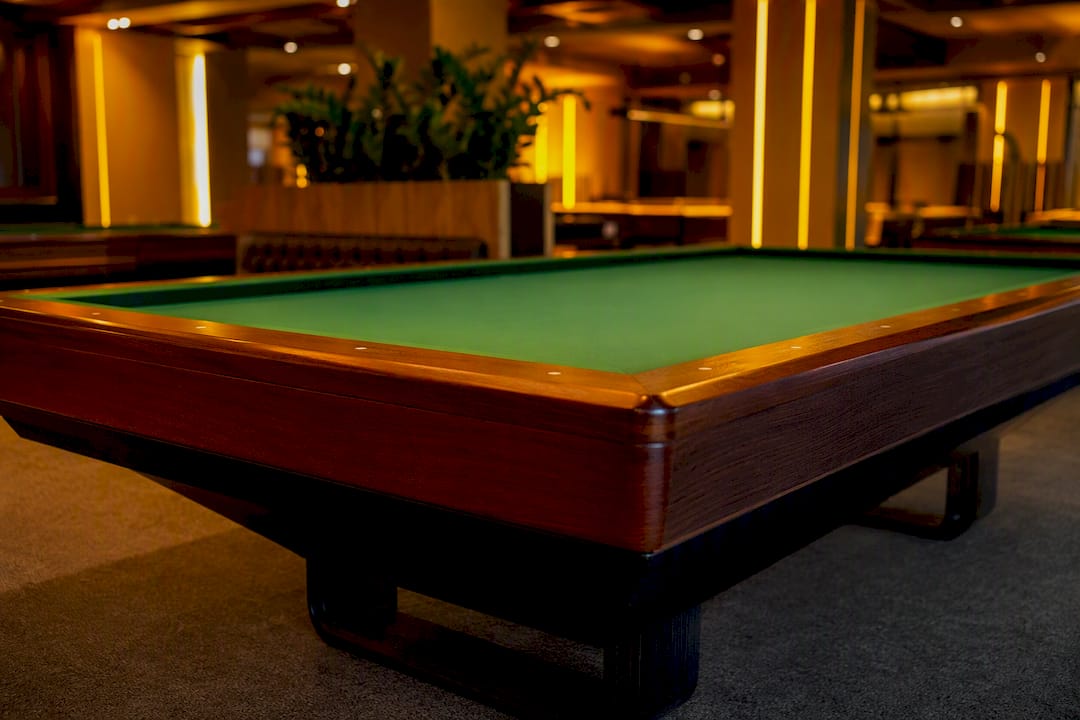
Quick specs: 10-foot pocketless carom table, three balls (one white cue ball, one yellow cue ball, one red object ball), no pockets anywhere on the rail.
The ball set breaks down like this:
- Two cue balls: white and yellow, one assigned to each player for the entire match.
- One red object ball: shared, and it's always one of the two object balls in every shot.
- Ball assignment: players lag or flip for color before the match starts, and that color sticks for the whole session.
- Spot positions: the head spot, foot spot, and center spot mark where balls get placed for the break and for re-spots after certain fouls, following USBA and UMB table markings.
The table is pocketless, which means the only way to score is through contact and cushion geometry, not by sinking anything.
What Counts as a Point? Plain-Language Scoring Rules
Strip away the formal language and the rule reads like this: your cue ball has to touch both object balls, and by the time it touches the second one, it needs three or more cushion hits already banked. That's it. That's the whole scoring system.
A few things trip up new players constantly.
Cushion impacts versus distinct cushions. You don't need to hit the long rail, then the short rail, then the long rail again. Three hits on the same cushion count just as much as three hits spread across different rails. A ball riding along the cushion edge still registers as contact, according to the USBA's official rules, which specify that cushion impacts don't need to occur on three different rails.
Timing is everything. Cushion contacts can happen before you touch either object ball, between touching the first and second object ball, or some mix of both. What you cannot do is touch both object balls and then try to bank your three cushions afterward. The count has to be locked in before that final contact, per USBA guidance on how to play three-cushion.
Valid example: cue ball hits the red, bounces off three separate rails, then touches the yellow. That's a clean point.
Invalid example: cue ball hits the red, then the yellow, then bounces off three rails. No point. The cushions came too late.
The shot is officially complete once all three balls stop moving, which is also when a referee or opponent confirms whether the count was met.
Step-by-Step Shot Sequences and Concrete Examples
Seeing the valid patterns laid out helps more than any written description. Here are the common legal sequences:
- Cushions first: cue ball strikes three rails, then touches object ball one, then object ball two. Fully legal regardless of which order the two object balls come in.
- Ball, then cushions, then ball: cue ball touches the red first, ricochets off three cushions, then finishes on the yellow. This is probably the most common pattern you'll see in competitive play.
- Mixed pattern: cue ball hits one cushion, touches the first object ball, hits two more cushions, then touches the second object ball. Still legal, because the full three-cushion count landed before the final contact.
Now the ones that don't count:
- Both balls, then cushions: cue ball touches object ball one, then object ball two, then rolls into three cushions. Zero. The cushions arrived after the shot was already decided.
- Short count: cue ball hits two cushions, touches both object balls. Also zero, since two cushions never satisfies the three-cushion requirement no matter when they happen.
One detail that confuses newer players: a "ride" along the rail, where the ball travels almost parallel to the cushion and brushes it repeatedly, still counts as legitimate cushion contact as long as there's genuine contact, not just proximity. Referees watch closely for this because it's the easiest call to get wrong in real time.
If you're coaching or refereeing, sketching these sequences on a simple table diagram with numbered arrows for cushion order makes disputes far easier to settle than describing them verbally mid-match.
Common Fouls and What They Cost
Fouls in three-cushion end your inning immediately, and the balls typically get spotted back to standard positions before play resumes. Here's what referees flag most often, based on USBA's foul and procedure rules:
- Wrong ball on the break: the break shot must strike the red ball first; hitting yellow or missing entirely on the break is a foul.
- Touched or moved balls: brushing a ball with your hand, clothing, or the cue shaft outside of a legal stroke ends your turn.
- Jumped balls: any ball that leaves the table surface, even briefly, is a foul, and it gets re-spotted.
- Shooting while balls are still moving: you have to wait for every ball to fully stop before your next shot.
- Double hits and pushed strokes: a stroke where the tip contacts the cue ball twice, or pushes it rather than striking it cleanly, is illegal.
- Frozen-ball situations: when the cue ball rests against a cushion or another ball, special placement rules apply, and referees typically move the object ball slightly to allow a fair stroke.
When a ball jumps the table or lands on the frame, it gets respotted at the nearest standard spot rather than left where it landed. Forceful or massé shots are legal, but if the cue ball leaves the bed of the table during one, that's still a foul regardless of intent.
The practical referee routine is simple: confirm all three balls have stopped, verify the cushion count and contact order, then either award the point or call the foul and spot balls before the next player's inning begins.
How Matches Are Played: Innings, Breaks, and Match Flow
Match length depends entirely on the event. Casual play might run to 15 or 20 points, while sanctioned tournaments often push to 30 or 40, and pricing for table time and race format varies by venue and format.
The break carries one hard requirement: the cue ball must contact the red object ball first. Breaking into the yellow instead, or missing contact altogether, is a foul and ends the inning before it starts.
After that, play alternates on a simple rhythm:
- Successful point: the same player continues shooting. Skilled players can string together long runs this way, which is part of what makes elite three-cushion so watchable.
- Missed shot or foul: the inning ends and turn passes to the opponent, who shoots from wherever the balls came to rest.
- Streaks matter: a player on a hot run can close out a race to 20 in a handful of innings, while a defensive stalemate can stretch a match well past an hour.
Tournament etiquette generally expects players to shoot within a reasonable time window per turn and to call fouls on themselves when clearly in violation, though a referee makes the final call in sanctioned events. Venues hosting regular tournaments typically post the target score and time limits before the draw starts.
Practical Positioning and High-Percentage Tactics
The biggest lever in three-cushion isn't raw power, it's where you leave the first object ball after contact. Coaching material like the Three-Slate System breaks the table into zones and teaches players to route the object ball into high-percentage lanes rather than just aiming for contact.
Reading the table before you shoot matters more than most beginners assume. Three things to check every time:
- First-ball position: where will it end up after contact, and does that leave your opponent an easy return?
- Cushion sequence: pick your three-rail path before you strike, not after watching where the ball drifts.
- Speed and English: soft speed with the right spin holds a tighter, more predictable path than a hard hit that relies on luck to find the second ball.
Two drills build this fast. Run a repetitive cushion-count drill where you shoot the same three-rail pattern from the same starting spot twenty times and track how consistently the cue ball lands near the target zone. Then run a finishing drill where you start from varied positions but always aim for the same final contact point, which trains touch rather than memorization.
Pro Tip: Track your made-point percentage over a set number of attempts each practice session rather than just counting makes. A player who converts 6 of 10 attempts consistently is improving faster than one who occasionally strings a lucky run of 8.
Every three-cushion shot demands a multi-angle, multi-speed calculation, which is why consistent success tends to come from repeatable cushion patterns rather than raw force. Players who practice on quality equipment, whether that's a well-maintained table at a Houston snooker and pool venue or a digital simulator like Virtual Pool 3 for off-hours repetition, tend to internalize cushion geometry faster than those relying on inconsistent tables.
Where to Read the Official Rulebook
The most reliable source for dispute resolution is the USBA's official rules of play, which spells out every scoring and foul scenario in exact language.
- USBA: publishes the complete US rulebook and is the reference most American tournaments use to settle disputed calls.
- UMB: the international governing body that sets table-marking standards and tournament rules for global competition.
- Before any tournament: check both organizations' sites for errata, since rule clarifications occasionally get published between major revisions.
A Note on Learning the Rules Right
Watching players at Q Billiards Arena work through cushion counts during weekly tournaments reinforces one thing: the rules aren't a formality, they're the whole game. Count slowly, verify calls against the rulebook when in doubt, and never assume a close cushion contact without a second set of eyes if the point matters.
Ready to put these rules into practice? Q Billiards Arena in Houston runs regular carom and cue sport tournaments on professional-grade equipment across its 11,000-square-foot floor, with late hours for players who want to drill cushion patterns after work. Check game availability and pricing or browse upcoming tournaments and events to test what you've learned against real competition, or start with a visit to the main venue page to see the full lineup of tables and league nights.
Frequently Asked Questions
What is the official rule for scoring in three-cushion billiards?
The cue ball must contact both object balls and make at least three cushion impacts before touching the second object ball. This is confirmed in the USBA's official rules and mirrored in international UMB standards.
Do the three cushions need to be three different rails?
No. Three impacts on the same cushion satisfy the requirement just as well as three impacts spread across different rails, as long as genuine contact occurs each time.
What happens if I hit both object balls before completing three cushions?
No point is scored. The three-cushion count has to be finished before the cue ball touches the second object ball, not afterward, and your inning simply ends without a foul unless another violation occurred.
What's a common foul in three-cushion billiards?
Missing the red object ball on the break, touching a ball with your hand or clothing, and shooting before all balls have stopped are among the most frequently called fouls. Each one ends the inning and often requires re-spotting balls to standard positions.
What target score do three-cushion matches typically use?
Casual games often run to 15 or 20 points, while sanctioned tournament matches commonly extend to 30 or 40, depending on the event's format and time constraints.
Where can I verify an official three-cushion ruling during a dispute?
Check the USBA rules of play for US matches, or the UMB's international standards for events following global tournament rules. A referee's on-site ruling generally takes precedence during active play, but both rulebooks resolve most disputes when consulted afterward.
Sources
- Official US Billiard Association Rules of Play
- How to Play 3-Cushion Billiards
- How to Play Three-Cushion Billiards in 2026: Expert Guide