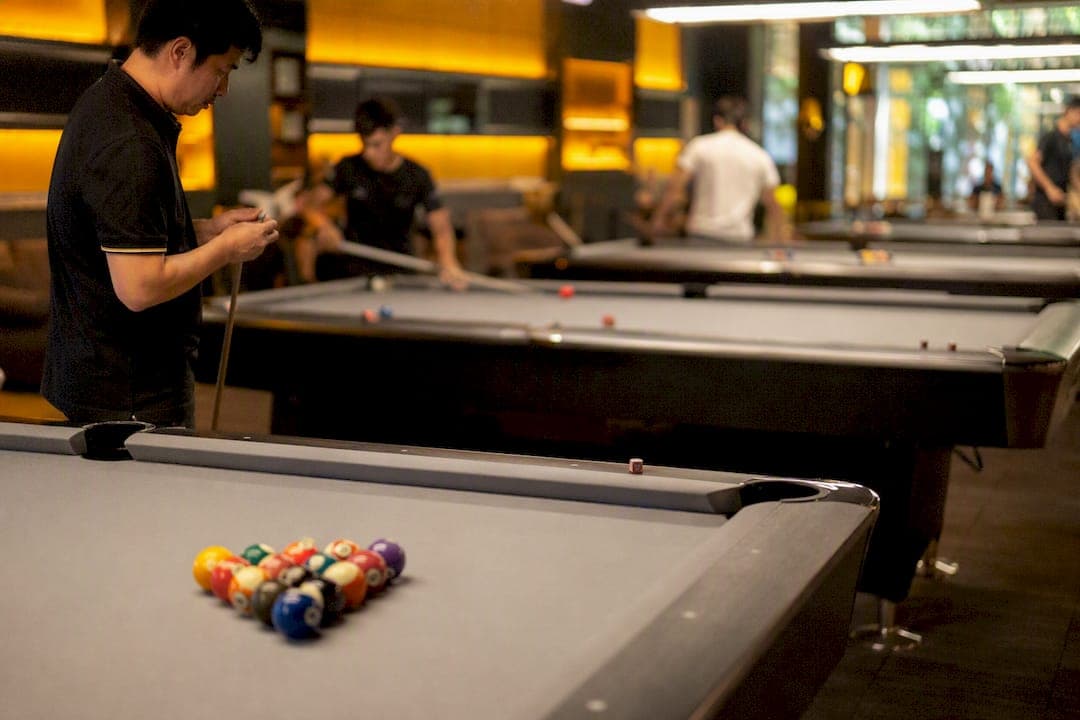
To host a pool tournament that runs on time and keeps players happy, pick a format that fits your table count, schedule matches by working backward from your finish time, publish clear rules before anyone racks up, and put one non-playing tournament director in charge of the room. That's the whole job. Everything else is detail work.
Two quick examples show how flexible this is. A casual bar night for 8 players works well as single elimination, race to 3, wrapped up in about three hours. A club-level event with 16 players usually calls for double elimination, race to 5, and a full evening on multiple tables. Either way, a common structure for bar tournaments uses race-to-3 for 8-ball and race-to-5 for 9-ball to keep matches moving without feeling rushed.
Before players arrive, confirm three things:
- Tables are reserved and in good condition
- Someone is named tournament director and isn't playing
- Rules are printed or posted where everyone can see them
Key Takeaways
A pool tournament runs smoothly when the format matches your player count, the schedule is built backward from a finish time, rules are posted before play starts, and one non-playing director manages the room.
| Point | Details |
|---|---|
| Pick format by headcount | Use round-robin or single elimination for 4–8 players, double elimination for 8–16. |
| Schedule backward | Set your finish time first, subtract estimated match time, and build in buffers between games. |
| Publish rules early | Reference BCA or APA rules, or a short house sheet, and post it at check-in and by the brackets. |
| Assign a non-playing director | One impartial person should manage matches, rotation, and disputes without competing themselves. |
| Scale up with the right venue | Q Billiards Arena's 25 tables and staffed events support brackets too large for a single-table setup. |
Table of Contents
- How to Host a Pool Tournament: Choosing the Right Format
- How Do You Schedule Around Table Availability?
- What Rules Should You Set Before Match Day?
- Building Brackets: Seeding, Byes, and Digital Tools
- Venue and Equipment Checklist Before Doors Open
- Entry Fees, Payouts, and Getting the Word Out
- Running Day-Of Operations Without Chaos
- Lessons From Running Tournaments on 25 Tables
- Setting Player Divisions and Handicaps
- Setting the Tone: Conduct and Handling Bigger Problems
- Do You Need Insurance for a Pool Tournament?
- What Happens After the Tournament Ends?
- Why Logistics Beat Prize Money Every Time
- How Q Billiards Arena Supports Tournament Hosts
- Sources
How to Host a Pool Tournament: Choosing the Right Format
Format decides everything else, so pick it first. Single elimination is fast: lose once and you're out, which suits large casual fields or tight timelines. Double elimination gives players a second chance through a loser's bracket, and small-venue tournaments with 8 to 16 participants often use it specifically to keep people engaged longer instead of eliminating half the field in round one. Round-robin has everyone play everyone, which works great for small groups but scales badly past eight or so players. Team formats (doubles or squads) add a social layer but roughly double your scheduling complexity.
Match it to your headcount:
- 4–8 players: round-robin or single elimination, done in a few hours
- 8–16 players: double elimination, the sweet spot for most bar and club nights
- 16+ players: double elimination with seeded groups, or a hybrid bracket to control total match count
A 12-player double-elimination bracket typically runs 20 to 22 matches total. An 8-player round-robin means every player plays all others once, resulting in many games, so budget accordingly.
How Do You Schedule Around Table Availability?
Work backward. Decide when you want the event to end, subtract your total estimated match time, and that's your start time.
- Estimate time per match based on race length, adding a short buffer between games for reset and reracking.
- Multiply by the number of rounds each table will need to cover.
- Add buffer time between matches so a late finish on one table doesn't stall the whole bracket.
- Set your start time by subtracting that total from your target finish.
Planning guides recommend building in buffers between matches rather than scheduling back to back, because even friendly players run long occasionally, and a stacked schedule has zero room to absorb it.
Pro Tip: Run more than one table if you have it. Two tables running simultaneously can cut your total event time nearly in half, and idle players waiting around are the number one complaint at poorly run tournaments.
What Rules Should You Set Before Match Day?
Don't write your own rulebook from scratch. Hosting guides consistently recommend referencing an established ruleset like BCA or APA, or at minimum a short house-rules sheet that covers the gaps. Either way, decide these before anyone shows up:
- Break rules (alternating, winner breaks, or open table)
- Foul penalties, and whether ball-in-hand applies
- Call shot or slop, especially on tougher shots
- Rack style and who racks between games
- Time limits per shot, if any
For a deeper dive on rack specifics, our guide to racking 8-ball covers the exact steps for casual and league play.
Disputes will happen. Set up a flow where the tournament director hears both sides, checks the posted rules, and makes a final call.
Pro Tip: Post the rule sheet at the check-in table and by the brackets. Half of all disputes disappear once players can just point to the printed rule instead of arguing from memory.
Building Brackets: Seeding, Byes, and Digital Tools
Seed competitive fields by known skill level so your best players don't collide in round one. For casual nights, a random draw is faster and feels fairer to newcomers who don't have a track record yet.
Odd numbers happen. Give the extra player or two a bye into round two rather than forcing an awkward three-way match. For big fields, consider running short group stages first, then advancing top finishers into a single-elimination knockout, which controls total match count without sacrificing fairness.
Digital bracket managers have mostly replaced the paper bracket taped to a wall. They update automatically as results come in, display live standings on a screen or shared link, and save the director from constantly recalculating who plays who next.
- Skill-based seeding for leagues and competitive fields
- Random draw for casual, first-time-friendly events
- Byes go to top seeds or are drawn randomly for fairness
- A synced digital bracket saves real admin time on match day
Venue and Equipment Checklist Before Doors Open
Walk the room before players arrive, not after someone complains.
- Check that every table sits level and the felt is clean and free of tears.
- Confirm each table has a complete, matched ball set and a working rack.
- Verify lighting is even across all playing surfaces, with no glare on the felt.
- Leave 5 to 10 feet of clearance around each table for players and spectators.
- Set out enough seating near the action so waiting players aren't standing the whole night.
- Stock chalk, spare cues, and extra racks within easy reach of every table.
- Put up a visible bracket board or digital display so players always know who's up next.
Skipping this step is how you end up mid-tournament realizing table three has a dead rail.
Entry Fees, Payouts, and Getting the Word Out
Entry fees typically run lower for casual bar nights and higher for competitive club events where the prize pool matters more. A common payout split is 50% to first, 30% to second, and 20% to third, though plenty of hosts mix in a bar tab, trophies, or house merchandise instead of straight cash.
- Set entry fees based on expected turnout and prize pool goals
- Consider a 50/30/20 cash split, or blend in non-cash prizes
- Post the event at least two weeks out on social media and at the venue
- Offer a small discount for early registration to lock in numbers sooner
Starting promotion two weeks ahead and tapping local pool groups tends to fill a bracket faster than a last-minute flyer.
Running Day-Of Operations Without Chaos
- Open check-in early: collect entry fees, hand out the rule sheet, and issue a wristband or name tag so nobody gets skipped.
- Have the director call matches by bracket order and assign tables as they free up, keeping rotation tight.
- Track results on the bracket in real time so players always know their next match.
- Close the night by handing out payouts, announcing winners publicly, and asking a few players for quick feedback before they leave.
Pro Tip: Keep a side game running near the tables for eliminated players. A quick group game keeps the room lively instead of watching people leave the second they lose.
Lessons From Running Tournaments on 25 Tables
Running weekly tournaments across a 25-table room requires staggered starts and table marshals so no group waits too long for an open table. Q Billiards Arena has used promotions like free pool with an equal purchase paired with a food menu built for long tournament nights, since players who are fed and comfortable stay later and play better.
The biggest lesson scaling up: the schedule breaks the moment one table falls behind and nobody's watching for it. A marshal checking rotation every 20 minutes fixes that before it snowballs.
- Staggered starts prevent bottlenecks on busy nights
- Table marshals catch delays before they cascade
- Food and drink pairings keep players around longer
Setting Player Divisions and Handicaps
Not every player belongs in the same bracket, and pretending otherwise is how you lose your less experienced regulars after one lopsided match. Most recreational tournaments sort players into skill divisions, typically two or three tiers based on self-reported experience or observed play, so a weekend hobbyist isn't matched against someone who plays five nights a week.
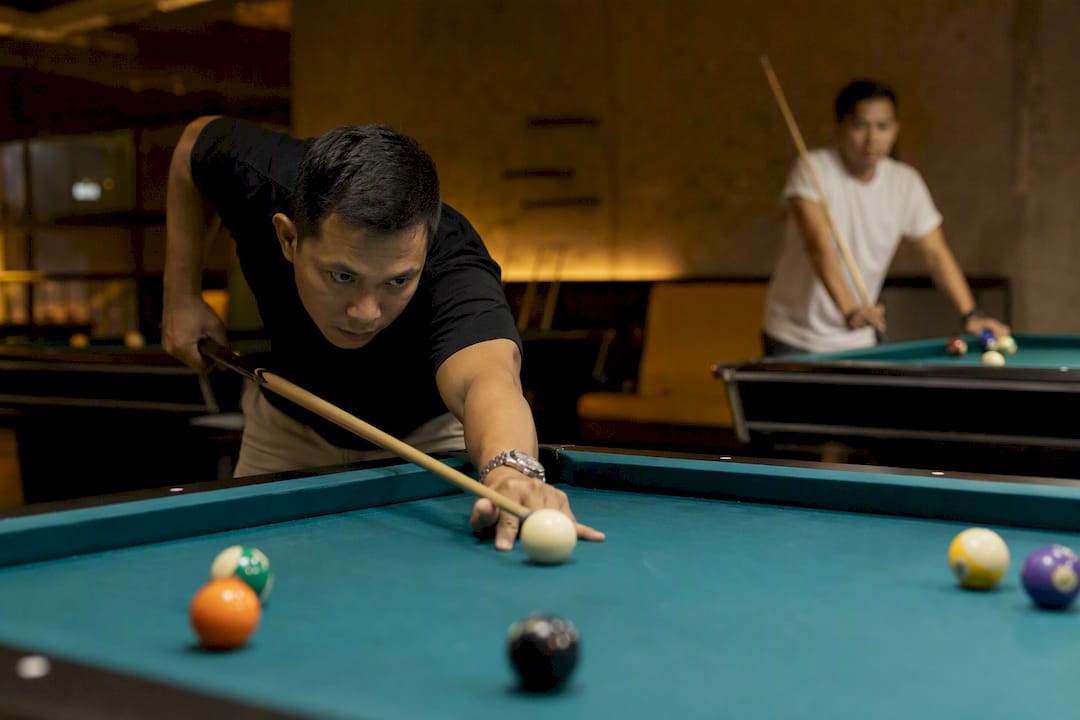
Handicapping is the more precise tool. Instead of separate brackets, weaker players get a scoring advantage, like needing fewer games to win a race, while stronger players need more. A race-to-5 for an advanced player might face a race-to-3 for a newer one in the same match. This keeps the whole field in one bracket while still leveling the actual contest.
Decide eligibility rules up front too. Will you allow walk-ins the day of, or require registration by a set deadline? Are house regulars and outside guests both welcome, or is this a members-only league night? If you're running a season-long league rather than a single event, you'll also want a policy on who counts as a "beginner" versus "intermediate," since self-ranking tends to drift as players improve over a season.
The simplest starting point for a first-time host: two divisions, open and beginner, sorted by a quick pre-tournament sign-up question asking how often someone plays. Adjust next time based on how lopsided the matches actually were.
Setting the Tone: Conduct and Handling Bigger Problems
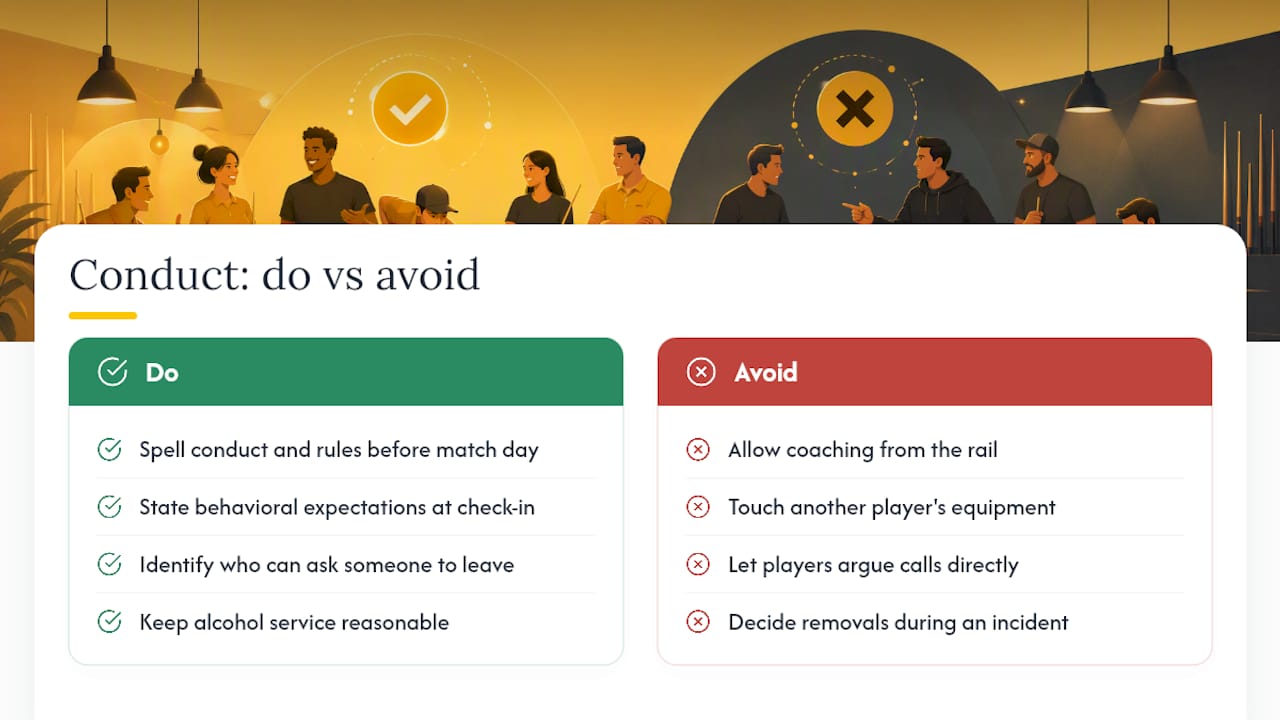
Rules cover fouls and shot-calling. Conduct covers everything else, and you need both spelled out before match day. Set basic behavioral expectations at check-in: no coaching from the rail during a match, no touching another player's equipment, and no arguing calls directly with an opponent instead of the director.
Most conflicts are minor and resolve with a calm ruling from the tournament director. Occasionally something bigger comes up: a heated argument, someone visibly intoxicated, or a player who won't accept a ruling. Have a plan for that before it happens, not during it. Decide in advance who has the authority to ask someone to leave, and make sure that person (usually the director or a venue manager) is clearly identified to staff.
Keep alcohol service reasonable if your venue serves it, since sharp play and heavy drinking don't mix, and a tournament with real stakes tends to amplify tempers faster than a casual night out. A brief verbal reminder about expected behavior during check-in, rather than burying it in a rules sheet nobody reads, heads off most problems before they start.
If your event runs late into the night or draws a big crowd, having a second staff member available just to handle conduct issues, separate from whoever's running the bracket, keeps one person from getting pulled away from match management every time something minor comes up.
Do You Need Insurance for a Pool Tournament?
If you're hosting inside an established venue, liability coverage is usually already handled through the venue's existing policy, but you should confirm this rather than assume it. Ask directly whether tournament play, cash prizes, and larger-than-usual crowds fall under the venue's standard coverage or require a rider.
If you're organizing an independent event, especially one with an entry fee or outdoor setup, look into event liability insurance specifically. It typically covers injury claims and property damage, and policies for a single-day event are often inexpensive relative to the protection they offer.
Cash prize pools introduce their own wrinkle. Some venues and jurisdictions have specific rules about running a paid-entry contest with a cash payout, so it's worth a quick conversation with the venue owner or a local business license office before advertising a prize pool publicly. This matters more for larger, publicized tournaments than for a small friendly night among regulars, but it's a five-minute check that avoids a real headache later.
For off-site or outdoor events, don't overlook logistics that carry their own liability questions, like temporary restroom facilities. A rental checklist for portable restrooms is worth reviewing if you're planning anything outside a fixed venue with existing facilities.
What Happens After the Tournament Ends?
The event isn't over when the last match finishes. Get final results recorded and posted, whether that's a league standings sheet, a social media post, or an update in your bracket software, within a day or two while it's still fresh for players checking in on how they did.
Ask for feedback while people are still in the room if you can, or send a short follow-up message afterward. A few quick questions work fine: Was the schedule realistic? Did the format feel fair? Would they come back? You'll learn more from three honest answers than from a long survey nobody finishes.
Use what you learn to adjust the next event rather than starting from scratch. If matches ran long, tighten your time estimates. If the bracket felt unbalanced, revisit your seeding or handicap approach. If turnout was lower than hoped, push promotion earlier next time.
Consider setting a recurring date, weekly, biweekly, or monthly, once you've run a successful event or two. Regular tournaments build the kind of community that turns casual players into regulars, and regulars are what make a tournament series worth running long term.
Why Logistics Beat Prize Money Every Time
The biggest prize pool in the world won't save a tournament that starts an hour late and runs on a broken bracket. Good logistics are what players actually remember and come back for. Start small, ask for honest feedback after every event, and build from there.
— Q
How Q Billiards Arena Supports Tournament Hosts
Running a tournament on a single table in someone's garage is one thing. Running one across a room built for it is another, and that's the gap Q Billiards Arena fills for hosts who want the venue-tested version instead of the DIY one.
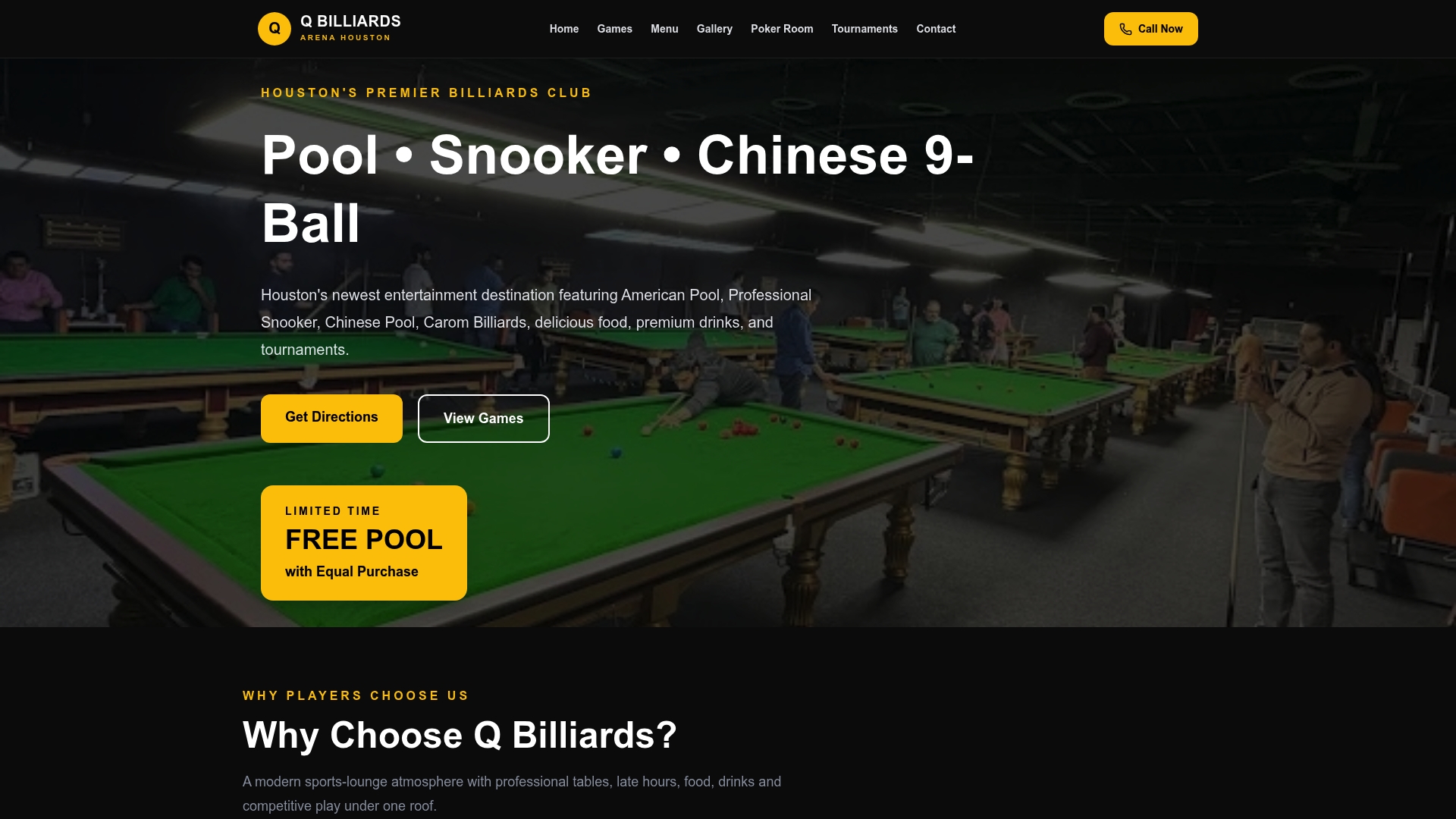
With 25 professional-grade tables spread across 11,000 square feet, Q Billiards Arena can handle brackets that would overwhelm a smaller room, whether that's an 8-player friendly night or a 32-player club event running on staggered starts. The venue handles staffing, table setup, and a full food and drink menu so you're not juggling a fryer and a bracket sheet at the same time, and late hours mean your finish-time math has real breathing room if matches run long. Hosts who want a private space for side games or post-tournament poker can also look at the poker room rental option.
If you're ready to move your next event off a single table and into a room built for it, check availability and booking details on the tournaments and events page.
Sources
- How to Run a Pool Tournament in a Bar - Our Pastimes
- How to Host a Pool Tournament at Home - GameRoomMania
- How to Organize a Pool Tournament: Complete Guide - Score7
- How to Organize a Pool Tournament - Cued Up Blog