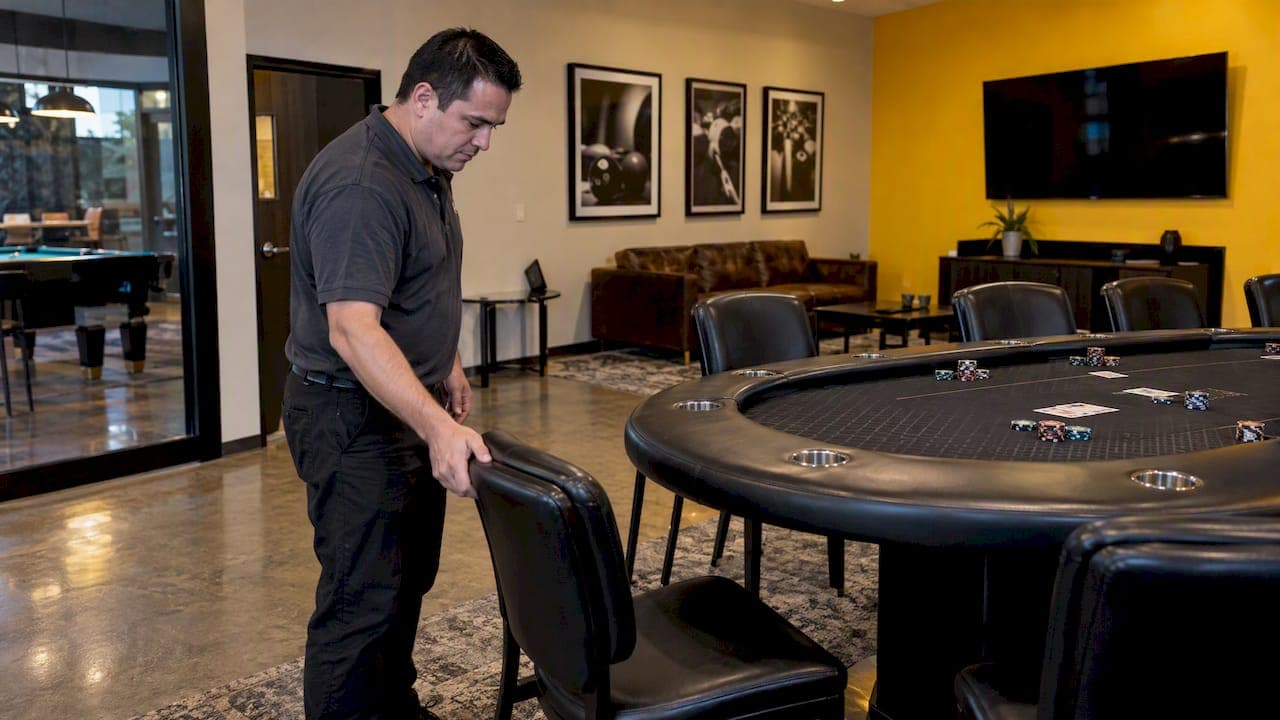
For most private poker nights, booking a turnkey venue with an existing poker room gives you the easiest path: tables, dealers, and setup are already handled. Renting tables and a dealer separately makes sense when you need a specific location, like a home or office. Venues like Q Billiards Arena offer a straightforward turnkey option, with costs ranging from modest hourly rates to full event packages. Start by checking availability on the poker room page.
TL;DR:
- Venue rooms suit casual games of 8 to 40 guests who want food and drinks nearby; rentals fit homes, offices, and other fixed locations.
- Quotes may bundle tables, chairs, setup, teardown, chips, and cards, but confirm shufflers, dealer minimum hours, food service, and extra staff before booking.
- Request itemized table, dealer, delivery, and overtime charges, then verify insurance, cancellation terms, arrival windows, and deposit deadlines before paying.
- Allow about 3 feet of clearance per player and add 6 to 7 feet to each table dimension when mapping the room layout.
- Book small games 2 to 4 weeks ahead, but reserve 8 or more weeks for tournaments that need multiple tables and dealers.
Table of Contents
- Venue Private Room or Table-and-Dealer Rental: What Fits Your Event
- What Rental Packages Usually Include
- How to Pick a Vendor: Checklist, Questions, and Red Flags
- Booking Timeline and Setup Logistics
- Typical Costs and a Sample Budget You Can Copy
- Practical Tips From Running a Venue
- Why a Turnkey Venue Usually Wins on Guest Experience
- Q Billiards Arena: How We Handle Poker Room Rentals
- FAQ
- Sources
Venue Private Room or Table-and-Dealer Rental: What Fits Your Event
Two booking paths cover almost every private poker event. The first is reserving a private room at a venue that already runs poker, where tables, chairs, and often dealers come built into the space. The second is renting tables and hiring a dealer to bring to a location you choose, such as a home, office, or rented hall.
A venue room suits hosts who want minimal coordination: you show up, play, and let staff handle setup, drinks, and teardown. Table-and-dealer rental suits hosts who need a specific address, like a corporate office or a backyard, or who want full control over décor and guest flow.
- A venue room typically works best for casual game nights of 8 to 40 guests who want food and drinks on-site.
- Table-and-dealer rental fits custom locations, private residences, or events where the address matters more than the amenities.
- Larger tournaments with multiple tables often lean toward venues because staff can manage several tables and dealers at once.
If convenience, food service, and a ready-made room matter most, a venue wins. If location flexibility matters more than amenities, bringing in tables and a dealer is worth the extra coordination.
What Rental Packages Usually Include
Whether you book a venue or hire tables and a dealer, most quotes break down into similar components. Knowing these in advance makes it easier to compare offers and spot what is missing.
- Tables: Standard poker tables seat 8 to 10 players, with sizes and felt styles varying by vendor.
- Dealers: Quoted by the hour, often with a minimum booking window and sometimes a dealer-to-table ratio for larger events.
- Chips, cards, and shufflers: Usually included in a package but worth confirming, since some vendors charge separately for automatic shufflers.
- Setup and teardown: Delivery, table assembly, and breakdown are commonly bundled into the rental price.
- Seating: Chairs matching table capacity, sometimes with upgraded or padded options at an extra cost.
Common add-ons include a tournament director for structured events, branded felt for corporate logos, and extra floor staff for larger games. Pricing generally follows one of three shapes: per-table rental, per-dealer-hour, or a flat event package with a minimum spend or minimum hours attached.
How to Pick a Vendor: Checklist, Questions, and Red Flags
Comparing vendors gets easier with one consistent checklist. Before booking, confirm:
- Capacity and table condition: Ask how many players each table seats and whether felt, rails, and chips show visible wear.
- Dealer experience: Confirm dealers have run private events before, not just casual home games.
- Insurance and liability: A reputable rental company carries insurance, which protects you if equipment is damaged during the event, as recommended in guides on renting poker tables.
- Cancellation policy: Ask what happens to your deposit if plans change, and how close to the event date you can cancel without penalty.
On your first call, ask about arrival windows for delivery or setup, the deposit amount and when it is due, overtime rates if the game runs long, and any staging requirements like a flat surface or power access.
Watch for vendors who refuse to itemize pricing or won't confirm insurance coverage; both are signs to keep looking. Request a breakdown that separates table, dealer, delivery, and overtime charges so you can compare quotes apples to apples.
Pro Tip: Ask for a packaged rate if you're renting more than one table. Vendors often bundle delivery fees or discount per-table pricing for multi-table bookings.
Booking Timeline and Setup Logistics
Lead time depends heavily on event size. A small home game for 8 to 10 players can often be booked 2 to 4 weeks out, while a multi-table tournament with several dealers needs 8 or more weeks to lock in staff and equipment.
- Confirm access early: Ask about loading docks, elevator width, and service door measurements, especially if tables need to travel through tight hallways or freight elevators.
- Plan clearance per player: Industry guidance recommends about 3 feet of clearance per player for chairs and movement around each table, a rule confirmed by poker table rental guides.
- Map the room footprint: Add roughly 6 to 7 feet in both length and width per table to account for seating and circulation space, then sketch a layout before committing to a room.
- Check venue restrictions: Ask about alcohol service curfews, noise limits, and occupancy caps, since these can cut a late-night game short if not confirmed in advance.
Typical Costs and a Sample Budget You Can Copy
Costs vary by region and package, but a few line items show up in nearly every quote: table rental, dealer fees by the hour, delivery or travel charges, and any venue minimum. Overtime and travel fees are the most common surprises, so ask about both before signing.
A practical budget checklist looks like this:
- Table rental: Priced per table or bundled into a flat package.
- Dealer fees: Charged per hour, often with a minimum of 3 to 4 hours.
- Venue rental or minimum spend: Applies when booking a private room rather than bringing your own tables.
- Food and beverage: Often a separate line item unless bundled into a venue package.
- Gratuities and deposits: Dealers commonly expect tips, and most vendors require a deposit to hold your date.
For tournament payouts, organizers can reference poker hand probability tables to set realistic prize structures based on how often certain hands occur. This helps avoid overpaying for common hands or underpaying for rare ones.
Per-player cost estimates differ for casual versus competitive events: social games often split table and dealer costs evenly among guests, while tournaments factor in prize pools and entry fees on top of base rental costs.
Practical Tips From Running a Venue
Running a room with 25 tables day in and day out teaches a few lessons that rarely show up in generic rental guides. Sizing tables correctly for the room matters more than most hosts expect: a table that fits on paper can still feel cramped once chairs, drinks, and dealers are in place.
Staffing ratios matter too. One dealer per table keeps games moving, but larger events benefit from a floor manager who can handle chip breaks and seating changes without pulling a dealer away from the table. A common setup mistake is forgetting to confirm whether the room allows outside food or drink, which can create last-minute scrambling.

Pro Tip: Confirm your dealer's arrival time includes at least 30 minutes before guests show up, enough time to set chips, check cards, and settle in before play starts.

Why a Turnkey Venue Usually Wins on Guest Experience
Authenticity matters, but convenience usually wins for private poker nights. A venue that already runs tables, dealers, and food service removes the guesswork that turns a fun night into a logistics project.
— Q
Q Billiards Arena: How We Handle Poker Room Rentals
We offer private poker room rental at our venue, built around professional-grade tables and late-night hours. Our space includes room for private games alongside food and drink service from our on-site menu, so guests can enjoy refreshments on-site.
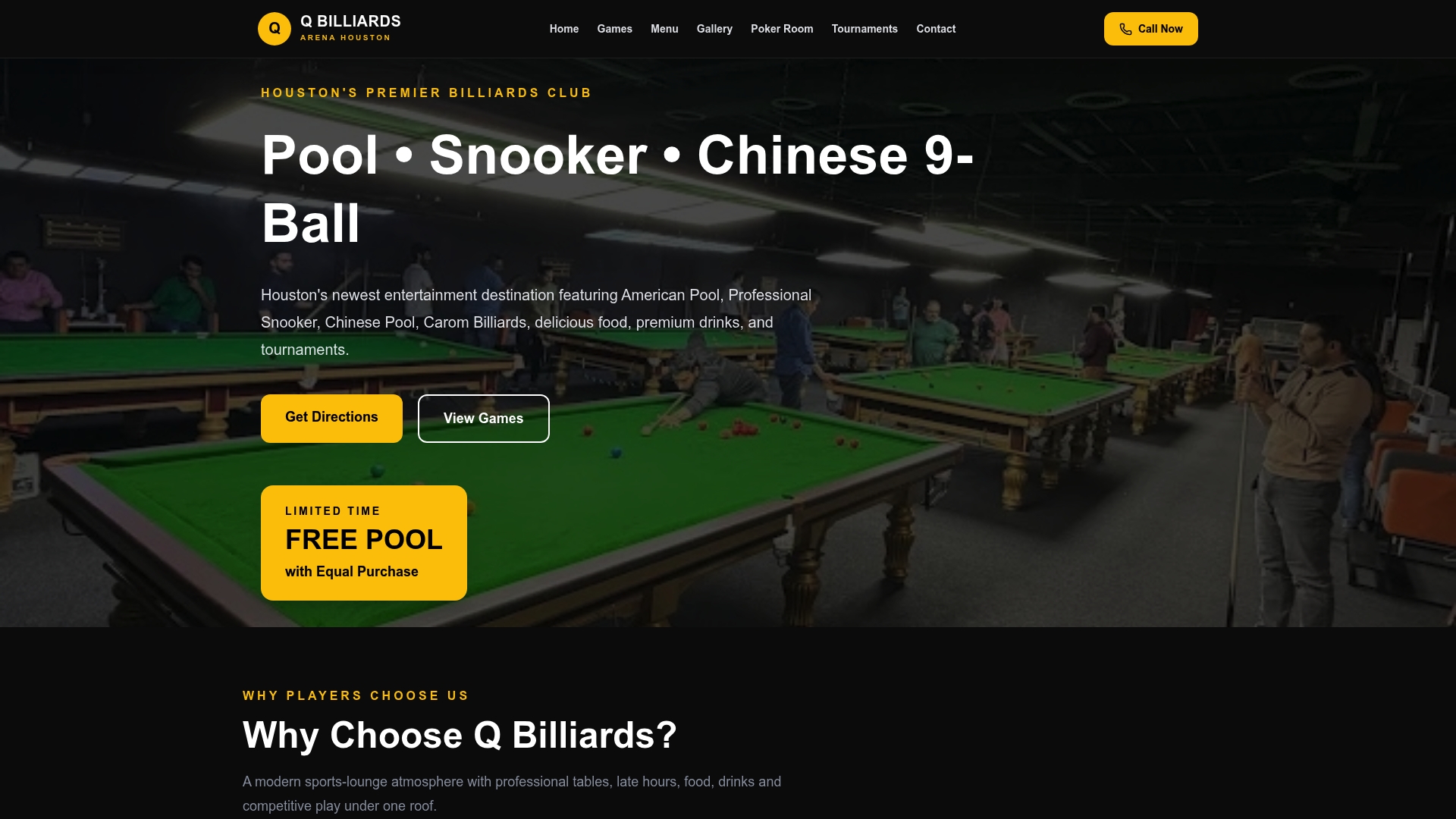
Requesting a quote starts with reaching out through our poker room page, where we outline availability and next steps. We recommend booking a few weeks ahead for smaller private games and earlier for larger groups to ensure availability.
| What's included | Details |
|---|---|
| Private poker room | Dedicated space separate from the main floor |
| Food and drinks | Available from our on-site menu |
| Booking | Request a quote through our poker room page |
If you're also planning a broader event with golf or fundraising components, event-planning workflows built for multi-step events can help coordinate vendors and timelines alongside your poker booking. Check current availability and pricing on our poker room rental page.
FAQ
What's included when you rent a poker room?
Most poker room rentals include tables, chairs, and often a dealer, with chips, cards, and shufflers bundled in or offered as add-ons. Setup and teardown are usually part of the package, while food, drinks, and extra staff like a tournament director are common optional extras.
How much clearance do you need per player at a poker table?
A widely used rule of thumb is about 3 feet of clearance per player for chairs and movement, as recommended in poker table rental guidance. This clearance helps avoid a cramped table and keeps players and dealers moving comfortably.
How far in advance should you book a poker room?
Small private games for 8 to 10 players can often be booked 2 to 4 weeks out, while larger tournaments with multiple tables and dealers need 8 or more weeks of lead time. Booking earlier also protects your date against overlapping events at popular venues.
Do organizers need to report poker event income for tax purposes?
Exempt organizations running gaming activities, including poker events, may have reporting obligations once gaming revenue crosses certain thresholds, according to IRS guidance on tax-exempt gaming. Rules vary by organization type and revenue level, so it's worth reviewing the specific thresholds or checking with a tax professional before hosting a fundraising poker event.
What questions should you ask before booking poker tables or a room?
Ask about table capacity and condition, dealer experience, insurance coverage, and cancellation policy before committing to a vendor. It also helps to request an itemized quote separating table, dealer, delivery, and overtime charges so you can compare offers clearly.
Sources
For readers who want more detail on tax reporting, space planning, or tournament payouts, these references cover the regulatory and practical side of poker room rentals.
- Publication 3079 (Rev. 10-2018) — Tax-Exempt Organizations and Gaming
- Raise the stakes: Things to consider when renting poker tables — All In One Events
- Poker probability: poker hand odds & royal flush odds — Pokerology