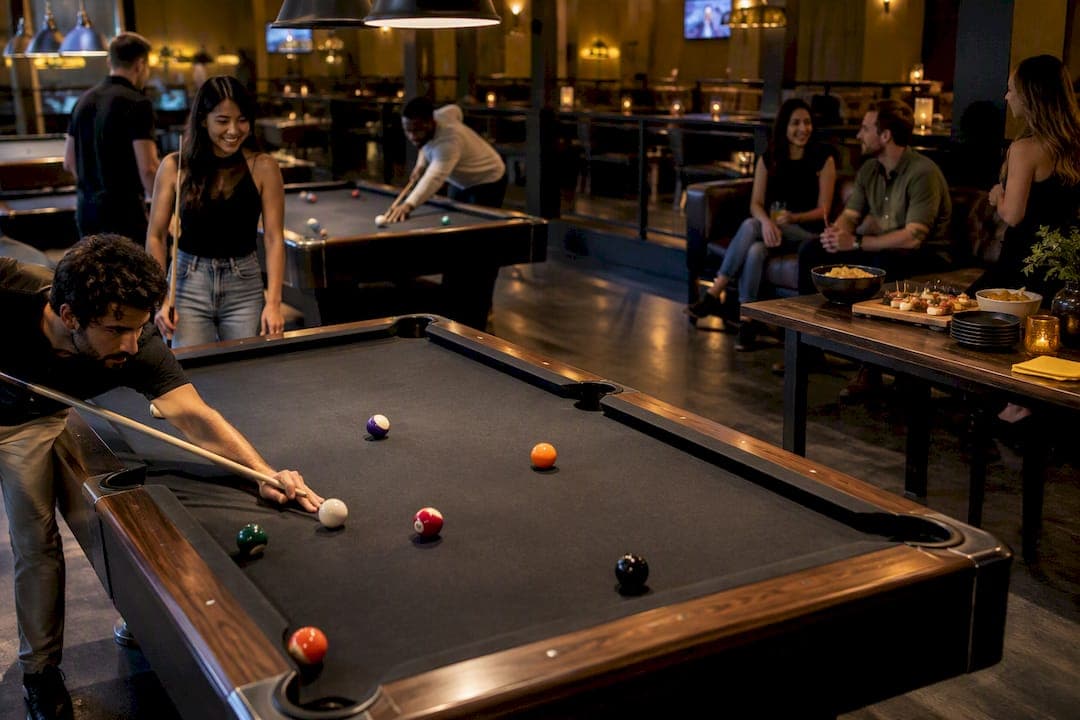
Book reserved tables for a cue-sports crowd or a private poker room for a card-focused group, then get a written package before you confirm the date. That package should spell out food and beverage minimums, staffing (dealer or tournament director), and deposit terms in one document. Venues like Q Billiards Arena in Houston offer both formats under one roof, making it easier to compare them than juggling two separate venues.
TL;DR:
- Private venues require a written package detailing food, staffing, deposits, and cancellation policies before confirming the booking.
- Different formats, such as rotation, tournaments, or buyouts, should match the group's competitiveness level and planned activity type.
- Confirm in writing whether the venue permits cash prizes or buy-ins for poker events, and consider venue-credit alternatives to avoid licensing issues.
- Schedule match times with buffers and ensure tables are equipped with cues, chalk, and seating to prevent delays and mishaps during the event.
- Book at least two to three weeks in advance for small groups and four or more weeks for large or full-space bookings, especially around holidays.
Table of Contents
- Private Game Night Ideas Worth Reserving a Venue For
- What Should You Send the Venue When Booking?
- Running the Night Without Bottlenecks
- What to Confirm Before You Charge Buy-Ins for Poker
- Sample Agendas You Can Copy Into an Invite
- Why a Real Venue Beats Improvising One
- How to Book a Private Night at Q Billiards Arena
- Sources
- FAQ
Private Game Night Ideas Worth Reserving a Venue For
Not every group wants the same night. The format you book should match how competitive your guests actually are, not how competitive they claim to be at the RSVP stage.
Reserved-table rotation works best for groups of 6 to 16 who want to play without the pressure of a bracket. Reserve enough tables so no more than four people share one at a time, request shared seating nearby, and ask the venue to set out shared platters instead of individual plates so guests can graze between games.
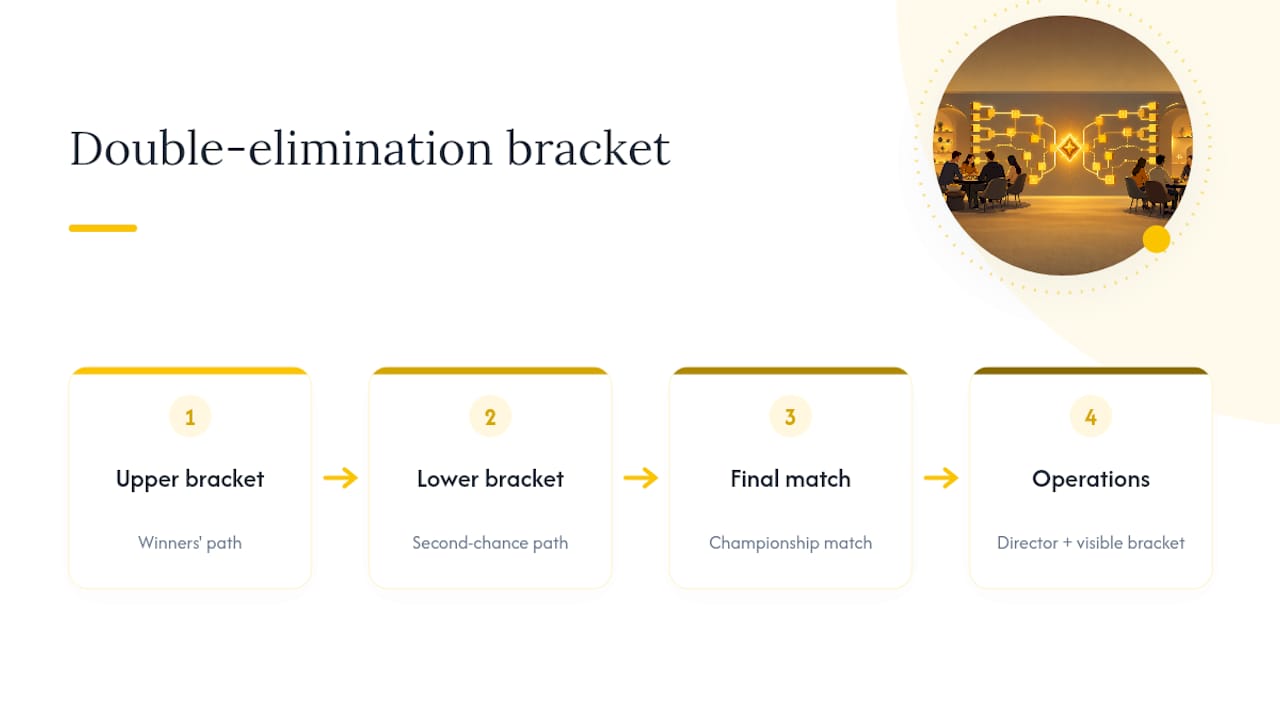
Tournament night suits groups that actually want to compete. Double-elimination is the standard format for organized pool events because it guarantees every player at least two matches, which keeps early losers from sitting out the rest of the night. Ask the venue to assign a tournament director and post a visible bracket, whether that's a printed sheet or a screen near the tables, ensuring every player gets multiple matches.
Private poker room rentals fit groups who want cards, not cues. Ask about professional dealers and branded chips, and decide up front whether prizes will be cash, venue credit, or nothing at all. That single decision changes what you need to confirm legally, which the next section covers in detail.
Section buyout for mixers makes sense for larger, more social crowds. Request dedicated food stations, spectator seating along the rail, and enough ambient audio control that conversation doesn't compete with a blaring TV.
Hybrid formats split the room: half tables running casual rotation, half running a mini tournament. If you go this route, stagger start times by 15 to 20 minutes so the venue's staff aren't managing two intense scheduling problems at once.
For a deeper breakdown of relaxed formats, Qbilliardshtx's guide to group games for pool night covers rotation structures you can copy directly into an invite.
What Should You Send the Venue When Booking?
Send this as a single email or form, not a string of follow-up texts. Venues field dozens of these requests weekly, and a complete first message gets a faster, more accurate quote.
- Date, start and end time, and total guest count.
- One named contact person who can approve last-minute changes.
- Table types needed (pool, snooker, or poker) and whether you want a private room or a full section.
- Whether you need a dealer or tournament director on staff for the event.
- Food and beverage minimums, what's included in that minimum, and what costs extra.
- Gratuity policy and whether local taxes are added on top of quoted prices.
- Deposit amount, cancellation window, and refund terms.
- Whether the venue requires event insurance for larger private bookings.
- The venue's written policy on gambling, buy-ins, or cash prizes if poker is involved.
- Age and ID requirements, plus AV or accessibility needs for any guests.
Private poker event materials commonly list per-person or per-table pricing, dealer inclusion, and gratuity separately, so ask the venue to itemize each rather than quote one bundled number, a pattern confirmed in published poker-party event materials.
Pro Tip: Ask for the written package before you pay a deposit, not after. A verbal quote over the phone almost never matches the invoice that shows up two weeks later.
Running the Night Without Bottlenecks
Table scheduling is where most private events lose time, not table count. A venue with 25 tables can still run behind if nobody assigns match windows or turnover buffers between games.
Build the schedule around expected match length. Casual games run faster than tournament races; set a per-match window with a 5 to 10 minute buffer for cleanup and reset before the next pair sits down. This buffer, applied consistently across every table, is what keeps a multi-table tournament from cascading into delays by hour two.
Before guests arrive, confirm the room has:
- Spare cues and extra chalk staged near each table, not locked in a back room.
- Clean, freshly polished balls for every table, checked that morning.
- Accessible seating for players waiting their turn, plus a small accessory table for scorecards or phones.
- A clear line between the play area and the food service area, so spills stay off the felt.
Time food service around breaks in play, not during active matches. A tray passed too close to a table with balls in motion is how cloth gets damaged and how a fun night turns into an awkward conversation with the manager.
Visible brackets and a dedicated tournament director reduce disputes over calls and keep the whole timeline honest, and that structure tends to keep guests around longer since everyone knows they'll get at least two matches guaranteed. Send guests a pre-event message covering arrival time, parking, ID requirements if poker is involved, and dress code, and include a QR code linking to the live bracket or schedule so nobody's hovering over your shoulder asking when they're up next.
What to Confirm Before You Charge Buy-Ins for Poker
Poker complicates a private event in ways cue sports don't. Federal guidance on gaming addresses reporting thresholds for cash prizes, but whether a venue can legally host buy-ins or award cash prizes at all depends on state and local licensing, which varies widely and isn't something a phone call can settle.
Get the venue's gambling policy in writing before you plan around cash prizes. A verbal "should be fine" from a manager is not a legal position you can rely on if a guest disputes a payout.
If cash prizes feel risky or unclear, safer formats exist that still deliver a real poker-room experience. Play-for-fun tournaments with venue credit instead of cash sidestep most of the licensing question. Dealer-hosted lessons using token chips work well for mixed-experience groups where some guests have never played a hand. Professional providers in this space often structure their events as entertainment rather than gambling, which is worth asking your venue whether they follow the same model. Whatever format you land on, confirm age and ID rules, whether the event needs added insurance, and who is responsible for handling and reporting any prizes.
Sample Agendas You Can Copy Into an Invite
Timing is the part organizers guess at most, and it's the easiest thing to get right with a template. Match your agenda to guest count instead of writing one from scratch.
- 6 to 12 guests, casual rotation (3 hours): Arrival and drinks for 30 minutes, first food service at the 45 minute mark, rotate tables every 20 to 30 minutes, second food pass around hour two, wind down the last 20 minutes.
- 16 to 32 players, double-elimination tournament (4 to 5 hours): Registration and warm-up for 30 minutes, bracket announcement, matches run in scheduled windows with checkpoints after each round to confirm the bracket is current, food served between rounds rather than during play, awards in the final 15 minutes.
- 30-plus guests, multi-table poker (4 to 6 hours): Staggered registration in three waves to avoid a crowded front desk, dealer rotations every 45 to 60 minutes to keep energy consistent across tables, a midpoint food service, and a clear final-table moment guests can gather around.
Keep the closing short. Announce results or hand out trophies or credit vouchers within the last 15 minutes so guests who need to leave aren't stuck waiting through a long thank-you speech.
Why a Real Venue Beats Improvising One
The venue runs many professional-grade tables across a large space, plus a weekly tournament schedule and late hours that give organizers room to actually finish an agenda without rushing. That scale is what makes formats like double-elimination brackets or a full section buyout realistic instead of theoretical. It's also why templates matter: a tournament format guide built from real event structure saves you from reinventing scheduling logic on the fly.
— Q
How to Book a Private Night at Q Billiards Arena
The venue provides a private poker room with dealer support, reserved pool and snooker tables that don't need to be shared with walk-in customers, and a kitchen already running behind the scenes for food and drinks. That's the real advantage over piecing together tables, a folding card set, and takeout menus yourself. You skip the setup labor and the guesswork about whether ten people can actually fit around your dining room table.
Start by requesting a written event package through the events and booking page, which covers tournament setups, room rentals, and staffing options. If poker is the centerpiece of your night, go straight to the poker room rental page to ask about dealer availability and format options. Confirm your deposit and cancellation terms in writing, name one point of contact on your side, and check the menu ahead of time so food minimums don't come as a surprise on the invoice.
Sources
- How to Organize a Pool Tournament: The Complete Guide | Cued Up Blog
- IRS Publication P-3079 (Gaming by Exempt Organizations) excerpt
- The Lodge Poker Party Group Events PDF
- Private Poker Night Venue in Soho / TriBeCa NYC | LUME Studios
FAQ
What's the Difference Between Reserved Tables and a Private Poker Room?
Reserved tables give your group exclusive use of specific pool, snooker, or Chinese 9-ball tables while the rest of the venue stays open. A private poker room is a fully separate space, often with its own dealer and door, built specifically for card games.
How Far in Advance Should I Book a Private Game Night?
Two to three weeks is a safe window for groups under 20, since it gives the venue time to confirm staffing and finalize a written package. Larger tournaments or full section buyouts often need four or more weeks, especially around holidays or weekends.
Can I Have Cash Prizes at a Private Poker Night?
That depends entirely on the venue's own policy and your state or local licensing rules, which vary and aren't something to assume. Ask for the venue's gambling policy in writing, and consider venue-credit prizes as a lower-friction alternative.
Does Q Billiards Arena Offer a Poker Room for Private Events?
Yes. Q Billiards Arena offers a private poker room rental for group events, alongside reserved pool and snooker tables across its 25-table venue. Pricing for the poker room isn't published, so request a written quote directly.
How Many Tables Do I Need for a Group of 20?
Plan for roughly one table per four to five guests if you want steady rotation without long waits. For a 20-person group, that's four to five tables minimum, plus one or two extra if you're running a tournament bracket alongside casual play.