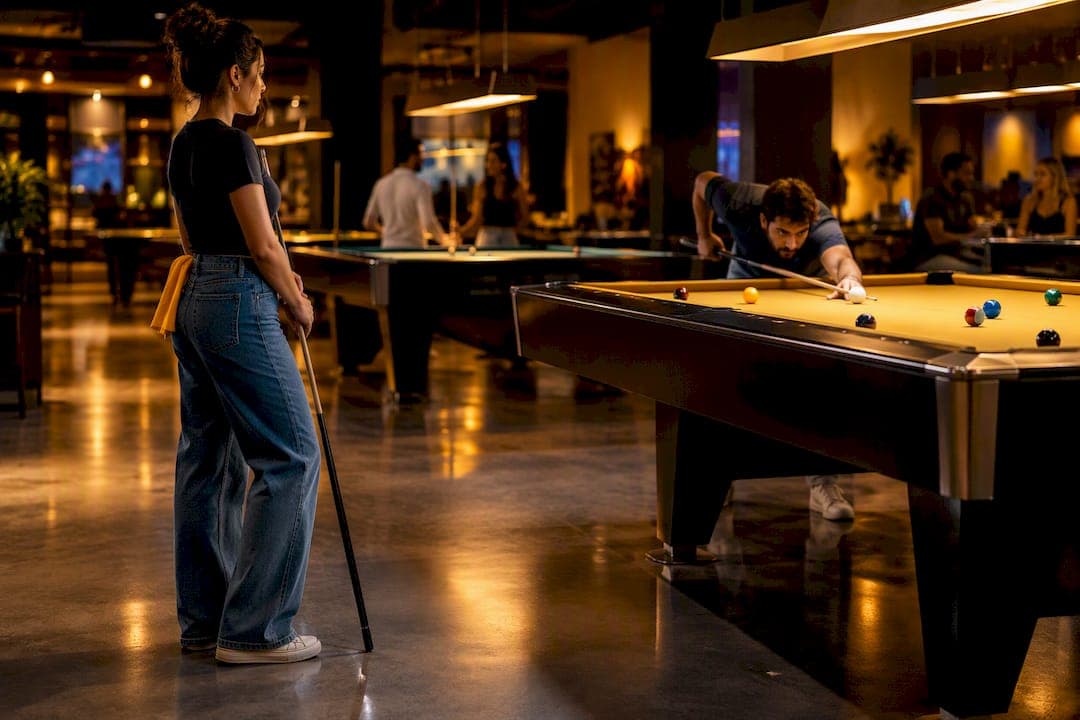
Pool hall etiquette comes down to one thing: respect the players, the equipment, and the house rules, in that order. The single most important habit to build is staying out of the shooter's sight line and staying quiet while they're at the table. Everything else, calling your own fouls, racking correctly, tipping when appropriate, flows from that one act of basic courtesy.
TL;DR:
- Avoid standing in a shooter's line of sight and speaking during their shot, as these are considered clear breaches of billiards etiquette.
- Keep tables and equipment clean by avoiding food, drinks, or leaning on the rails, and handle cues gently and only with permission.
- Calling your own fouls promptly is expected, especially for scratches, wrong contact, no-rail fouls, or moved balls, with venue rules overriding league standards.
- Respect unwritten norms such as not coaching during shots, waiting to comment, and understanding local shot clock and measurement rules.
- Practice good league and tournament etiquette by arriving prepared, respecting formats, managing disputes calmly, and maintaining the table and equipment in good condition.
Table of Contents
- Top 10 Pool Hall Rules Every Beginner Should Know
- Table and Equipment Care
- Rules, Fouls, and House Policies
- Unwritten Rules and Social Norms
- Etiquette for League Play and Tournaments
- How Etiquette Works in a Real Hall
- Guidelines for Tipping and Paying Table Fees
- How to Acknowledge a Good Shot
- Why Etiquette Is What Keeps Pool Halls Worth Visiting
- Practice What You've Learned at Q Billiards Arena
- Where These Rules Come From
- FAQ
Top 10 Pool Hall Rules Every Beginner Should Know
Most of what separates a welcome regular from someone the staff quietly dreads comes down to a short list of habits. None of them require skill. They just require attention.
The biggest one is avoiding "sharking," a term for standing in a shooter's line of sight, moving around during their shot, or talking while they're lined up. APA etiquette guidance treats this as one of the clearest breaches of billiards etiquette, and it's not a gray area. Whether it's intentional or not, standing where a shooter can see you in their peripheral vision is a distraction they didn't ask for.
Beyond that, here's the shortlist that covers most situations:
- Stay seated or step back when you're not shooting, especially near the table your opponent is using.
- Be ready when it's your turn. Chalk your cue, plan your shot, and don't disappear to the bar mid-rack.
- Keep your voice down during someone's shot, even if you're chatting with a friend two tables over.
- Never celebrate a scratch or a missed shot loudly. It reads as gloating, even when you don't mean it that way.
- Keep your temper in check. Bad rolls happen to everyone, and slamming a cue or cursing at a table draws attention you don't want.
- If you're spectating, stand where you won't block walkways or a shooter's approach angle.
Slow play is its own kind of rudeness. Taking five minutes to line up a routine shot holds up the table for everyone waiting, and in a busy hall on a Friday night, that adds up fast.
Table and Equipment Care
The felt and slate under it are the most expensive part of any pool table, and they're also the easiest thing to damage without meaning to. That's why food and drinks stay off the rails and cloth entirely. Set your glass on a side table or the rail's outer edge tray if the venue provides one; a spilled drink on cloth can mean a costly reclothing job.

Sitting or leaning your full weight on the rail is another habit to break early. According to guidance on proper pool stance, leaning heavily on the rail can warp or crack the frame over time, and most halls will ask you to stop the moment they see it.
Never pick up another player's cue without asking. It's personal equipment, often expensive, and handling it uninvited is a quick way to irritate a regular.
- Chalk by swiping the tip lightly across the cube, not grinding it in circles.
- Keep your bridge hand clean and dry so chalk dust doesn't build up on the cloth.
- Set your cue against the wall rack, not leaned against the table.
Pro Tip: Grinding your chalk instead of swiping it creates a fine dust cone that lands right on the felt and the cue ball, which is exactly what makes shots skid unpredictably later in the rack, as chalking guides note.
Rules, Fouls, and House Policies
Calling your own fouls is not optional if you want to be taken seriously at a table. The APA team manual is direct about this: players are expected to call fouls on themselves immediately, and once the next shot has been taken, that foul generally can't be called retroactively.
A few fouls trip up beginners more than any others:
- Scratching the cue ball. Sinking the white ball on your turn hands ball-in-hand to your opponent.
- Wrong first contact. Hitting a ball other than your group first, or hitting nothing at all, is a foul in most rule sets.
- No-rail fouls. If no ball touches a rail after contact (and nothing is pocketed), that's typically a foul too.
- Jumped or moved balls. Balls that fly off the table or get bumped by accident have their own rulings depending on the house.
That last point matters more than most beginners realize: the venue's own posted rules always override general league rules. APA guidance confirms that if a hall bans jump shots or massé shots to protect its cloth, that policy stands no matter what a league rulebook says elsewhere. When in doubt, ask the front desk before you attempt anything unusual.
Unwritten Rules and Social Norms
Some rules never get posted anywhere. They get learned by watching, and skipping that step is how newcomers accidentally annoy a room full of regulars.
Unsolicited coaching is high on that list. Don't offer tips to someone mid-shot unless they've asked, even if you can see an obvious better angle. If a friend genuinely wants help, wait until they ask, then keep it brief.
You'll also hear players mention the "two finger rule" and the "30 rule." Neither is universal. The two finger rule usually refers to a casual measure some players use for bridge spacing or chalk positioning, and the 30 rule typically refers to a shot clock, informal or league enforced, giving a player around 30 seconds to take a shot before it's considered a delay. Conventions vary by hall and by league, so treat both as local customs rather than fixed law.
- Cheering a great shot is welcome. Cheering over someone's backswing is not.
- Wait until the shooter has finished their turn before commenting on the table layout.
- Rack only when the table is fully clear and both players are ready.
Etiquette for League Play and Tournaments
Organized play adds a layer of structure on top of everything above, and it's worth knowing before your first league night.
- Show up prepared. Bring your own cue, your own chalk, and your entry fee in cash if that's what the event requires. Arriving late to a scheduled match puts your whole team behind schedule.
- Respect the format. Follow lag procedures, don't break your cue down mid-match unless there's a real delay, and stick to whatever time limits the host location's guidance sets for your division.
- Handle disputes calmly. If something's unclear, a wide-open scratch call, a questionable foul, stop play and bring in your team captain or a tournament official rather than arguing it out at the table.
Marking the cloth, either intentionally or through careless chalk handling, is treated seriously in league settings because the same tables often host matches for weeks at a time.
How Etiquette Works in a Real Hall
Posted rules only work when a venue actually enforces them consistently. At Q Billiards Arena, staff walk newcomers through the basics before their first rack: where to chalk without dusting the felt, how tournament brackets rotate players through tables, and what the dress expectations look like for league nights and tournament play.
Small habits keep a room like this running well for everyone. Wiping up a spilled drink instead of walking away, tipping your server during a long tournament night, and following staff direction when tables rotate all add up to the same thing: a room regulars want to keep coming back to.
Guidelines for Tipping and Paying Table Fees
Table fees are usually straightforward: you pay for time on the table, and the clock starts when you sit down. At Q Billiards Arena, American Pool runs $10 per hour, while Standard Snooker is $15 per hour and Heated Snooker is $20 per hour. Chinese 9-Ball and Carom Billiards both run $15 per hour. Tournament entry works differently, with the Tuesday and Friday Night Pool Tournaments each costing $10 and the 1-Red Snooker Tournament priced at $20.

Tipping isn't required at most pool halls the way it is at a full-service restaurant, but it matters more than beginners expect in service-heavy venues. If a server brings you drinks or food tableside throughout a long session, tip the way you would at any bar, generally 15 to 20 percent on your tab. If desk staff help you settle a dispute, swap out equipment, or squeeze you onto a busy table during a rush, a few dollars left with your payment goes a long way toward how you're treated on your next visit.
The real etiquette lesson here is simpler than the math: pay promptly when your session ends instead of making staff chase you down, and don't linger at a table past your paid time when others are waiting. Rooms that respect the clock keep tables turning over fairly for everyone in line.
How to Acknowledge a Good Shot
A great shot deserves a reaction, but the timing and size of that reaction says a lot about whether you understand the room you're in.
The simplest version is a quiet nod, a "nice shot," or a light tap of your cue on the floor after your opponent sinks something difficult. That's true whether they're your teammate or the person you're trying to beat. Sportsmanship guidance from experienced players consistently points back to this: shake hands and acknowledge good play regardless of who wins the game, because pool halls run on repeat visits from the same faces.
Save the bigger reactions, a loud "wow" or applause, for shots that genuinely earn it: a combination bank, a tough cut across the rail, a clutch break. Overreacting to routine shots can come across as sarcastic even when it isn't, and underreacting to a genuinely hard shot reads as cold. Somewhere in between is where most regulars land.
What you avoid matters just as much as what you do. Don't acknowledge a good shot by immediately pointing out the lucky roll that followed it. Don't use it as an opening to start unsolicited coaching about what your opponent should do next. And never let a good shot from across the room pull your attention away from your own table when it's your turn to play. A quick glance and a nod cost nothing. A long distraction costs someone their focus.
Why Etiquette Is What Keeps Pool Halls Worth Visiting
Good etiquette isn't about being polite for its own sake. It's what keeps tables in good shape, keeps disputes rare, and keeps regulars willing to make room for someone new at their table. Halls with sloppy etiquette lose good equipment fast and lose good players faster. The habits in this guide take almost no skill to learn, just attention, and that's exactly why they matter. Get the small things right consistently, and you'll notice something simple: people start saving you a seat.
— Q
Practice What You've Learned at Q Billiards Arena
Reading the rules is one thing. Playing them out on a real table, under real house rules, is what actually makes them stick. Some venues offer multiple professional-grade tables across various billiard games in a spacious setting built for both casual nights and serious competition.
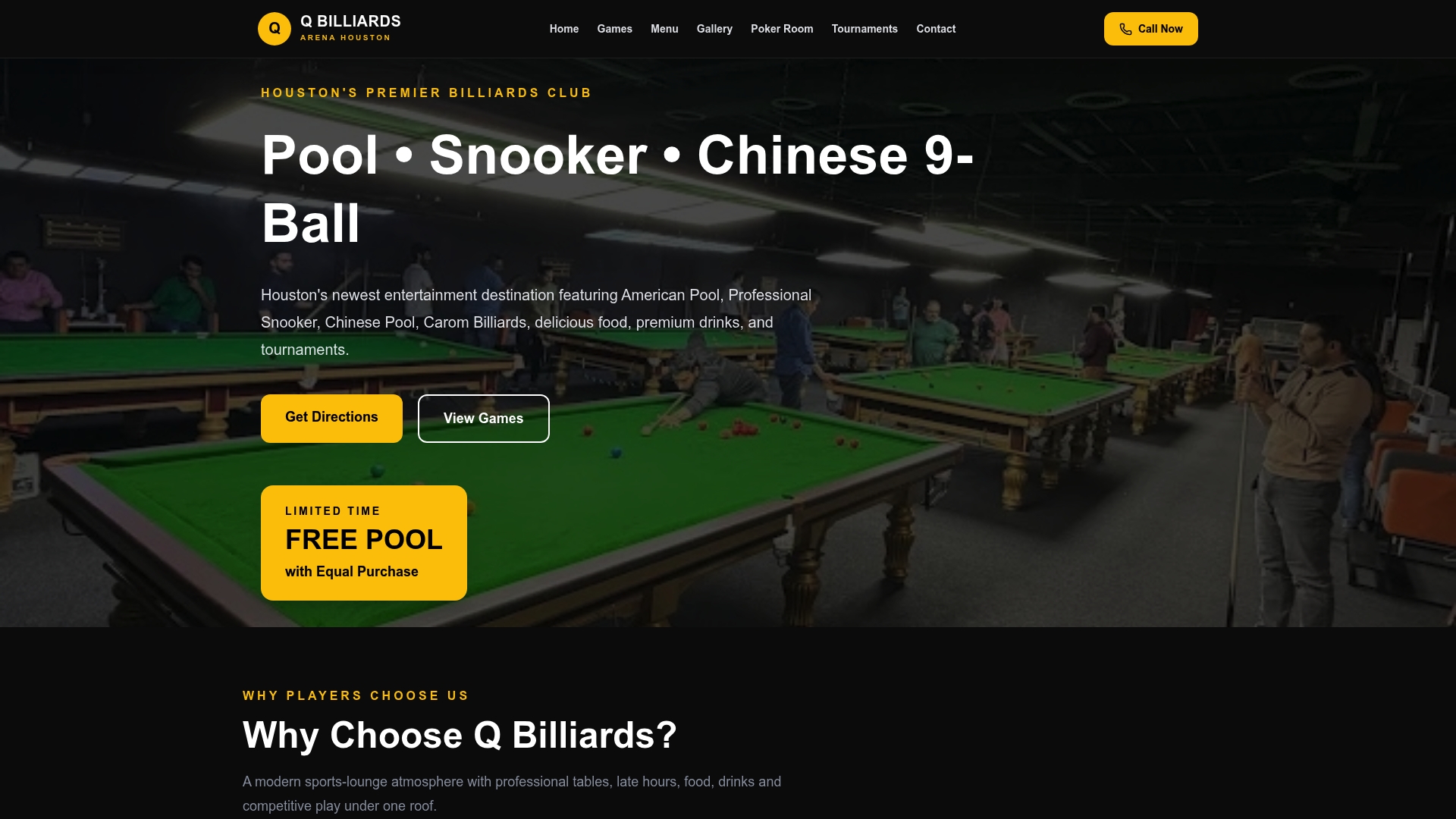
If you're new to etiquette-conscious play, weekly events are the easiest way to practice it around people who already know the drill. The Tuesday and Friday Night Pool Tournaments put you at a table with regulars who expect you to follow calling-your-own-fouls and no-sharking norms without being told twice, which is honestly the fastest way to learn them. Snooker players can work on the same habits through the coaching camp and events listed on the tournaments and events page, and posted house rules at the venue make it clear which local conventions apply before you ever rack a ball. Check current tournament dates and table availability before your next visit.
Where These Rules Come From
This guide draws on the APA team manual, APA's official etiquette page, and PBIA's pool etiquette guide, alongside Q Billiards Arena's own venue and house rules.
FAQ
What is the etiquette at a pool hall?
Pool hall etiquette means respecting other players, the equipment, and posted house rules. The biggest expectation is staying out of a shooter's line of sight and staying quiet while they play, a behavior APA guidance explicitly calls out as sharking when done deliberately.
What are the house rules for a billiard hall?
House rules are venue-specific policies that override general league rules, covering things like food and drink placement, jump or massé shot permissions, and dress code. APA guidance confirms that whatever a venue posts takes precedence, so it's worth checking the front desk or the venue's own rules page before you start.
What is the two-finger rule in pool?
The two-finger rule isn't a universal law, it's an informal convention some players use for bridge spacing or measuring distance on the table. Definitions vary by hall and by region, so treat it as a local custom rather than an official regulation.
What is the 30 rule in pool?
The 30 rule typically refers to a shot clock giving a player roughly 30 seconds to take their shot before it counts as a delay of game. Enforcement varies widely between casual play and organized leagues, so it's best to ask at the table or check posted rules for the specific hall or event.
Does Q Billiards Arena charge table fees?
Yes. American Pool costs $10 per hour, Chinese 9-Ball and Carom Billiards are each $15 per hour, and snooker ranges from $15 to $20 per hour depending on whether the table is heated.