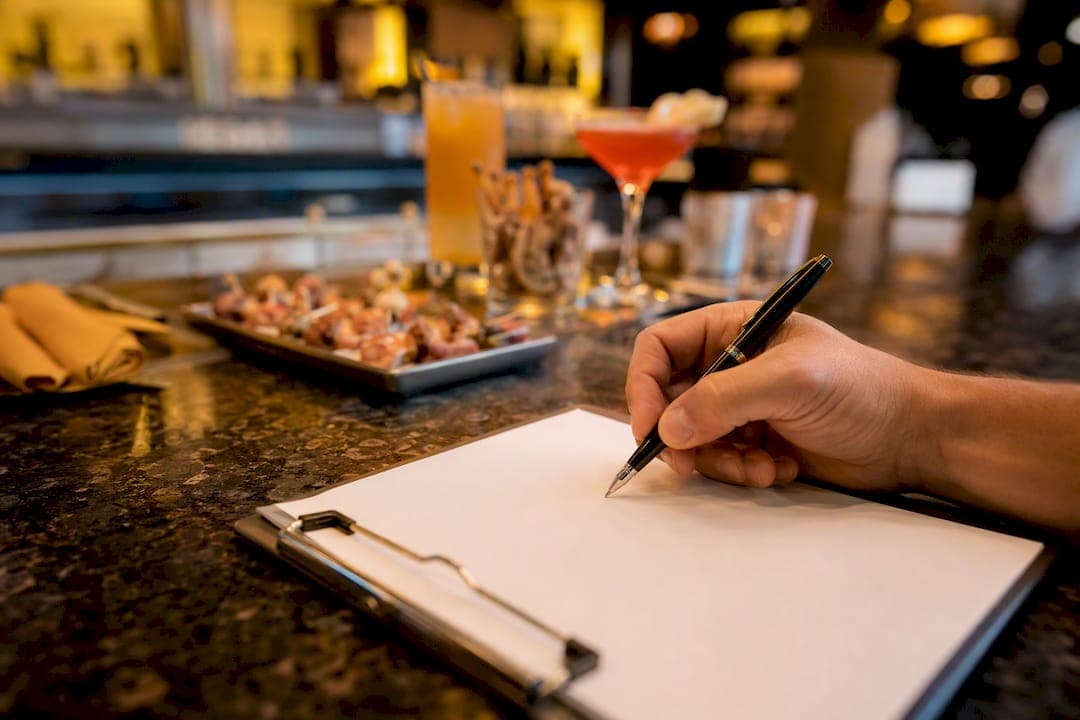
A food-and-beverage minimum is the dollar floor a venue requires you to spend on food and drinks to reserve a private room. Fall short, and the venue invoices the difference as a shortfall or rental adjustment, usually before tax and service charges get added on top. Before you sign anything, do three things:
- Confirm exactly what counts toward the minimum and what doesn't.
- Compare the minimum against a flat room rental fee to see which actually costs less.
- Set your guest guarantee early so the venue's kitchen and your budget line up.
TL;DR:
- Food and beverage minimums typically exclude tax, service charges, outside vendor fees, and corkage, so your total bill will likely be higher than the minimum quoted.
- Minimums are set based on room capacity, demand, and date; peak periods like holidays can raise minimums several times above standard rates.
- Failing to meet the minimum results in a shortfall charge, which is taxed and charged with a service fee similarly to actual food and drink spend.
- Comparing a flat room rental fee with the minimum helps determine which option is more cost-effective for your expected spending.
- Clarify in writing how shortfalls are billed and taxed before signing, since misunderstandings often cause surprise invoices.
Table of Contents
- What Counts Toward the Room Rental Food Minimum
- How Do Venues Set Their F&B Minimums?
- What Happens If You Don't Hit the Minimum?
- How to Meet or Reduce Your F&B Minimum
- Three Worked Examples: Minimum vs. Actual Spend
- Contract Details Worth Checking Before You Sign
- How Q Billiards Arena Applies These Rules to Private Events
- Key Takeaways
- Why Hosts Keep Getting Surprised by the Final Bill
- Book Your Private Room at Q Billiards Arena
- Sources
What Counts Toward the Room Rental Food Minimum
Venues almost always count food and hosted bar spend toward the total: plated meals, buffet charges, per-person packages, and any beverage package you select. Where hosts get tripped up is assuming that number is the final bill.
- Counted: food orders, hosted bar tabs, plated or buffet per-person charges, beverage packages.
- Usually excluded: sales tax, service charge or gratuity, the room rental fee itself, outside vendor fees, and corkage.
- Gray areas: comped items, promotional discounts, and food brought in by a third-party caterer. Large venues in particular often hold exclusive catering rights and restrict outside food and beverage entirely, charging corkage or removing outside items without written approval.
The pre-tax, pre-service-charge structure is close to universal, but "usually" isn't "always." Get it in writing.
Pro Tip: Ask the sales manager to mark up a sample invoice showing exactly which lines apply toward your minimum before you sign. A verbal answer means nothing once the final bill arrives.
How Do Venues Set Their F&B Minimums?
Minimums aren't arbitrary. Venues price them against what the room would otherwise earn: capacity, expected turns, day of week, and how badly they want that date filled. A Tuesday lunch in a side room costs the venue almost nothing in lost opportunity. A Saturday night in the main dining room during December is a different calculation entirely.
- Small private dining rooms: often a few hundred dollars on slow weeknights.
- Mid-size event rooms: typically climb into the low thousands for weekend evenings.
- Prime ballrooms or peak dates: can run several thousand dollars, especially around holidays.
Why December costs more: sample venue contracts show holiday and peak-date addenda that raise minimums sharply above standard weekend pricing. If your event lands between Thanksgiving and New Year's, expect the quoted minimum to run well above what the same room costs in February.
The pattern holds across formats: the scarcer the date, the higher the floor. A Monday in August will almost always undercut a Friday in December for the identical room.

What Happens If You Don't Hit the Minimum?
Missing the minimum doesn't cancel your event. It just changes your final invoice.
The venue calculates the gap between what you actually spent on food and drink and the contracted minimum, then adds that gap as a separate line. You'll see it labeled as an "unmet minimum," a "room rental adjustment," or simply a "shortfall charge." The label varies by venue; the math doesn't.
- Shortfall = contracted minimum minus actual pre-tax F&B spend.
- That shortfall commonly still gets hit with service charge and sales tax, the same way your food order would.
- State and local tax treatment on shortfall charges can vary, so don't assume your venue's practice matches one you used last year.
A shortfall functions as a penalty for underspending, and most contracts treat it as if it were food revenue for tax and service-charge purposes, even though no additional food was served.
Ask the venue to confirm in writing, before you sign, whether the shortfall gets taxed and service charged the same as your actual order, and consider using an online booking calendar for escape rooms to streamline your planning and guarantee timeline. That single question prevents the most common invoice surprise hosts report after private events.
How to Meet or Reduce Your F&B Minimum
Start by comparing the minimum against a flat room rental fee. Planner guides consistently recommend running both numbers before committing, because a $2,000 minimum with a group that naturally spends $2,400 in food and drink is a worse deal than a flat $1,200 rental with the same group ordering off the regular menu.
- Run the comparison first. If your expected spend already clears the minimum comfortably, the minimum structure usually wins. If it's a stretch, ask about a flat rental instead.
- Build the menu to the floor. Set menus, guaranteed per-person pricing, and modest bar packages all count toward your minimum and make the math predictable.
- Set your guarantee with room to spare. Venues plan for a small overage, often around 5%, so a slightly padded guest count reduces shortfall risk without wasting food.
- Negotiate the terms, not just the number. Ask for a lower minimum in exchange for an earlier start time, a date-flexible booking, or a limited bar package instead of full open bar.
Pro Tip: If the venue won't budge on the minimum itself, ask for credits toward add-ons instead. A free dessert upgrade or extra appetizer round often costs the venue less than a discount, but it still helps you hit the number.
Three Worked Examples: Minimum vs. Actual Spend
Numbers make this concrete faster than any explanation.
- Scenario A: Weekday private dining. Minimum is $800. Twenty guests order off the regular menu, averaging $30 per person in food and drink. Actual spend: $600. Shortfall: $200, plus service charge and tax on that $200.
- Scenario B: Guaranteed count with a set menu. Minimum is $1,500. Host guarantees 30 guests at a $50 per-person set menu. Total: $1,500 exactly. No shortfall, no surprise line item, and the invoice matches the contract.
- Scenario C: Prime Saturday, high minimum. Minimum is $4,000 for a December weekend. Actual F&B spend hits $4,200. A 20% service charge and local sales tax apply on top of that $4,200, meaning the final bill runs well past the quoted minimum even though the group cleared it comfortably.
The lesson across all three: the quoted minimum is never your total bill. It's the floor your food and drink spend has to clear before tax and service charge get layered on.
Contract Details Worth Checking Before You Sign
Most invoice surprises trace back to a clause nobody read closely at signing. A few deserve specific attention.
- Deposits: many venues require a nonrefundable deposit to hold the date, applied against your final F&B total rather than refunded separately.
- Guarantee deadlines: commonly 7 to 14 days before the event, after which your guest count locks in and you're billed for that number regardless of who actually shows.
- Overage rules: confirm how the venue handles guests above your guarantee, since some charge a premium rate for last-minute additions.
- Peak and holiday clauses: separate addenda often apply during December and other high-demand stretches, sometimes doubling the standard minimum.
- Cancellation tiers: penalties usually scale by how close to the event date you cancel, with the steepest fees inside the final week.
How Q Billiards Arena Applies These Rules to Private Events
Entertainment venues handle minimums a little differently than white-tablecloth dining rooms, and Q Billiards Arena builds its private-room policy around that reality. Snacks, drinks, and per-person packages count toward the room minimum, while the table time itself and any add-on tournament entries sit outside it.
- Budget roughly $20 to $30 per person for food and drink on a typical private booking.
- Expect a deposit to hold your date, applied toward your final total rather than charged separately.
- Details on packages and availability live on the poker room rental page.
Key Takeaways
The minimum a venue quotes is a spending floor for food and drink only, and shortfalls, service charges, and taxes almost always land on top of that number, not inside it.
| Point | Details |
|---|---|
| Minimum excludes tax and service | Budget for those charges on top of whatever minimum the venue quotes you. |
| Shortfalls get billed and taxed | An unmet minimum typically appears as a separate line and often carries the same tax and service charge as food. |
| Peak dates raise the floor | Holiday and prime weekend minimums can run several times higher than weekday minimums. |
| Guarantees lock in your bill | Confirm your guest count 7 to 14 days out, since you pay for that number regardless of turnout. |
| Q Billiards keeps it simple | Private poker room bookings count snacks and drinks toward the minimum, with table time billed separately. |
Why Hosts Keep Getting Surprised by the Final Bill
Most advice on food-and-beverage minimums treats the number on the contract as the finish line. It isn't. The real work happens in the gap between what a venue quotes and what a host actually understands about that quote, and that gap is where nearly every bad invoice experience gets born.
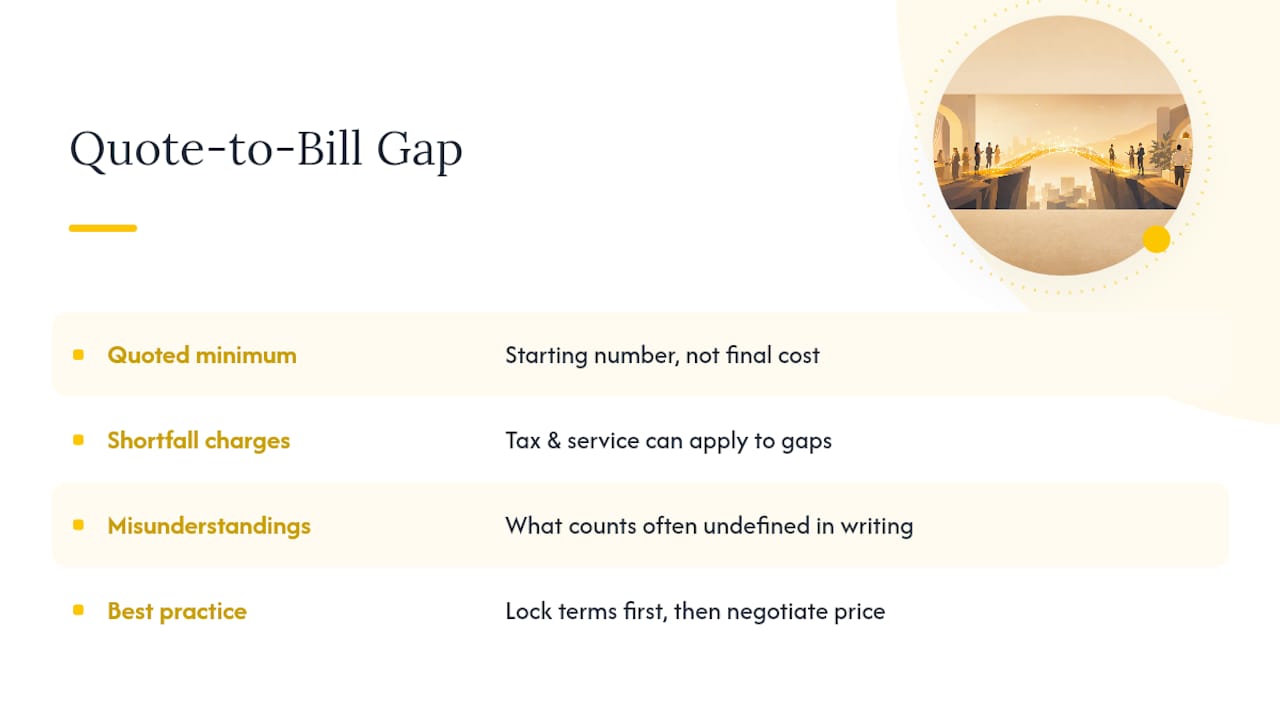
The conventional wisdom says "negotiate the minimum down." That's not wrong, but it's incomplete. The bigger lever is asking how the shortfall gets taxed and service charged before you ever get to negotiating the number itself. A host who wins a $500 reduction on the minimum but doesn't clarify shortfall tax treatment can still end up paying more than a host who accepted the original number but locked in clean, written terms.
Prioritize clarity over discount. Get the venue to define, in writing, exactly what counts, how shortfalls are labeled, and when your guarantee locks. Only after that should you push on the number itself. Hosts who negotiate terms first and price second consistently end up with fewer invoice disputes, even when they paid a slightly higher minimum to get there.
— Q
Book Your Private Room at Q Billiards Arena
Skip the hotel-ballroom guesswork and book a private room where the food minimum actually makes sense for a group that wants pool, snooker, or poker alongside the meal. Q Billiards Arena's poker room rental pairs a private space with a straightforward per-person food and drink allowance, no exclusive-catering fine print, and no separate rental fee stacked on top of your minimum.
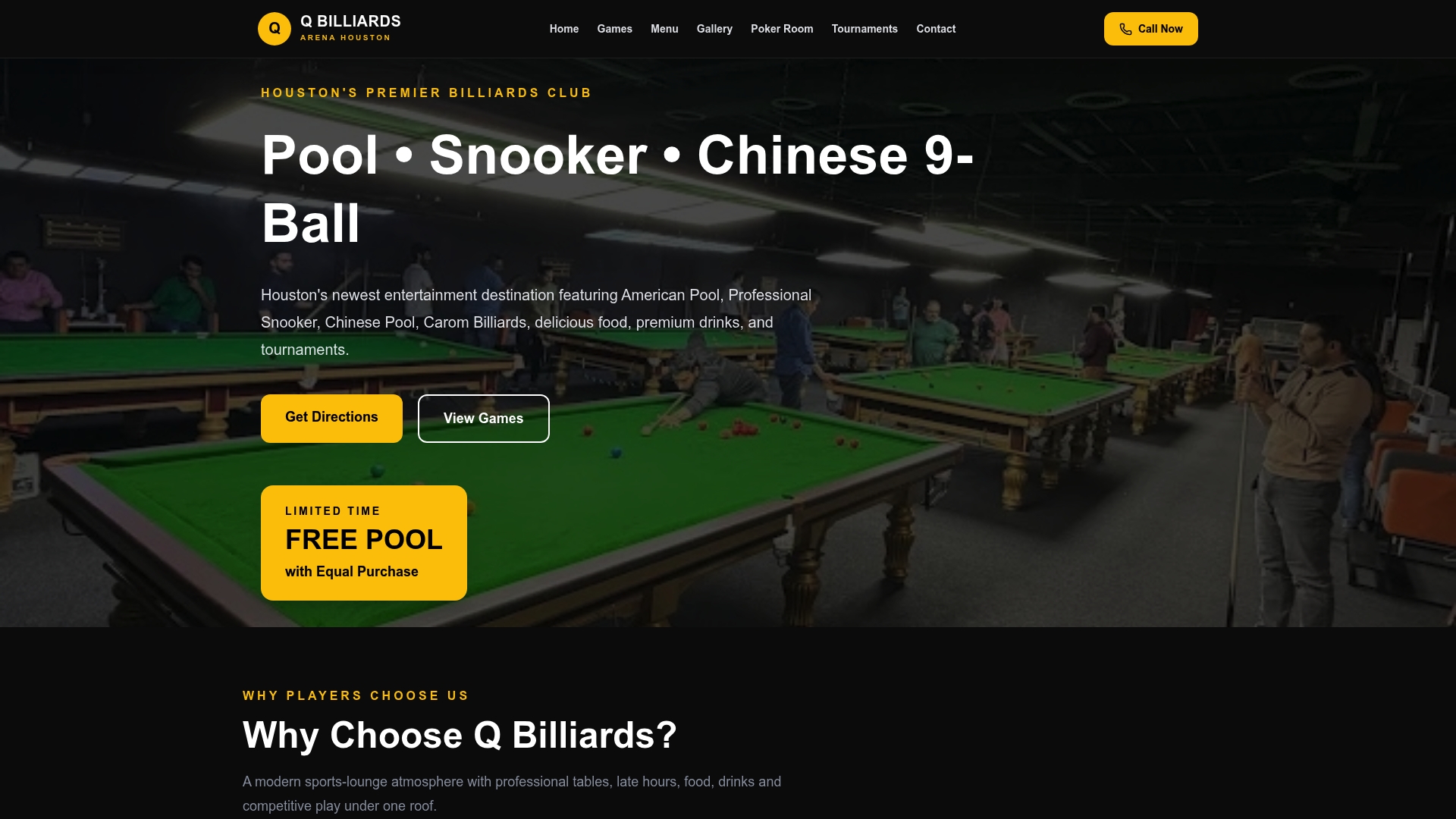
Whether you're planning a birthday tournament, a corporate happy hour, or a league night with food included, the poker room rental page lays out packages and current availability. Check games and pricing to plan your per-person budget, or head to Qbilliardshtx to check your date and get a quote for your group size today.
Sources
- How Do Food and Beverage Minimums Work: Shortfalls and Fees - LegalClarity
- Corporateevents
- Seared River Room Contract (excerpts)
- Exhibitor success guide — The Venetian (F&B exclusivity and booth catering rules)