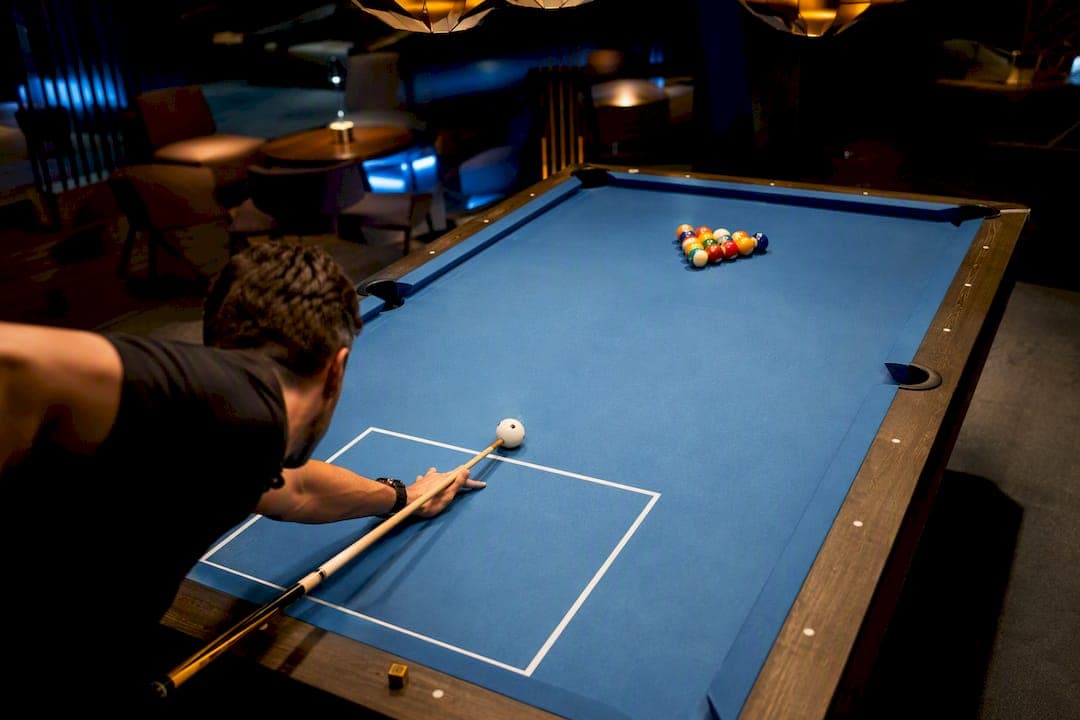
A break box limits where the cue ball can start a rack, penning it inside a small zone behind the head string instead of anywhere along that line. That single restriction kills most power side-breaks and forces a cut-break angle on the 1 ball, which means you need real cue-ball control, not just speed, to satisfy tournament break requirements. In most tournament formats, the box works alongside a three-ball rule that decides whether your break even counts.
TL;DR:
- Using a break box reduces the wide-angle power breaks and requires players to control cue-ball angle and speed to meet tournament rules.
- The three-ball rule determines if the break counts, requiring at least three balls to cross the head string or be pocketed, affecting break execution and outcomes.
- Effective breaking from inside a box demands precise aim with cut angles, matching cue ball speed to clear three balls without scattering or fouling.
- Pocketing the 9 on the break is only advantageous if the three-ball requirement is met; otherwise, the 9 is re-spotted, and play continues.
- Confirm specific event rules beforehand, including box dimensions, rack placement, and enforcement of minimum break speed or rail contact standards.
Table of Contents
- What Is the Break Box Rule, Exactly?
- How Does the 3-Ball Rule Work With a Break Box?
- Which Tournament Formats Combine the Box With Other Rules?
- How Do You Break Effectively From Inside a Box?
- What Happens When the 9 Ball Drops on the Break?
- How Do You Confirm Which Rules Apply at Your Event?
- Q Billiards Arena's In-House Notes on Mastering the Box Break
- Where to Read More on Break Box and 9-Ball Rules
- What the Rules Actually Reward, and What Players Get Wrong
- Sources
What Is the Break Box Rule, Exactly?
Standard 9-ball lets you place the cue ball anywhere behind the head string for the break. A break box removes that freedom and confines you to a marked rectangle, usually centered or slightly favoring one side of the table, well inside the string's full width.
Dimensions vary by event, so there's no single fixed number to memorize. Some tournaments use a box approximately a foot wide; others narrow it further for televised or invitational formats. The Euro Tour and EPBF popularized a narrow box specifically because it limited the wide-angle side breaks that used to make pocketing the wing ball or the 9 almost automatic.
Why bother? Organizers adopted the box for a few overlapping reasons:
- Fairness across players: a wide-open break rewards whoever finds the one soft, high-percentage spot on the string, not whoever plays the best rack.
- Reducing pattern racking: when players can stand anywhere and repeat a known break, skilled rackers can quietly stack outcomes in their favor. A box shrinks that window.
- More rack-to-rack variety: forcing a narrower angle produces more open tables and fewer instant break-and-runs, which tournament organizers generally consider better for a standardized, fair game.
One clarification worth making up front: "box break" also shows up in unrelated hobbies, most notably trading-card box breaks, where collectors open sealed product live on stream. That has nothing to do with cue sports. If you land on the wrong result searching "box break," now you know why.
How Does the 3-Ball Rule Work With a Break Box?
The box tells you where you can stand. The three-ball rule tells you whether your break counted. They almost always travel together in sanctioned 9-ball, and misunderstanding either one costs matches.
Here's the plain-language version of the WPA's three-ball break rule: pocketed balls plus balls that cross the head string, added together, must total at least three. If your break falls short of that count, the incoming player gets a choice.
- Accept the table as it lies and shoot from there.
- Hand the shot back to the breaker, essentially forcing a re-break.
That choice matters tactically. A weak break that leaves three balls loosely scattered near the rack might still be worth accepting if it opens a path to the 1. A break that barely nudges anything usually gets handed right back.
The practical fallout from a box: standing in a smaller zone reduces your angle options, so you often need to add cue-ball speed or aim more directly through the stack to force enough balls past the string. That's a real tradeoff. Crank up the speed to guarantee three balls cross, and you risk scattering the rack into an unfavorable pattern, or worse, sending the cue ball into a rail combo that ends in a scratch. Break too soft to stay safe, and you hand the rack back to your opponent on request.
Break-tracking data from recent European events shows break-and-run rates shift noticeably depending on the rule package in play, which tells you the box and the three-ball rule aren't cosmetic. They change how often anyone runs out from the break at all.
Which Tournament Formats Combine the Box With Other Rules?
Walk into a random tournament and you'll find the break box paired with a handful of other variables. Knowing which combination you're facing before you rack up saves you from guessing mid-match.
- 9-on-the-spot vs. 1-on-the-spot: some events rack the 9 ball dead center on the foot spot, which drastically cuts your odds of pocketing it directly off the break. Others rack the 1 on the spot instead, which changes where your break angle should aim to start the rack moving in a useful direction.
- Template racking vs. traditional triangle: a rigid template locks every ball's position tightly, which removes the wiggle room players once used for informal pattern racking. Triangles allow more variation, which is exactly why more events have shifted toward templates.
- Enforced forceful breaks: several tournaments require a minimum break speed or a minimum number of balls reaching the rail, separate from the three-ball rule itself, specifically to stop players from tapping a soft break to control the table.
Enforcement isn't always consistent. Forum reporting on recent events documents real variation in box width, racking method, and how strictly referees police forceful-break requirements from one tournament to the next. That inconsistency is precisely why you check the specific rule sheet for your event rather than assuming last month's format carries over. Our internal breakdown on 9-ball racking rules covers how these racking choices connect to break outcomes if you want the mechanical side spelled out.
How Do You Break Effectively From Inside a Box?
Cut-break technique replaces the old power stroke once you're confined to a box, and the shift starts with where you aim, not how hard you hit.
1. Learn the cut-break angle on the 1 ball. Instead of hitting the head ball dead center like a full-table power break, aim a slight cut, similar to ghost-ball aiming on any other shot. Dr. Dave Alciatore's break analysis breaks this down with diagrams showing how a cut angle sends energy diagonally through the rack instead of straight back, which spreads balls more evenly and improves your three-ball count.
2. Pick your starting lane inside the box deliberately. If your box runs roughly 12 to 14 inches wide, breaking from the outside edge on your dominant side usually gives a cleaner cut angle than dead center. Center placement tends to produce a fuller hit, which is closer to a traditional power break and less reliable for controlled cutting.
3. Match your speed to the three-ball requirement, not to maximum power. You need enough force to get three balls moving past the string or into pockets, not the hardest stroke you own. Overpowering the rack raises scratch risk and scatters balls unpredictably. Dial back until you find the minimum speed that reliably clears the requirement.
4. Choose spin based on where you want the cue ball to land. Outside english on the cut angle tends to send the cue ball along the side rail and back toward the center of the table, useful for setting up a follow shot on the 1. A touch of draw with bottom-right helps control post-break position without killing your break speed entirely.
5. Practice cue-ball routing, not just pocketing. Experienced players aim for a cue ball path that returns predictably to the rack's centerline, which either opens gaps for wing-ball movement or leaves position near the 1 for a second shot, according to routing strategy discussed among competitive players.
Three drills worth running on repeat:
- Lane consistency drill: break from the same spot inside the box 15 times, marking where the cue ball comes to rest each time. You're checking for a repeatable path, not a pocketed ball.
- Three-ball count drill: rack and break 10 times, counting pocketed-plus-crossed balls each time. If you're not clearing three at least 8 out of 10, your speed or angle needs adjusting.
- Cut-angle accuracy drill: place a target object on the head ball's cut line and break 10 times aiming to graze it consistently. This isolates aim from power.
Pro Tip: Video your break from directly behind the cue ball for ten reps in a row. Most players think their stance is square when it's actually angled two or three degrees off, and that small error compounds into a completely different cut angle by the time the cue ball reaches the rack.
What Happens When the 9 Ball Drops on the Break?
Pocketing the 9 on the break feels like a win until the referee checks whether your break actually satisfied the rules in play.
- If the three-ball requirement is met, the 9 stays pocketed and, depending on the event's rule set, you may win the rack outright or continue shooting.
- If the three-ball requirement is not met, the WPA regulations require the 9 to be re-spotted on the table, and play continues as normal rather than ending the rack.
- Scratching on the break typically means loss of ball-in-hand for the incoming player, though some leagues attach additional penalties, so this is one detail worth confirming locally.
- Failing the three-ball count without pocketing the 9 gives the incoming player the accept-or-return choice described earlier. There's no automatic re-rack; it's the opponent's call.
How Do You Confirm Which Rules Apply at Your Event?
Before you rack for money or league points, run through this checklist rather than assuming the format from your last tournament carries over.
- Check the box dimensions in the printed rule sheet. Width varies by event, and referees will enforce whatever the document states, not what you saw on a livestream last year.
- Read the exact three-ball wording. Some events phrase it as "three balls pocketed or crossing the head string"; confirm there isn't a local variation before you assume WPA language applies word for word.
- Ask whether the 9 is racked on the spot. This single detail changes your entire break strategy, since a spotted 9 behind other balls is a low-probability shot compared to one buried at the back of a triangle.
- Confirm forceful-break enforcement. Ask the referee or head judge directly whether there's a minimum speed or rail-contact standard, since this isn't always spelled out clearly in casual league play, per PoolPlayers' break-rule summary.
- Locate the official regulations document for the event, whether that's a WPA-sanctioned rule set, an EPBF/Euro Tour packet, or a house rule sheet posted at the venue. When in doubt, ask before your first rack, not after a dispute.
Q Billiards Arena's In-House Notes on Mastering the Box Break
We built our league practice sessions around one idea: you can't fix a break by hitting it harder, you fix it by making the same shot on purpose ten times in a row.
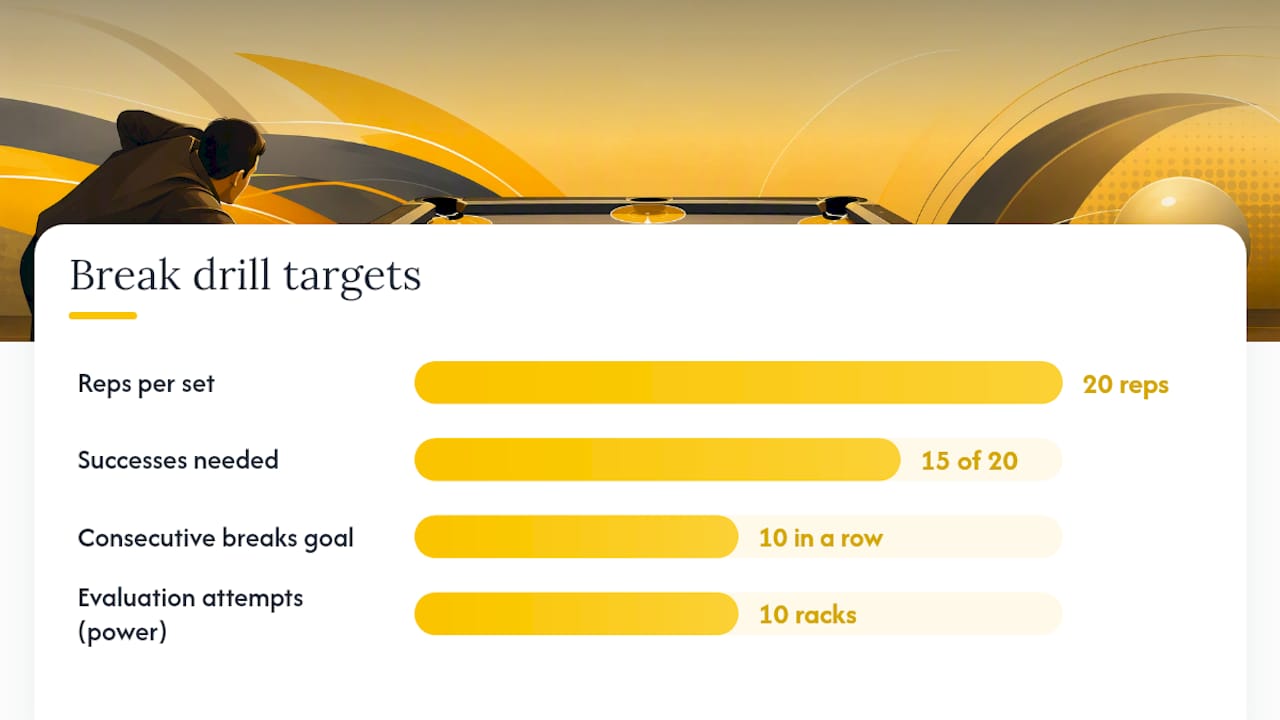
Our progressive alignment drill starts simple and builds. Break from the same fixed spot inside a box for 20 reps, tracking cue-ball landing zones after each shot. Once you can land within a consistent 6 inch zone on 15 of 20 attempts, narrow your target zone and repeat. That progression matters more than swinging harder, because a repeatable miss is fixable and a random one isn't.
We also run two structured sessions during break-focused league nights:
- Control-first sessions: reduced speed, full focus on cut angle and cue-ball path, evaluated by how consistently the cue ball returns to the same rail zone.
- Power-to-satisfy sessions: speed dialed up just enough to reliably clear the three-ball count across 10 racks, evaluated by counting successful three-ball breaks out of 10 attempts.
Pro Tip: Track your break stats over a full practice session instead of judging yourself shot by shot. A single great break tells you nothing about consistency; ten in a row tell you whether the adjustment actually worked.
Players who rent tables for open play or league practice can run these drills on regulation tables set up with an actual marked box, which matters more than it sounds. Practicing on a table with no marked restriction teaches habits that don't transfer.
Where to Read More on Break Box and 9-Ball Rules
For the rule text itself, go straight to the WPA's playing regulations. For technique and diagrams, Dr. Dave Alciatore's break strategy breakdown remains the most detailed public resource on cut-break mechanics. For tournament context and variant tracking, the AzBilliards forum community documents real event differences as they happen. Our own breakdowns on 9-ball rack setup and tournament break and push-out rules fill in the practical gaps between the official text and what actually happens at the table.
What the Rules Actually Reward, and What Players Get Wrong
Most break-box advice online treats it as a power problem: hit harder, hope for three balls, move on. That's backwards. Every credible technical source on this points the other direction, toward control and angle, and the tournament data backs it up. Break-and-run rates shift with rule format precisely because power stops being the deciding factor once you're boxed in.
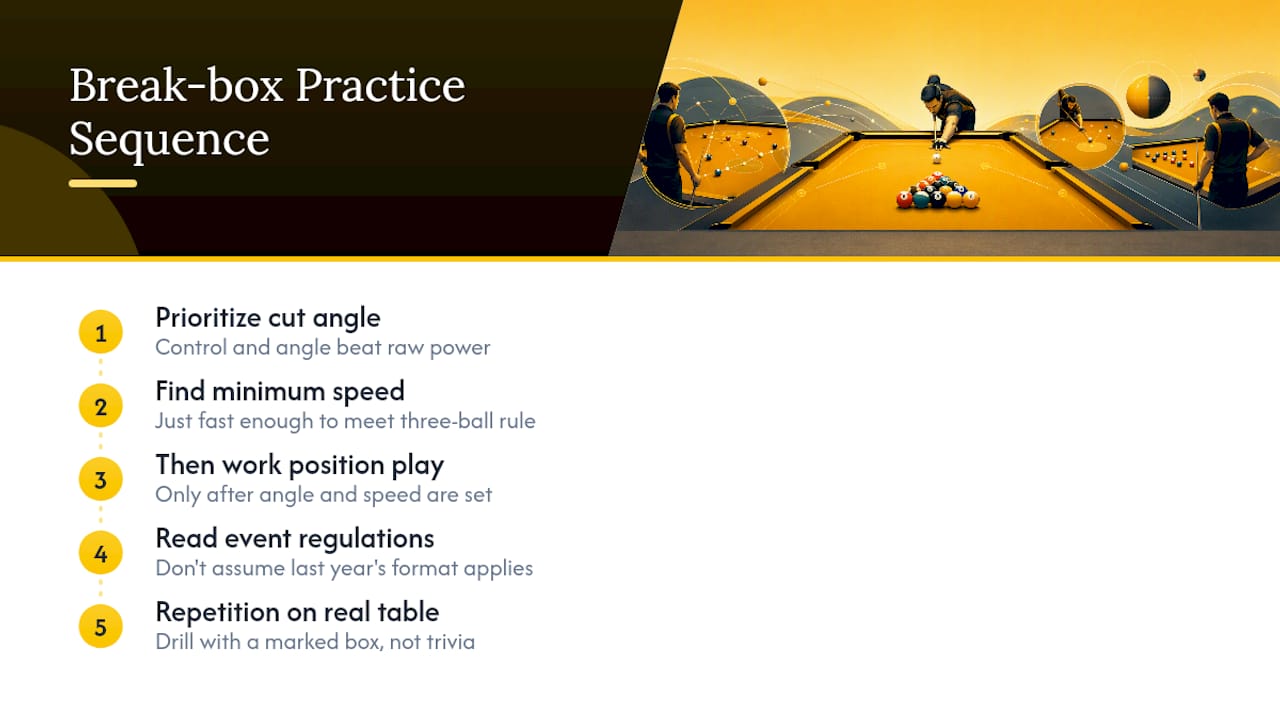
The bigger mistake I see is players learning the rule text but never drilling the adjustment. Knowing the three-ball requirement doesn't help you if your only tested break is a full-power center hit built for open-string rules. Prioritize the cut angle first, then find the minimum speed that clears the requirement, and only then worry about position play. Read the actual regulations for your event before assuming last year's format applies, and put in the repetition on a real table with a marked box. Rule knowledge without practice reps is just trivia you'll forget mid-rack.
— Q