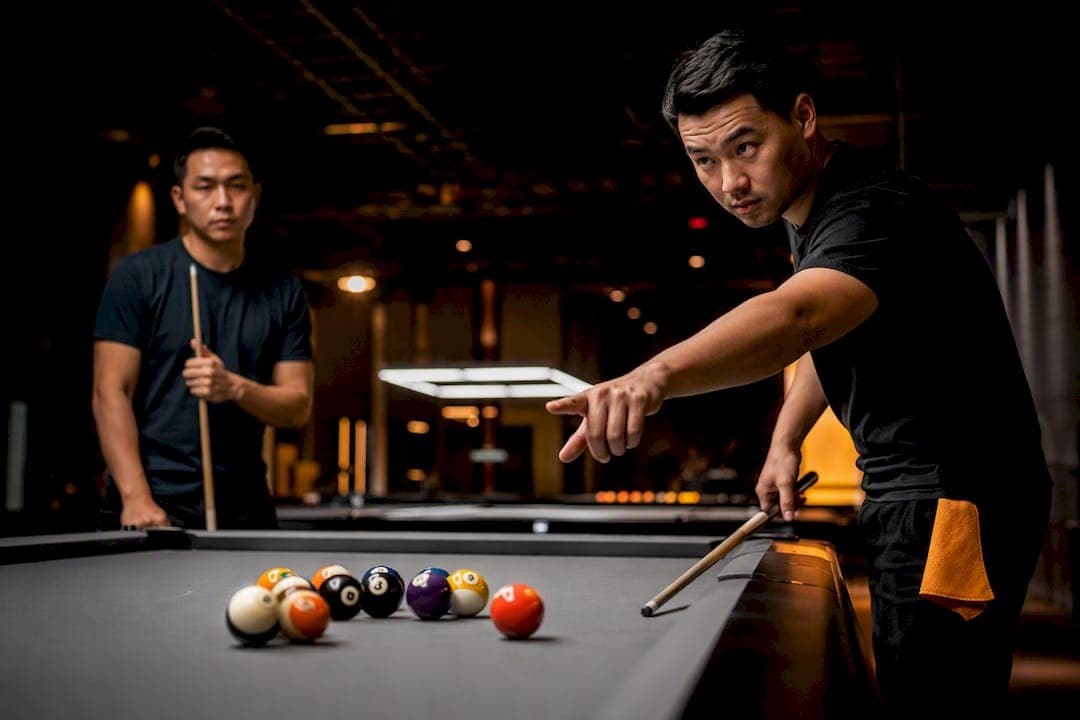
Chinese 8-ball requires a legal break (pocket a ball or drive four object balls to a rail or across the head string), a called shot on every ball including the 8, and a table played with an open table until one player legally pockets a full suit. Miss a foul call, pot the 8 early, or fail to call your pocket, and control passes straight to your opponent with ball in hand.
TL;DR:
- The break must be legal by pocketing a ball or hitting four object balls to a rail, and fouling during the break results in ball-in-hand for the opponent.
- Calling the 8-ball is mandatory on every shot, especially for bank, jump, or combination shots, with referee discretion over what needs calling in simple shots.
- The game is played on a 9-foot table with tighter pockets and faster cloth, demanding higher precision from players used to smaller, slower tables.
- Any foul, such as a push shot or touching/offensive contact with the balls, causes the opponent to gain ball-in-hand or, in extreme cases, lose the frame immediately.
- House rules vary on key issues like break-winning conditions, push-out options, and foul penalties, so players should clarify local practices before matches.
Table of Contents
- What Are the Core Chinese 8-Ball Rules?
- Equipment and Table Specs That Actually Affect Your Game
- Racking, Lagging, and the Legal Break Explained
- Calling Your Shots: What the Rules Actually Require
- Fouls, Penalties, and How You Actually Lose a Frame
- How Tournaments Handle Timing, Stalemates, and Match Formats
- Beyond the Frame: How Matches and Scores Actually Get Decided
- Getting Started: Etiquette and Habits That Separate Beginners From Regulars
- Where Chinese 8-Ball Diverges: House Rules and Regional Quirks
- A Note From Q Billiards Arena on Playing It Right
- Sources
What Are the Core Chinese 8-Ball Rules?
The object of a frame is simple to state and hard to execute: pocket your entire group, either solids or stripes, then legally pocket the 8-ball while it's your shot and you've called the correct pocket. Whoever does that first, without fouling, wins the rack. Everything else in the rulebook exists to define "legally" in painful detail.
At the start of every frame, the table is open. That means neither player owns solids or stripes yet, and any ball can be struck first except the 8. The open-table condition ends the moment a player legally pockets a called ball after the break. From that shot forward, that player owns whatever group the ball belonged to, and their opponent owns the other. If the breaker pockets nothing, the table stays open for the incoming player, who can shoot at any group.
A legal shot in Chinese 8-ball has two requirements. First, the cue ball must contact one of the shooter's own group balls before anything else, unless the table is still open, in which case any ball qualifies. Second, after that contact, either a ball must drop into a called pocket, or the cue ball or an object ball must reach a cushion. Miss either condition and it's a foul, full stop.
A few structural points define how innings run:
- The shooter continues at the table as long as they keep pocketing legally called balls from their own group.
- A missed shot, even a legal miss with no foul, ends the inning and hands the table to the opponent exactly as it sits.
- A foul ends the inning immediately and gives the incoming player ball in hand, meaning they can place the cue ball anywhere on the table before shooting.
- Once a player has cleared their group, they must call and pocket the 8-ball to win. There's no ambiguity in the sequence: solids or stripes, then the black ball, in that order, every time.
The US Chinese Eight Ball Association publishes the training-and-rules framework most American clubs and leagues build their house standards around, and it lines up closely with what the WEPF International Eightball Rules%20A4%20booklet.pdf) lay out for international tournament play. The overlap matters because it means a player who learns the rules correctly once can walk into nearly any sanctioned event, domestic or international, without relearning the basics.
Equipment and Table Specs That Actually Affect Your Game
Chinese 8-ball is usually played on a 9-foot table, noticeably larger than the 7-foot bar tables most American players learn on. That extra footage alone changes shot selection and cue-ball control demands.
- Balls: standard American sizing at 2¼ inches (57.15mm), so the balls themselves aren't the variable.
- Pockets: cut tighter, closer to snooker specifications, which is the single biggest reason the game plays harder than it looks on paper.
- Cloth: generally faster than typical bar-table felt, which rewards precise speed control and punishes sloppy position play.
- Cue length: tournament minimums typically require a full-length cue with no shortened "bar cues," and mechanical rests are permitted for shots the cue can't otherwise reach.
- Rack line and 8-ball spot: marked positions on the table define exactly where the rack sits and where the 8-ball gets respotted after certain fouls.
According to MR Cues' breakdown of the format, the combination of a 9-foot table, snooker-style pockets, and faster cloth is exactly why Chinese 8-ball tends to punish players who learned their fundamentals on forgiving bar tables. Every specification pushes toward the same demand: precision over power. A break that looks aggressive on a bar table can scatter wildly on a Chinese 8-ball setup, which is why break technique gets its own section below.
Racking, Lagging, and the Legal Break Explained
Getting the rack and the break right isn't a formality. Referees check both, and getting either wrong can cost you the frame before you've hit a ball.
Racking order:
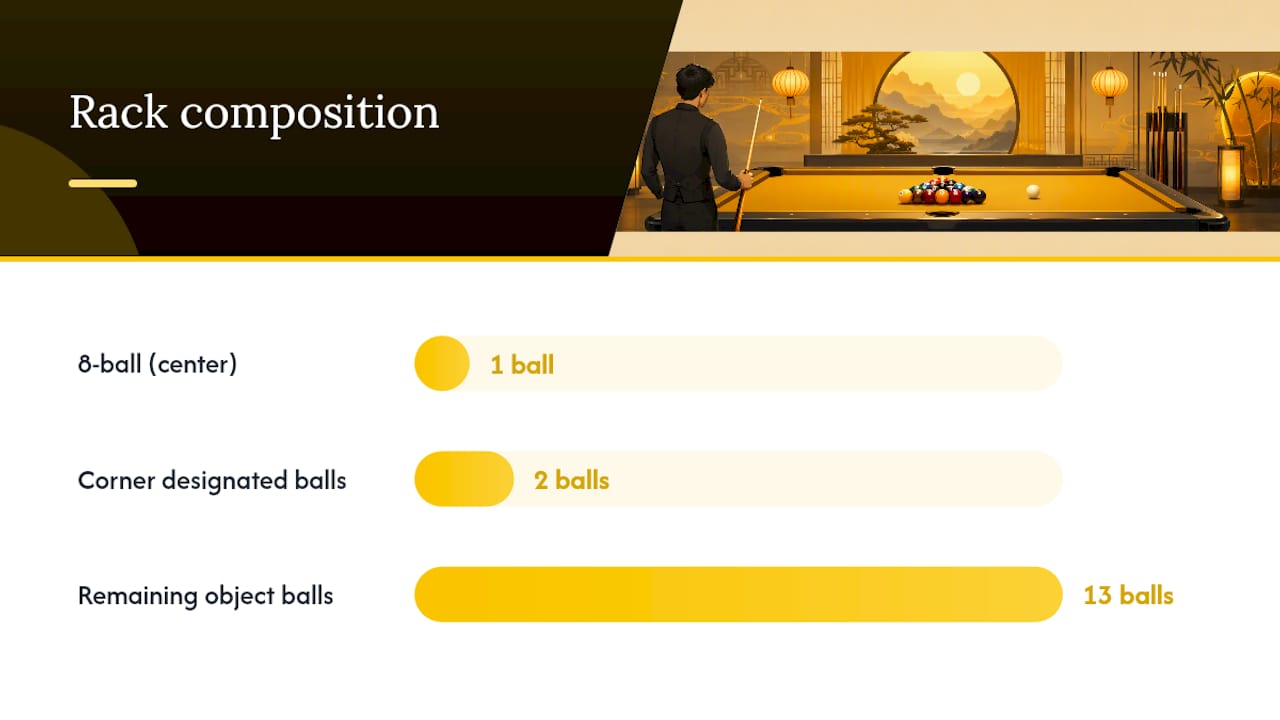
- Place the 8-ball dead center in the triangle. This isn't optional or approximate; referees checking a rack will look here first.
- Position one solid and one stripe in the two bottom corners of the triangle, touching the rack's back corners.
- Fill the remaining spaces with the other 13 balls in random order, packed as tightly as physically possible.
- Set the apex ball on the foot spot, then lift the rack straight up without disturbing the cluster.
- Have the referee or opponent visually confirm rack tightness before the break shot is taken.
Before the first frame of a match, players lag for the break: both shoot a ball from the head of the table down to the foot rail and back, and whoever's ball finishes closest to the head rail earns the choice of breaking or not. If both balls contact each other, foul the table, or the result is too close to call, referees will order a re-lag rather than guess.
A break only counts as legal when the breaker either pockets at least one ball or drives a minimum of four object-ball contacts to the rails or across the head string, a standard laid out in the WEPF's International Eightball Rules. Some rule sets specify the exact head-string crossing count differently, so tournament directors will confirm the local variant before play starts. An illegal break is a foul: the incoming player gets ball in hand and can choose to shoot from where the balls lie or ask for a re-rack.
If the breaker pockets the 8-ball on a legal break, the usual remedy under Chinese 8-ball tournament rules is to respot the 8 and let the breaker continue shooting, though some events allow the breaker to choose a re-rack and re-break instead. Pocket the 8 on an illegal break, however, and the outcome flips: the opponent typically gets to choose between accepting the re-rack or taking ball in hand with the balls as they lie.
Calling Your Shots: What the Rules Actually Require
Chinese 8-ball is a call-shot game, not a call-everything-and-hope game, and the distinction trips up more players than any other rule in the book.
Here's what genuinely needs a verbal call before you shoot:
- The 8-ball, always, no exceptions, no matter how obvious the shot looks to everyone in the room.
- Bank shots, kick shots, jump shots, and combinations, because the intended pocket isn't self-evident from the setup.
- Any shot a referee asks you to clarify, even if you consider it obvious. Referees have discretion to demand a call, and that discretion overrides your opinion of the shot's clarity.
What you generally don't need to call is a straightforward shot, meaning a ball sitting near a pocket with an unmistakable line into it. The rulebook leans on referee judgment here rather than a rigid checklist, which is exactly why disputes happen in casual play more than in officiated tournaments. If there's any doubt at all, call it. Nobody has ever lost a frame for over-communicating a shot.
Touching or frozen balls add another wrinkle. When the cue ball starts a shot frozen against an object ball, the referee (or the shooter, in unofficiated play) announces the contact before the shot, and simple forward contact off that frozen ball generally satisfies the legal-shot requirement even without visible cue-ball movement first. Simultaneous pocketing of two balls from one shot is legal as long as the called ball drops; incidental balls falling alongside it don't cost you the shot.
Fail to call a shot that required one, and even a ball dropping into the "right" pocket by luck doesn't count. The shot is a foul, the ball may be spotted back depending on local rules, and your opponent steps up with ball in hand.
Fouls, Penalties, and How You Actually Lose a Frame
Most fouls in Chinese 8-ball funnel down to the same penalty: ball in hand for the opponent, meaning they can place the cue ball anywhere on the table and shoot from there. But the paths to that penalty vary, and a few specific fouls end the frame outright rather than just costing you the inning.
Common fouls include:
- Scratching the cue ball into a pocket.
- Making contact with a ball from the wrong group before touching your own.
- Shooting while any ball is still visibly moving.
- Driving a ball completely off the table.
- Executing a push shot, where the cue tip stays in contact with the cue ball longer than a clean strike allows.
- Touching, moving, or double-hitting a ball with anything other than a legal cue strike, including body contact with the table.
Pro Tip: Keep both feet in contact with the floor on every shot. A foot leaving the ground mid-stroke is one of the most commonly called fouls in officiated tournaments, and it's the easiest one to eliminate with practice.
The penalty escalates fast for intentional fouls. Under the framework described in official Chinese 8-ball rule summaries, a first intentional foul, such as a deliberate safety played to look accidental, typically costs the offending player the entire rack rather than just ball in hand. A second intentional foul in the same match can cost the entire match. Referees in sanctioned play are trained specifically to distinguish a legitimate defensive shot from a disguised intentional foul, and the gap between those two calls comes down almost entirely to whether the shooter made a genuine attempt to hit their own ball.
Some rule sets also enforce a three-consecutive-fouls penalty, where three fouls in a row by the same player, even unintentional ones, results in loss of the frame. That rule exists mainly to stop stalling tactics disguised as bad luck.
You lose the frame outright, regardless of the score, in these situations:
- You pocket the 8-ball before clearing your own group.
- You pocket the 8-ball on the same shot as a foul.
- You drive the 8-ball off the table entirely.
- You pocket the 8-ball in a pocket other than the one you called.
Learning to avoid these situations matters more than learning to run racks. Understanding how cue ball fouls and ball-in-hand penalties actually get called will save you more frames than any amount of extra practice on your break.
How Tournaments Handle Timing, Stalemates, and Match Formats
Casual games run until someone's tired of playing. Tournament frames run on a clock, and the format decisions organizers make shape strategy as much as the rules themselves.
Most tournaments use a race format, where players compete to a set number of frame wins, commonly race-to-5 or race-to-7 depending on the event's size and time constraints. Some organizers cap matches by elapsed time instead, particularly in large-field events where table time is limited.
Shot clocks are standard in officiated play. The WEPF rulebook specifies a 45-second shot clock, with each player allowed one 15-second extension per frame for a genuinely difficult decision. Run past the clock without shooting, and it's treated as a foul, ball in hand to the opponent, exactly as if you'd fouled the shot itself.
Stalemates get handled through referee judgment rather than an automatic rule. If a referee determines that no reasonable shot exists for either player, given how the remaining balls have clustered or frozen against rails, the frame can be re-racked and rebroken. Some rule sets formalize this further with a three-turn stalemate provision, automatically triggering a re-rack if three consecutive innings pass with no ball pocketed and no progress made.
Beyond the Frame: How Matches and Scores Actually Get Decided
Winning one frame doesn't win the match. It wins one point toward the race number both players agreed to before the first ball moved.
Scoring in Chinese 8-ball tracks at two levels simultaneously. Within a frame, there's no partial credit: you either legally pocket your entire group plus the 8-ball, or you don't finish the frame at all. There's no scoring for individual balls pocketed, no bonus for a clean break, and no partial win for clearing solids but missing the 8. It's binary, frame by frame.
At the match level, frames accumulate toward whatever race number the event set, whether that's race-to-5 in a casual league night or race-to-9 in a championship final. Some leagues run a handicap system, where a stronger player needs more frame wins than a weaker opponent to account for skill gaps, similar to how bowling or golf handicaps work. That detail lives in league bylaws rather than the core rulebook, so always check before assuming a straight race applies.
Team formats add another scoring layer. League nights frequently score by combining individual frame results across several players into a single team total, with the team reaching the target frame count first taking the match regardless of any single player's personal record. A player who goes 1 and 4 individually can still be on the winning team if teammates cover the difference. Understanding this distinction matters if you're walking into a league night expecting singles-style scoring and find yourself on a five-player roster instead.
Getting Started: Etiquette and Habits That Separate Beginners From Regulars
Rules get you into the game. Etiquette keeps you welcome at the table.
Wait for your opponent to fully finish their shot, including any follow-through, before moving toward the table. Never lean over the table or stand in your opponent's eyeline while they're addressing a shot. If you're unsure whether a shot needs a call, call it anyway; over-calling costs nothing, while under-calling can cost the frame.
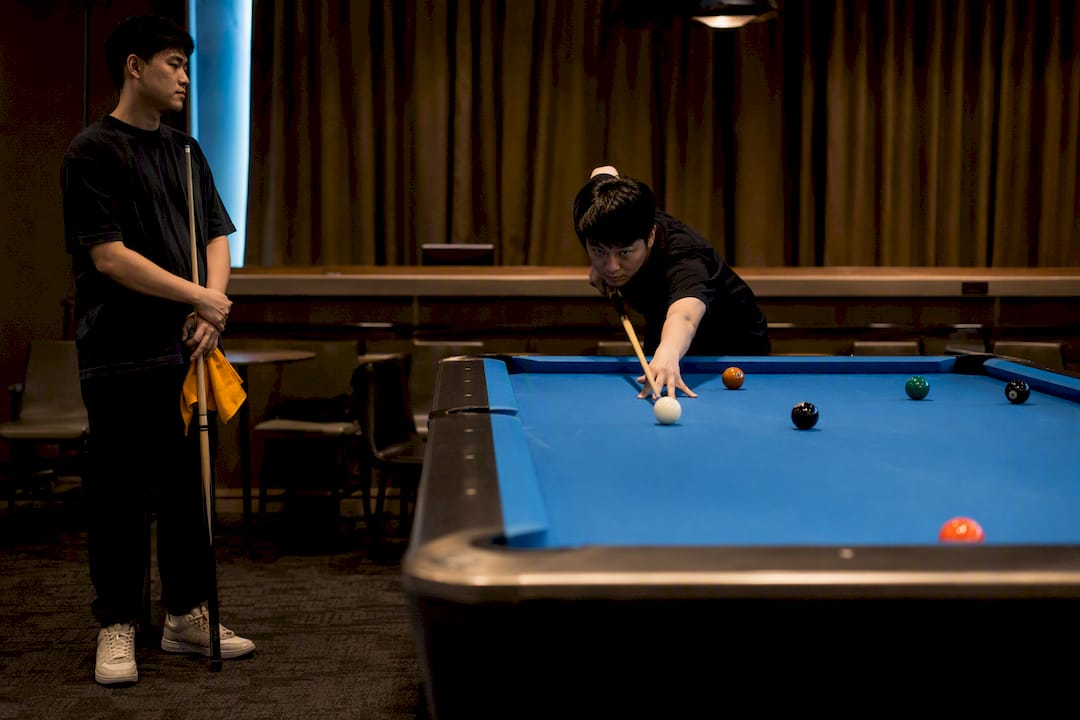
Learn to read the table before your turn arrives, not during it. Watching your opponent's shots gives you a preview of the cloth speed and pocket tightness you'll be dealing with, which matters enormously on faster Chinese 8-ball cloth compared to a typical bar table. New players often waste their first few visits overcorrecting for pocket size, either playing too timidly and leaving position, or too aggressively and rattling out shots that would have dropped on a wider bar-table pocket.
Ask before you rack if you're playing in an unfamiliar room or league; house variants on lagging order and re-rack procedure are common enough that assuming your home club's habits apply everywhere is a fast way to start a dispute. And when a foul call is close, defer to the referee or your opponent's read rather than arguing the point. Chinese 8-ball has enough legitimate rule complexity without adding unnecessary friction over judgment calls that a referee is better positioned to make.
Where Chinese 8-Ball Diverges: House Rules and Regional Quirks
The official rulebooks from USCEBA, WEPF, and the UPA agree on the core structure, but plenty of rooms run their own variations layered on top.
The most common house-rule divergence involves the break. Some clubs allow a "break shot" where pocketing the 8-ball on a legal break wins the game outright for the breaker, mirroring a rule found in some UPA-sanctioned events, rather than requiring a respot and continuation. Others treat it strictly as a respot situation with no bonus win available, regardless of how clean the break looked.
Another frequent variation involves push-out rules borrowed from 9-ball, where some rooms permit the player shooting immediately after a break to play a defensive "push out" without penalty, changing the tactical calculus of who wants to break at all. This isn't standard in most Chinese 8-ball rulebooks, but it shows up often enough in casual and league play that it's worth confirming before a match starts.
Head-string crossing counts for a legal break also vary by room. Some venues use the four-contact standard referenced by the WEPF, while others simplify it to "pocket a ball or hit the rail with anything," a looser standard that changes how hard players feel obligated to break.
Finally, three-consecutive-foul frame loss isn't universal. Plenty of casual rooms skip it entirely, treating repeated fouls as just repeated ball-in-hand situations with no accumulating penalty. If you're switching between your regular room and a tournament setting, that's one of the first differences worth clarifying, because it changes how conservatively you should play when you're already on your second foul in a row.
A Note From Q Billiards Arena on Playing It Right
Rules only matter if someone's actually enforcing them, and that's the standard we hold to on every table at Q Billiards Arena. Whether you're working through your first legal break or preparing for a league night on our Chinese 9-ball tables, our staff and tournament referees run games by the book, not by house shortcuts.
If you want to learn the rules by playing rather than reading, many pool halls offer that kind of practical experience. Walk in, ask a staff member to walk you through a rack, and get comfortable before you enter your first tournament. We'd rather you learn the tighter pockets on our tables during a practice session than during a match you're trying to win.
— Q
Ready to put these rules to work? Book a table at Q Billiards Arena and play Chinese 8-ball the way tournaments actually run it, on 9-foot tables with snooker-tight pockets built for players serious about the game.
Sources
- Training and Rules – US Chinese Eight Ball Association
- Chinese 8‑Ball Official Rules_Billiards World
- What Is Chinese 8 Ball? Why Is It More Difficult Than English Pool? — MR Cues