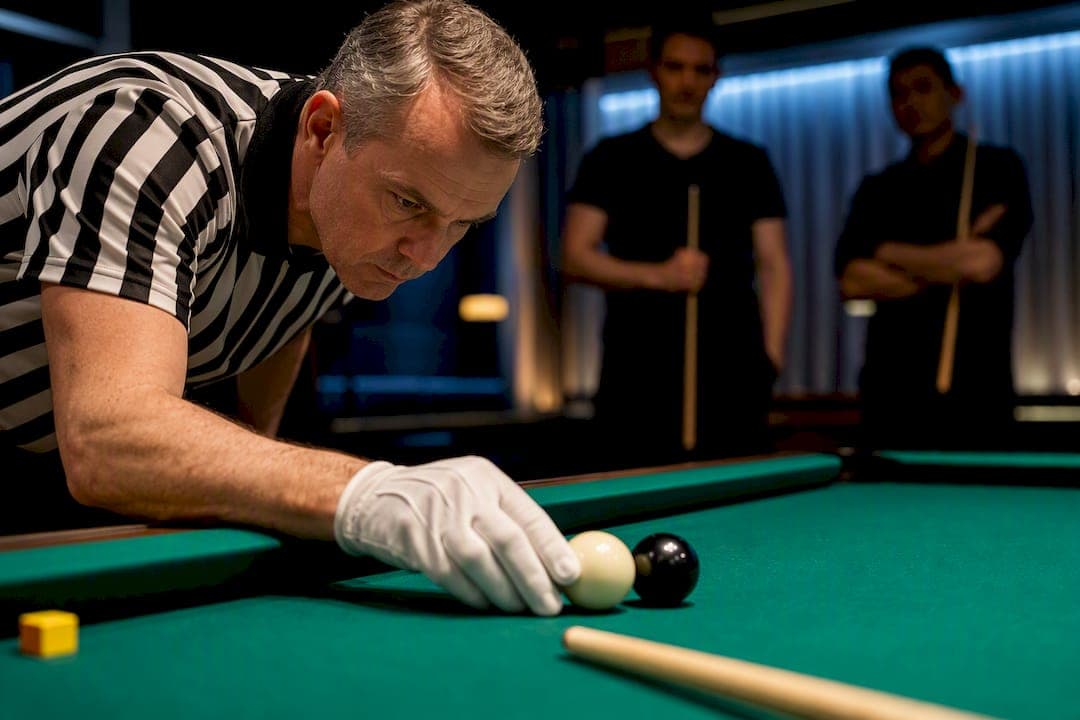
A cue ball foul happens whenever the cue ball gets pocketed, leaves the table, contacts the wrong object ball first, fails to drive any ball to a rail after contact, or gets struck, moved, or double-hit outside the rules. Under standard WPA and APA rules, the penalty is ball-in-hand for the incoming player, with one major exception: scratching on the opening break usually limits the shooter to placement behind the head string.
TL;DR:
- Fouls involving the cue ball include scratching, hitting the wrong ball first, and failing to contact a rail after contact, each resulting in ball-in-hand penalties.
- A break scratch limits the incoming player to a shot behind the head string, while other fouls can allow placement anywhere on the table.
- Disputes often arise from ambiguous calls on double hits, push shots, and frozen balls, which are judged by contact and timing rather than intent.
- Calling fouls must be done before the next shot, with referees enforcing rules in tournaments and players responsible in casual play.
- Understanding the specific rules for 8-ball, 9-ball, and snooker is crucial, as penalties and procedures vary significantly between these cue sports.
Table of Contents
- What Counts as a Cue Ball Foul in Pool?
- Ball-in-Hand: How the Penalty Actually Works
- Break Scratches, Kitchen Rules, and Fouling Near the 8-Ball
- Double Hits, Frozen Balls, and Push Shots: The Gray Areas
- Who Calls the Foul, and When It's Too Late
- How to Avoid Cue Ball Fouls: Lessons From the Table
- How Cue Ball Foul Rules Differ Across 8-Ball, 9-Ball, and Snooker
- Why Cue Ball Fouls Change How You Should Play
- A Few Myths I See Constantly
- Sources
What Counts as a Cue Ball Foul in Pool?
Every rulebook, whether it's the WPA, APA, or UPA, treats a handful of cue-ball actions as automatic fouls. Knowing the full list matters more than memorizing just the obvious ones, because half the arguments at the table come from players who only know "don't scratch" and nothing else.
Here's the complete catalog of cue-ball fouls you'll encounter in 8-ball and most other pool disciplines:
- Cue ball scratched or driven off the table. If the cue ball drops into a pocket or flies off the rails entirely, that's a foul under the WPA rulebook, and it usually hands the incoming player ball-in-hand.
- Wrong ball first. Hitting your opponent's group, the 8-ball out of turn, or any ball that isn't a legal target on that shot is a foul the instant contact happens, regardless of what occurs afterward.
- No rail after contact. After the cue ball touches an object ball, either a ball must be pocketed or some ball (cue ball or object ball) must reach a cushion. Miss both conditions and it's a foul, even if your position looks perfect.
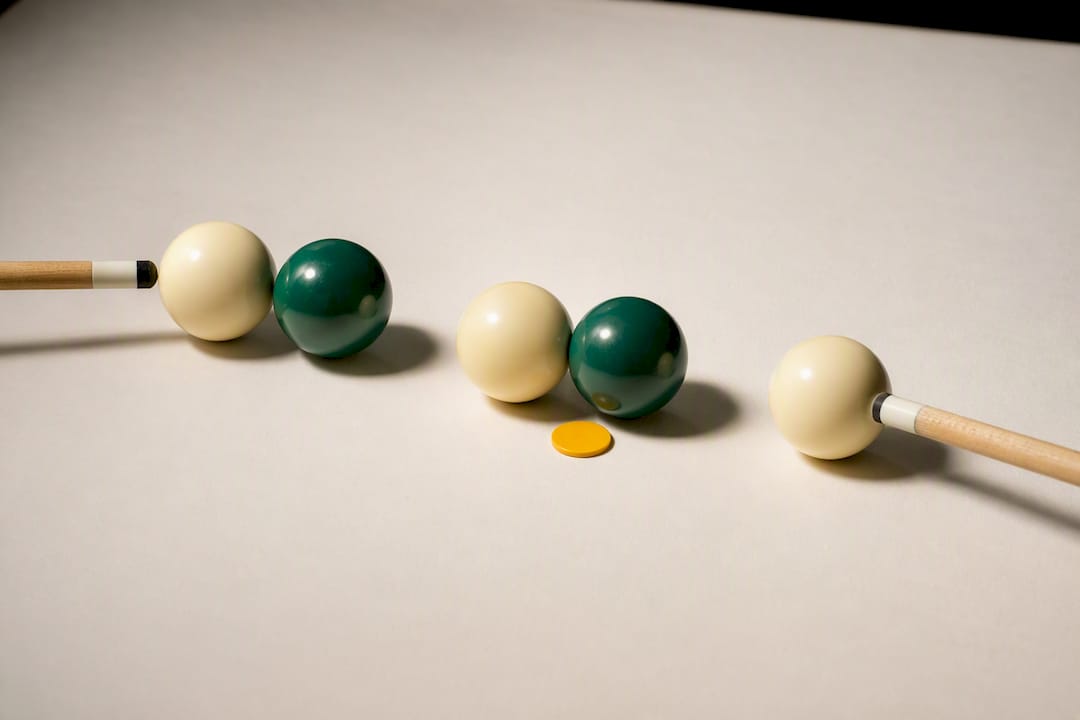
- Double hit. If the tip contacts the cue ball more than once during a single stroke, most commonly on a shot played with the balls close together, referees call this a foul. Frozen-ball situations get special treatment, since a ball touching another is assumed not touching unless someone declares it.
- Push shot. Prolonged tip contact, where the cue effectively shoves the ball forward rather than striking it cleanly, is illegal. Scooping or jumping the cue ball through excessive elevation on a non-jump shot falls into this category too.
- Touching or moving the cue ball illegally. This includes brushing it with your body, clothing, bridge hand, or rail cushion while it's in play, and moving it improperly while setting up ball-in-hand.
- Shooting while balls are still moving. If any ball on the table hasn't come to a complete stop and you shoot anyway, it's a foul regardless of where the cue ball ends up.
Most of these fouls share a common thread: they're judged by contact and physics, not intent. You don't get a pass because you didn't mean to double-hit the ball. The APA's fouls page lists these same categories almost verbatim, which tells you how standardized this list really is across leagues.
Ball-in-Hand: How the Penalty Actually Works
Ball-in-hand is the standard penalty for nearly every cue-ball foul, and it's more powerful than casual players give it credit for. The incoming player can place the cue ball anywhere on the table, not just behind the head string, which means a single foul can hand your opponent a dead-easy shot on a ball you thought was safely tucked away.
Quick reference: penalty scope by situation
| Situation | Placement allowed |
|---|---|
| Standard foul (mid-rack) | Anywhere on the table |
| Scratch on the opening break | Behind the head string only |
| Foul during 9-ball with a pocketed object ball | Ball-in-hand; pocketed ball may be spotted |
A break scratch is the one major exception to full-table placement. Because breaking is inherently risky, most rule sets limit the incoming player to the kitchen area rather than the whole table, which keeps the break from becoming a guaranteed disaster for the shooter.
In refereed league or tournament play, a certified referee calls and enforces every foul on the spot. In casual games at a bar table or between friends, enforcement depends entirely on the players agreeing to call it themselves, which is exactly where most disputes start.
Break Scratches, Kitchen Rules, and Fouling Near the 8-Ball
Break-related fouls generate more confusion than any other category, mostly because bar rules and official rules diverge here more than anywhere else.
- Break scratch: the cue ball goes in or off the table on the break. Balls that were legally pocketed on that same break generally stay down; only the cue ball's placement gets restricted to behind the line.
- Cue ball off the table on the break carries the identical penalty to a pocketed cue ball. Distance traveled doesn't matter; leaving the playing surface is the trigger.
- Fouling on or near the 8-ball does not automatically end the game under WPA or APA rules. A scratch while shooting at the 8-ball is a standard foul, ball-in-hand, nothing more. Plenty of casual bar rules treat any contact with the 8-ball on a foul shot as an instant loss, but that convention isn't in the official rulebooks, and it trips up more players than any other misconception in the game, according to BilliardBeast's breakdown of scratch rules.
- 9-ball scratches work differently: if the 9-ball gets pocketed on the same shot as an illegal cue-ball foul, it typically gets spotted back on the table rather than counted as a win, since a foul negates the pocketed ball's legality.
If your group plays with house rules that punish the 8-ball harder than official rules do, that's fine, just say so before the game starts.
Double Hits, Frozen Balls, and Push Shots: The Gray Areas
These three calls cause more table-side arguments than every other foul combined, mostly because they hinge on split-second timing rather than a clean visual result like a ball dropping in a pocket.
A double hit gets called when the tip strikes the cue ball twice in one stroke, usually on shots where the object ball sits close to the cue ball and a normal stroke risks a second contact. Frozen-ball situations complicate this: two balls touching are assumed not frozen unless a player declares it before the shot, according to the WPA fouls summary. That declaration shifts how the shot gets judged entirely.
Push shots come down to contact duration. A stroke that shoves the ball forward instead of striking it, or a cue that scoops under the ball to lift it illegally, both qualify. Referees watch for a cue that stays on the ball noticeably longer than a normal strike, or a follow-through that looks more like a shove than a hit.
Pro Tip: Elevate the butt of your cue slightly the instant after contact on tight-quarters shots. That small wrist motion frees the tip immediately and all but eliminates accidental double hits and push calls, a habit worth drilling until it's automatic, per American CueSports Alliance's standardized rules.
When in doubt, ask for the frozen-ball declaration before you shoot. It's the single fastest way to avoid a dispute after the fact.
Who Calls the Foul, and When It's Too Late
Fouls don't enforce themselves, and the rules are specific about timing and responsibility.
- The foul must be called before the next shot begins. Once the following player has taken their stroke, the foul is treated as if it never happened under most rulebooks, including the WPA's framework.
- Calling responsibility depends on context. In refereed matches, the referee makes the call. In casual and most league play, either player can call a foul on the other, and self-officiating is the norm.
- Multiple fouls on one shot only count as one penalty. If a shot somehow breaks two rules at once, say a double hit that also scratches, only the single most serious foul applies.
- Three consecutive fouls carries extra weight in disciplines like 9-ball, where it can end a rack outright. A referee must warn a shooter after their second consecutive foul before a third one triggers the harsher penalty, a procedural detail confirmed in the WPA's 2025 rules update. Standard 8-ball generally doesn't include this rule at all.
How to Avoid Cue Ball Fouls: Lessons From the Table
Most fouls come from the same handful of habits, and they're fixable with a little deliberate practice.
Scratching on follow and draw shots usually traces back to misjudging the tangent line, the path the cue ball takes after contact. Set up a second object ball on your practice table and run the same shot repeatedly, watching where the cue ball actually travels versus where you expected it to go. That single drill does more for scratch prevention than any amount of theory.
Double hits and push shots almost always come from rushing the stroke on tight shots. Slow your tempo, keep your grip loose through contact, and lift the cue butt fractionally right after the tip meets the ball.
- Practice break shots specifically for cue-ball control, not just power. A controlled break that stays near center table beats a hard break that risks a scratch.
- Check your stance and back foot before every shot. An unstable base is a common, overlooked cause of accidental ball movement.
- Drill kitchen placements after simulated break scratches so behind-the-line shots feel routine instead of awkward.
- Rehearse frozen-ball declarations out loud during practice sessions so the habit carries over to real matches.
Pro Tip: If you're unsure whether a ball is frozen against another, declare it before you shoot rather than after. Referees at Q Billiards Arena's tournaments treat a pre-shot declaration as binding, which removes almost all ambiguity from the call.
How Cue Ball Foul Rules Differ Across 8-Ball, 9-Ball, and Snooker
The core definition of a cue-ball foul stays consistent across cue sports, but the penalties and edge cases shift depending on the game.
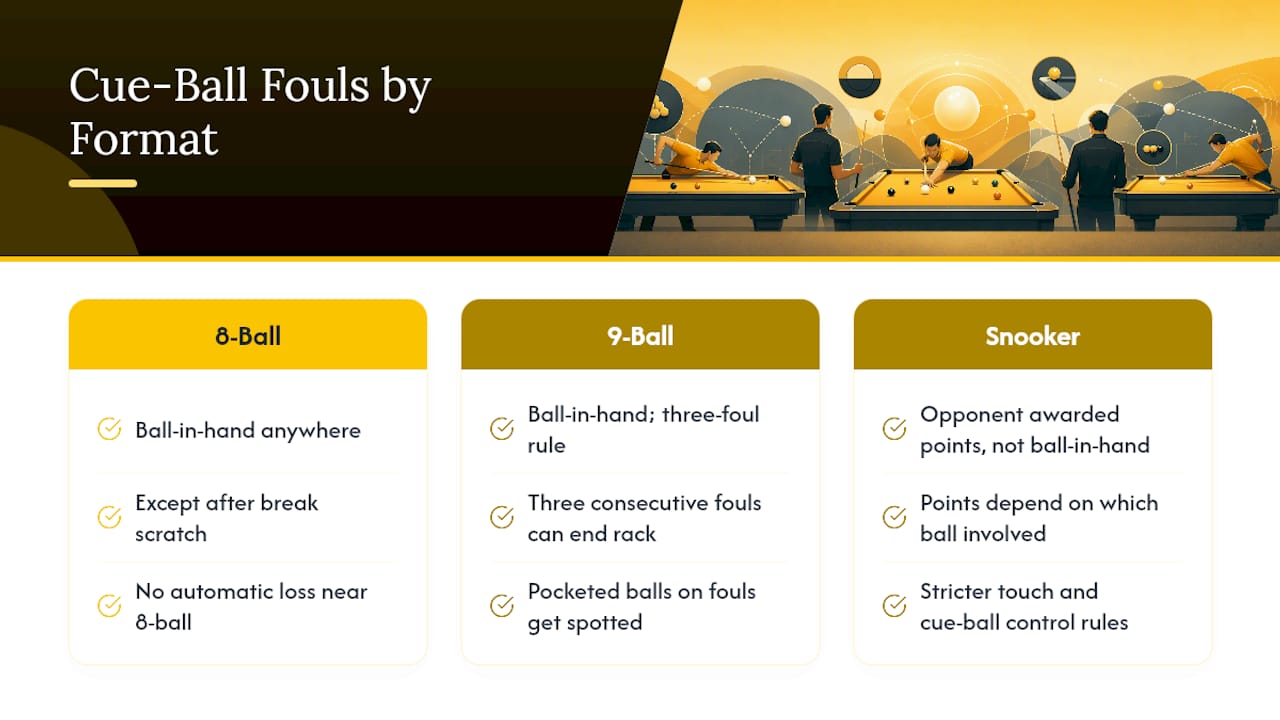
In 8-ball, a foul almost always means ball-in-hand for the opponent, applied anywhere on the table except after a break scratch. There's no automatic loss for fouling near the 8-ball itself, despite what bar rules often claim.
In 9-ball, fouls carry more weight because of the three-consecutive-fouls rule, which can end a rack after a third straight foul following a referee warning. Pocketed balls on a foul shot, including the 9-ball itself, typically get spotted rather than counted, since the shot was illegal to begin with.
Snooker takes a stricter approach overall. Fouls award points to the opponent rather than ball-in-hand, and the value of those points depends on which ball was involved, sometimes reaching the value of the highest ball on the table. Snooker also enforces stricter standards around touching balls and playing shots with proper cue-ball control, given the tighter pockets and longer table.
If you split time between formats, the safest habit is confirming which ruleset governs before the first rack, since assuming 8-ball penalties apply in a 9-ball match is a common and costly mistake.
Why Cue Ball Fouls Change How You Should Play
A single cue-ball foul doesn't just cost you the shot, it hands your opponent a strategic gift they didn't have to earn. Ball-in-hand means they can place the cue ball on the single easiest angle available anywhere on the table, which often turns a defensive rack into a runout.
That's why smart players treat foul avoidance as a strategic layer, not just a rules technicality. A safety shot that risks a marginal double-hit call isn't worth the reward if the miss hands over full table control. Likewise, a break that maximizes spread but carries real scratch risk needs to be weighed against how much a kitchen-only penalty actually costs you versus a full ball-in-hand.
Good players also use fouls defensively. Leaving your opponent a shot where the only legal contact is a nearly impossible angle can bait a wrong-ball-first foul, handing you ball-in-hand without ever needing to make a difficult shot yourself. This is standard practice in competitive 9-ball and shows up in 8-ball safety play too.
Understanding the foul rules cold, not just the obvious ones, turns them from a source of confusion into a tool you can use.
A Few Myths I See Constantly
The 8-ball loss myth is the one I hear most: players assume any foul while shooting at the 8-ball ends the game. It doesn't, under official rules it's just a standard foul. Break-scratch confusion runs a close second, with players either forgetting the kitchen-only exception or assuming pocketed balls come back up. Double-hit disputes round out the top three, almost always because nobody declared a frozen ball before the shot.
Agree on your ruleset before the first break, whether that's WPA, APA, or house rules, and call a referee when a call is genuinely unclear rather than letting it fester. Playing regularly under official rules, the kind enforced during tournament play at venues like Q Billiards Arena, builds the instinct faster than reading a rulebook ever will.
— Q
Sources
- What is Ball-in-Hand in Pool 2026: Complete Guide
- What is a Scratch in Pool? Rules for Scratching in Billiards