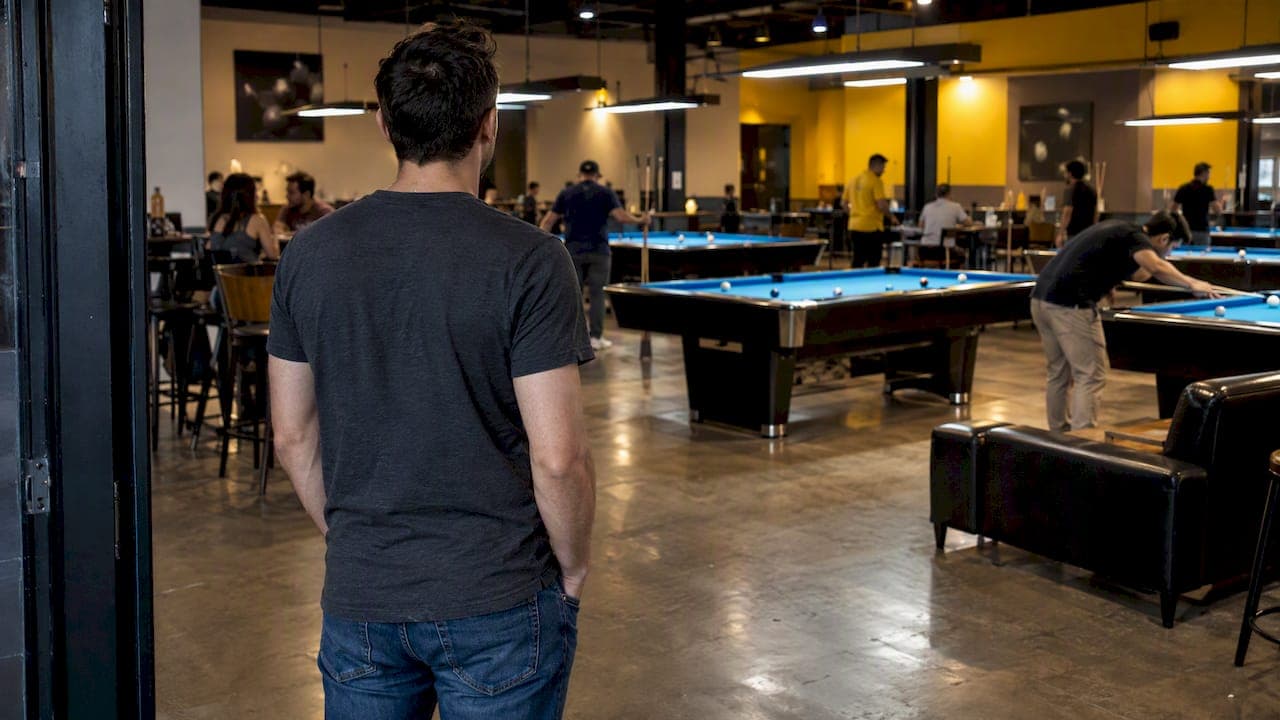
Three things decide whether a pool hall is right for you: how well it matches your goal, the quality of its tables, and the atmosphere and amenities around them. If you want organized play, confirm league and tournament listings first, starting with the APA locator. Our own Q Billiards Arena is one example of a room built around late hours, varied tables, and tournament events.
TL;DR:
- Before paying league fees, get the organization, night, format, and entry fee, then verify nearby operators through the APA locator.
- Inspect the cloth for wear and roll a ball across the slate; repeated drift signals an uneven table, while lighting and spacing affect play.
- Reserve for league nights and busy weekend evenings; off peak visits offer better walk in availability, while groups can avoid guesswork by booking.
- At Q Billiards Arena, American pool costs $10 hourly, other games cost $15 to $20, and Tuesday and Friday tournaments charge $10 entry.
Table of Contents
- What should you look for when shortlisting pool halls?
- What is a practical checklist for comparing two or three halls?
- How do you plan your first visit and reserve a table?
- Does a pool hall need more than tables?
- Why does community fit usually beat ratings?
- How does Q Billiards Arena meet these criteria?
- FAQ
- Sources
What should you look for when shortlisting pool halls?
Start with your primary use. A hall that is perfect for a Friday night with friends can be miserable if you want serious practice, and the reverse is just as true. Decide whether you are playing casually, joining a league, preparing for a tournament, or planning a social event, then judge every room against that one goal.
Once you know your goal, sort halls by these attributes:
- Table quality: Check the table size (8-foot or 9-foot), whether the slate is level, the condition of the cloth, and how the cushions respond. Tournament-grade tables follow the WPA equipment specifications, which cover table bed height, slate thickness, pocket mouth sizes, rail and cushion specs, and lighting.
- Events and leagues: Look at which night, which format, the entry fee, and whether you need to reserve a spot.
- Hours and crowds: Late-night options matter if you work evenings. Ask when the room is busiest and whether tables are walk-in or reserved.
- Amenities: Food and drinks, comfortable seating, good lighting, clean restrooms, parking, and friendly staff all shape how long you will want to stay.
- Pricing: Compare hourly table rates, tournament entry fees, and extras such as cue rental or food minimums.
Don't assume every hall offers organized play. Some rooms are purely casual, and a quick search of the league locator by location, discipline, and night saves you a wasted trip.
Pro Tip: Rank your top three needs before you search, then drop any hall that misses the first one, no matter how good its other features look.
What is a practical checklist for comparing two or three halls?
Use the same list for every hall so the comparison stays fair. You can run most of it by phone or online, and finish the rest with a short visit.
- Ask about event nights. Get the league names, nights, formats, and entry fees in writing or on the venue's calendar.
- Confirm reservation rules. Find out whether tables are first come, first served, how far ahead you can book, and what happens on league nights.
- Get the hourly rates. Ask whether the price changes by game type, time of day, or number of players, and whether cue rental costs extra.
- Ask about table spacing. Cramped tables mean bumped elbows and short cues on every shot.
- Inspect the cloth. Worn spots, burn marks, or pilling slow the ball and make shots unpredictable.
- Test the slate. Roll a ball gently across the table. If it drifts the same direction every time, the table is not level.
- Check the lighting. You want even light over the whole playing surface, without dark corners or glare on the cloth.
- Verify organized play. Cross-check any league claim against the APA locator, which lets you search for nearby league operators in the United States and Canada.
- Score each hall. Give the most weight to the factor that matches your goal. A league player might weigh events and table quality most heavily, while a casual group might favor atmosphere, food, and price.
The reason to check leagues independently is simple: the strongest predictor of a repeat visit is how well a room fits your goal, and a venue's community fit often matters more than its review score. A locator listing tells you whether the format you want actually runs there, and when.
Trust the table, not the star rating. The WPA equipment specifications set the benchmark for what tournament-grade equipment looks like, so measure a hall's tables against them.
How do you plan your first visit and reserve a table?
Match your booking style to the time you want to play. Reserve ahead for league nights and busy weekend evenings, when walk-in tables disappear fast. Walk in during off-peak hours, when you can usually find an open table and try the room without any commitment.
When you reserve, have these details ready:
- Your start time and how long you expect to play
- The table type you want, such as American pool or snooker
- Your party size
- A phone number or e-mail for confirmation
Our guide to reserving a pool table online walks through the process step by step, and our primer on pool hall essentials covers rules, table sizes, and what to bring.
On arrival, a few habits make you a welcome regular. Take care of house cues and return them to the rack. Order food and drinks if you are camping at a table for hours, and tip staff who help you. Respect league matches in progress and posted rules, and never distract an opponent mid-shot, which is the behavior our etiquette guide on avoiding sharking explains in detail.
If you want to join a league, ask the venue which organization it is affiliated with and which night the league meets. Then confirm the details with the league locator before you pay any fees.
Does a pool hall need more than tables?
Good tables get you through a practice session, but the rest of the room decides whether you stay for the evening. Lounge seating lets friends who are waiting for a table sit comfortably instead of hovering behind your shot. A food and drink menu keeps a group together through a long match, and a well-lit seating area makes it easy to watch a tournament round without crowding the players.
Some halls go further and add rooms built for other games or private gatherings. A dedicated poker room, for example, gives a mixed group of players somewhere to go when half of them want cards instead of cues. If you are planning a birthday, a team night, or a casual tournament with friends, ask whether the venue offers private space and what the minimum purchase or reservation requirement is.

Check the practical side too. Is there parking close to the entrance, or do you need to walk a few blocks? Is the music loud enough that you cannot hold a conversation? A room that handles these details well tends to attract a steady, friendly crowd, and that crowd is part of the experience you are choosing.
Why does community fit usually beat ratings?
Review scores tell you whether a stranger had a pleasant evening once. They say little about whether the room will suit you on a return visit. In my view, a room is more likely to earn repeat visits when it matches your goal: a regular schedule and a consistent crowd can help you plan your practice and find games.
That is why a venue that publishes a stable league and tournament calendar deserves more weight than one with a slightly higher rating and no schedule. Predictability turns a night out into a habit.
A room can also serve several goals at once. Ours combines tournaments, late hours, and a mix of table types, so a casual player and a tournament regular can share the same floor without either feeling out of place. When you evaluate any hall, ask whether it can grow with you as your goals change.
— Q
How does Q Billiards Arena meet these criteria?
We built the room around the same factors in this guide. Our professional-grade tables cover American pool, standard and heated snooker, Chinese 9-ball, and carom billiards, with American pool at $10 per hour, standard snooker, Chinese 9-ball, and carom at $15 per hour, and heated snooker at $20 per hour.
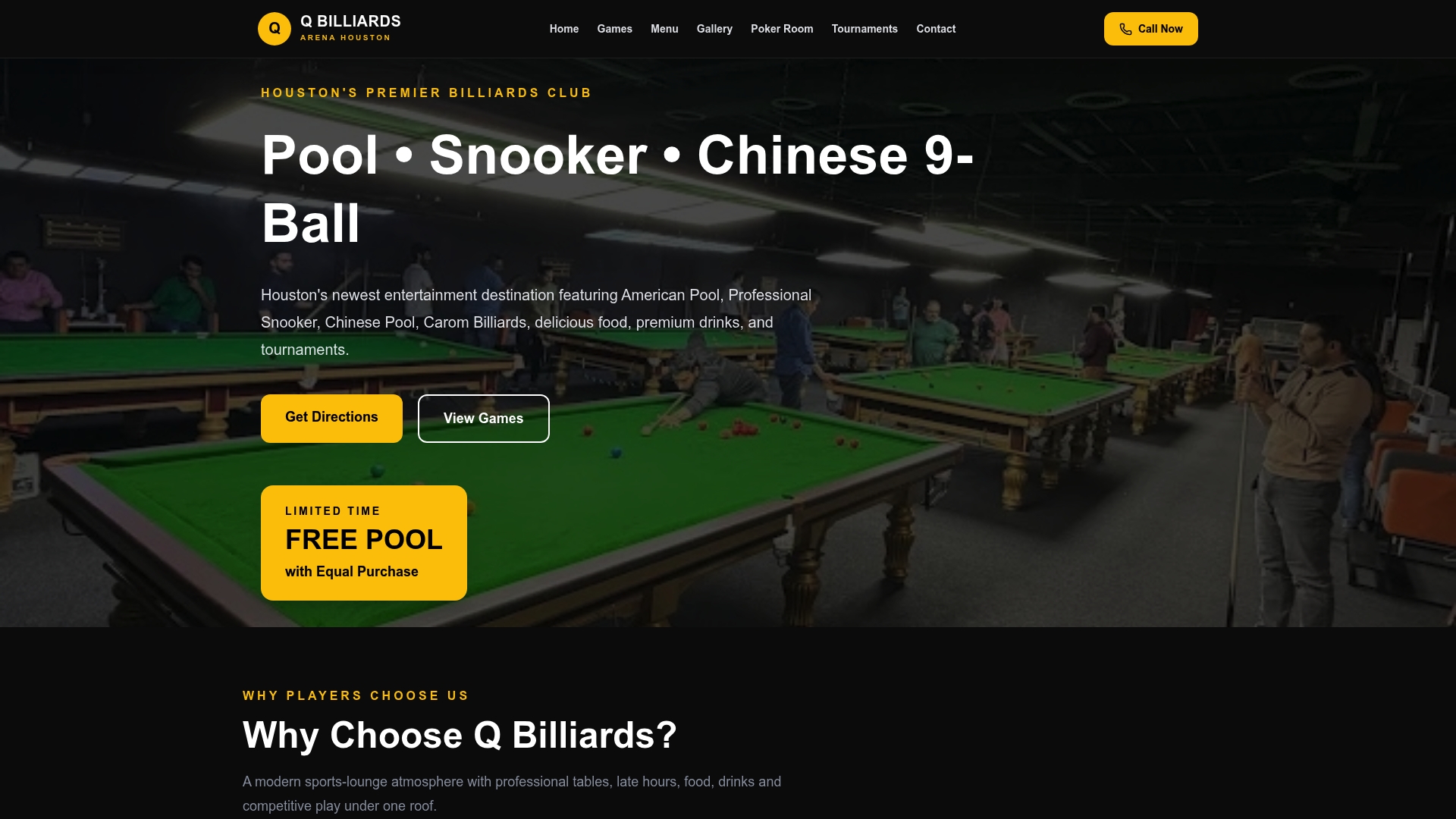
For organized play, we run a Tuesday Night Pool Tournament and a Friday Night Pool Tournament, each with a $10 entry fee, plus a 1-Red Snooker Tournament at $20. Our full tournaments and events calendar shows what is coming up. We stay open late, and our food and drink menu means your group never has to leave mid-match.
Want a private space? You can ask us about poker room rental for your next event.
Your next step is simple: browse our games and pricing, check the event calendar for a night that fits your goal, then call us or reserve a table and come play.

FAQ
How do I find a pool hall near me?
Search a map for pool halls in your area, then narrow the list by what you want to play. For leagues, use the APA locator to find nearby operators. Always confirm hours and table availability by phone before you go.
What should I look for in pool tables?
Look for a level surface, clean cloth without worn spots, lively cushions, and even lighting. Tournament-grade tables follow the WPA equipment specifications. A gentle test roll across the table shows quickly whether it is level.
Should I reserve a table or walk in?
Reserve for league nights and busy weekend evenings. Walk in during off-peak hours, when open tables are common. If you are bringing a group, a reservation removes the guesswork either way.
How do I know if a pool hall hosts leagues or tournaments?
Check the venue's event calendar, then ask for the league name, night, and entry fee. Confirm the league through the APA locator when possible, since not every hall offers organized play.
How much does a pool hall usually charge?
Most halls charge by the hour for table rental, plus entry fees for events. Ask about cue rental and food minimums too. At our arena, American pool is $10 per hour.