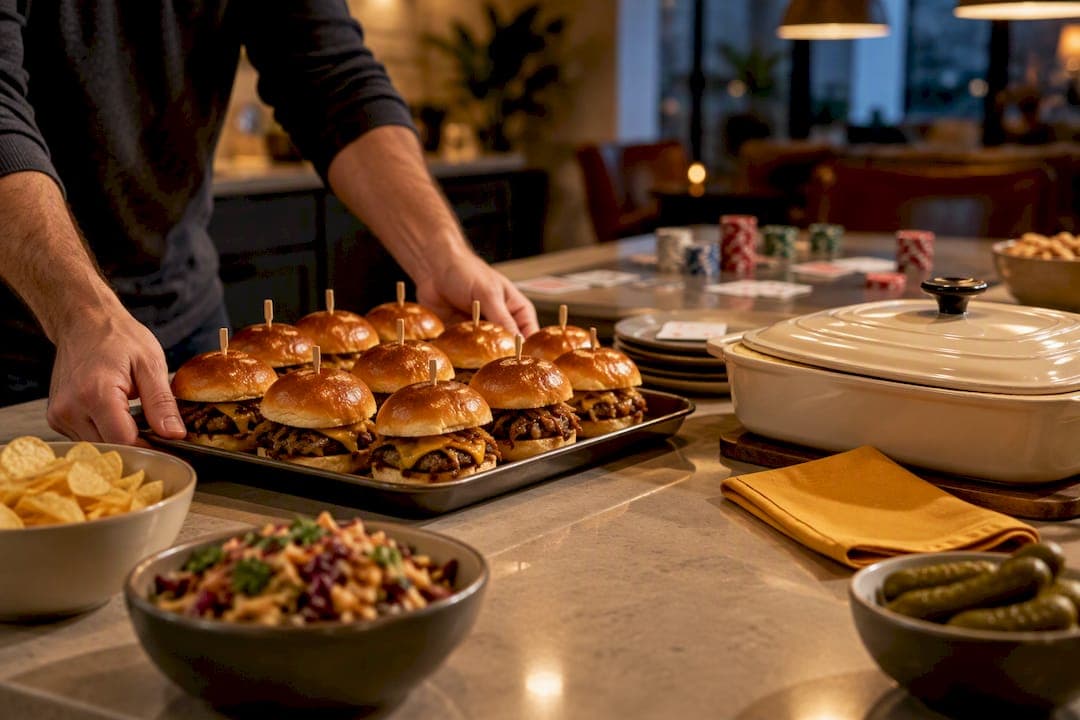
The best poker night menu pairs finger-friendly snacks with one filling main, all prepped ahead so the food never slows down the game. Start with chips and dip, popcorn or pretzels, a veggie tray, and sliders or mini pizzas, then finish with cookies or brownies that need no plate. Prep everything the day before, hold it at safe temperatures, and you spend the night playing cards instead of standing at the stove.
TL;DR:
- Most snacks should require no cutlery, with sturdy chips and popcorn holding up well over hours of play.
- Build your menu around 6 to 8 shareable items across categories like crunchy, warm, dippable, skewered, and sweet for simplicity and variety.
- Cooking from home with bulk staples and a single filling main is more cost-effective than multiple small hot dishes, especially for larger groups.
- Prepare hot foods in advance and keep items at safe temperatures using slow cookers or warming trays to minimize kitchen time during the game.
- Using a dedicated venue can eliminate prep work, as staff handle replenishing food and drinks, allowing players to focus solely on the game.
Table of Contents
- 1. Categorized shortlist of finger-friendly snacks
- 2. Budget menu templates and shopping shortcuts
- 3. Fuller meal options that still work at the table
- 4. Prep timeline, holding tools, and safety rules
- 5. Simple ways to cover vegetarian and allergen needs
- 6. Layout, napkins, and how much food to plan for
- 7. A venue host's take on feeding a poker table
- 8. Beverage pairing suggestions for the table
- 9. Tips for easy cleanup after the poker night
- 10. Themed decorations and table settings
- 11. What actually matters when you're planning this menu
- 12. Skip the prep and rent a room instead
- Sources
- FAQ
1. Categorized shortlist of finger-friendly snacks
A good spread doesn't need twelve dishes. Pick six to eight items across these categories and you cover salty, warm, dippable, and sweet without overcomplicating the table.
- Crunchy snacks: popcorn, potato chips, and seasoned pretzels hold up for hours and never need utensils, so bowls can sit within arm's reach all night.
- Warm handhelds: sliders, mini meatballs, and pigs in a blanket travel well from oven to table and reheat easily if a batch goes cold.
- Dips and dippables: buffalo chicken dip, queso, and guacamole belong in small bowls with sturdy chips or crackers, since one shared vat invites double-dipping and mess.
- Skewers and picks: fruit skewers, caprese bites, or mini kebabs let players eat one-handed while holding cards in the other.
- Sweet bites: cookies, brownies, and wrapped candy close out the spread without forks, plates, or crumbs that stick to felt.
This lineup mirrors the pattern recommended for poker home games: shareable food that needs little or no cutlery, built around chips, popcorn, a vegetable tray, one substantial handheld, and a small dessert, according to PokerNews. Keep sauces in small bowls with their own spoons, and set napkins and a trash can nearby so nobody leaves the table mid-hand just to wipe their hands.
2. Budget menu templates and shopping shortcuts
Three simple frameworks cover most poker nights, depending on how long you're playing and how hungry the table gets.
- Template A, snack grazing only: best for shorter sessions under two hours. Stick to popcorn, chips and dip, mixed nuts, and a plate of cookies. Nothing needs a stove.
- Template B, snacks plus one main: best for medium to long nights. Keep everything from Template A and add sliders or a couple of pizzas so players don't need to leave for dinner.
- Template C, pizza or dinner-style: best for feeding a hungry group cheaply. Order multiple large pizzas, add a simple salad, and skip the smaller appetizers entirely.
For the cheapest approach, build the spread around low-prep staples, popcorn, pretzels, tortilla chips, salsa, carrots, and a simple dip, then add one filling casserole or bulk pizza order instead of several small meat appetizers, a strategy outlined by Good Cheap Eats. Buying pretzels, chips, and soda in bulk cuts the per-person cost further, and keeping a bag of frozen mini quiches or spring rolls in the freezer means you always have a hot appetizer ready within ten minutes' notice. One casserole, like a baked ziti or a taco bake, gives you a filling main without juggling multiple hot dishes at once.
3. Fuller meal options that still work at the table
Offering one substantial main matters more than most hosts expect. A single filling dish keeps players satisfied, cuts down on refill requests, and gives you one thing to hold warm instead of five. Pair grazing snacks with one entrée so long sessions don't leave anyone hungry or force a long break, a balance that Good Cheap Eats recommends for exactly this reason.
- Pizza: cut into smaller squares instead of standard wedges so players can grab a piece one-handed without balancing a full slice.
- Sliders: pre-assemble in a single pan and cover with foil, then set out a stack of small plates so sauce doesn't drip on the felt.
- Nachos: build in individual ramekins rather than one giant tray, which keeps toppings from sliding off when someone reaches across the table.
- Hot dogs and burgers: pre-cut into thirds or serve as sliders instead of full-size portions, cutting mess and making them easier to eat between hands.
- Casseroles: portion into a muffin tin or small cups ahead of time so guests scoop one serving instead of carving into a shared dish.
Pro Tip: Cut every main into a size that fits in one hand before guests arrive, not after someone's already holding cards and a burger at the same time.
Ordering in saves time and guarantees consistent quality, but it costs more per person and limits portion control. Making sliders or a casserole at home costs less and lets you freeze extras, though it demands an hour of prep the day before. For a table of six to eight, homemade mains usually win on cost; for a bigger group on a tight schedule, a couple of large pizzas from a local shop is hard to beat.
4. Prep timeline, holding tools, and safety rules
Most of the work happens before anyone deals a card. The day before, make dips, bake desserts, chop vegetables, and freeze or refrigerate any apps you're prepping in advance. On the day itself, assemble the trays, heat the first hot batch, and leave everything else staged for reheating. This make-ahead approach, recommended by Evite's poker party guide, frees up your attention once guests arrive so you're not stuck in the kitchen during the first hand.
- Cold holding: keep dips, salads, and skewers over an ice bath or in a shallow bowl set inside a larger bowl of ice.
- Hot holding: a slow cooker, warming tray, or chafing dish keeps sliders, meatballs, and queso at serving temperature for hours.
- Replace, don't top up: swap in a fresh platter instead of adding new food to a half-empty one, which limits how long anything sits out.
- Small batches: cook and refill in smaller rounds so nothing spends more time out than it needs to.
Standard food-safety guidance from FSIS/USDA calls for cold food at 40°F or below and hot food at 140°F or above, refrigerating leftovers within two hours (one hour if the room is above 90°F), and reheating anything previously cooked to 165°F, according to the USDA's food safety guidelines. That two-hour window is the one rule worth setting a timer for, especially with dips and sliders that sit out for an entire session. Labeling each platter with a start time helps you track when it's due for a swap, and appliance-based tools can make holding simpler if you want dedicated gear, as covered by Kitchen Devotion's food safety tips.
5. Simple ways to cover vegetarian and allergen needs
You don't need a second menu to cover common dietary needs, just one or two items that naturally fit and clear labeling on everything else.
- Include at least one naturally vegetarian or plant-forward item, like a crudité platter with hummus, fruit skewers, or a bowl of popcorn, an approach Taste of Home suggests as an easy way to cover this need without extra cooking.
- Label major allergens, nuts, dairy, and gluten, directly on the platter or with a small card so guests don't have to ask.
- Swap in gluten-free buns for sliders or a dairy-free base for one dip if you know a guest needs it in advance.
- Place these items in the main spread, not off to the side, so they're just as easy to reach as everything else.
A quick label and one thoughtful substitution cover most tables without adding real prep time.
6. Layout, napkins, and how much food to plan for
Where you put the food matters almost as much as what's on the table. Set snacks and mains on a break table a few steps from where players are seated, never on the playing surface itself, and keep drinks on a separate stand so spills stay away from cards and chips.
- Stage a break area: place all food and a stack of small plates on a side table so players step away to grab a bite instead of reaching across the game.
- Set up napkin and trash stations: put both within arm's reach of the food table, along with small bowls and toothpicks for anything that needs one-handed eating.
- Replace, don't top off: swap trays for fresh ones rather than adding to what's left, which also keeps portions looking fresh for the next round.
Pro Tip: Stage a second wave of snacks in the kitchen before the game starts, so refilling takes fifteen seconds instead of a mid-hand grocery run.
For quantity, appetizer-only events run about 12 to 15 pieces per person over two hours and 18 to 20 pieces for three-plus hours, while mixed snack-and-main nights work well with four pieces in the first hour and two per hour after, according to a party food calculator. Scale those numbers up for a bigger table, and check how many players fit in a typical poker room if you're planning around a rented space instead of your kitchen table.

7. A venue host's take on feeding a poker table
Running food service for a room full of players teaches you what actually works: one-handed bites, warm mains that hold well, and refills that show up before anyone has to ask. At a dedicated poker room venue, guests can get access to an on-site menu covering food, snacks, and drinks, so nobody's stepping away from a hand to check the oven. A venue with multiple tables and late hours means food service runs on its own schedule, separate from whoever's dealing.
Booking a room shifts the holding and replenishment work onto staff instead of the host, which is the biggest practical difference between hosting at home and hosting at a venue. For more venue-tested ideas, see the snack recommendations for pool night or the poker etiquette guide covering table rules that keep games moving.
8. Beverage pairing suggestions for the table
Drinks deserve the same one-handed thinking as food. Canned beer, hard seltzer, and pre-mixed cocktails avoid the mess of shaking drinks mid-game, while a pitcher of a simple whiskey sour or an easy sangria covers guests who want something stronger without a full bar setup. For anyone skipping alcohol, sparkling water with fruit, iced tea, or a simple mocktail pitcher keeps the drink table just as covered.

Keep cups labeled or color-coded so nobody loses track of a drink mid-hand, and set the drink station apart from the food table so spills stay away from chips and cards. A short list of two or three options, one beer, one mixed drink, one non-alcoholic pitcher, is easier to restock than a full bar and keeps the line short between hands. For ready-made mocktail ideas that don't require much prep, see this game night mocktail guide.
9. Tips for easy cleanup after the poker night
Cleanup starts before the game does. Line trays and pans with foil or parchment so wiping them down takes seconds instead of scrubbing baked-on cheese. Keep a trash bag and a recycling bin next to the drink station, since most of the night's waste, cans, napkins, and wrappers, collects there.
Use disposable plates and cups if you're hosting more than six people, since a sink full of dishes at midnight is the least appealing way to end game night. Wipe down the playing surface last, after food and drinks are cleared, so nothing sits on felt or wood longer than it has to. A five-minute reset between the last hand and everyone heading out keeps the next game day from starting with yesterday's mess.
10. Themed decorations and table settings
You don't need much to make the table feel like an event. Poker-chip cookies, card-suit cutouts, or fruit arranged into spade and heart shapes turn ordinary snacks into something that fits the night without adding prep time or mess, an approach also used for casino-style spreads built around recognizable party food with light thematic touches, according to Foodism. The rule worth keeping in mind: theme through labels and presentation, never by making food harder to eat.
A few decks of cards scattered as table decor, a runner in green felt tones, or small chip-shaped place cards cost little and photograph well. Skip anything that adds a step to eating, sticky garnishes or elaborate plating work against the one-handed, low-mess goal that makes the rest of the menu work.
11. What actually matters when you're planning this menu
Most poker night advice spends too much time on recipes and not enough on logistics. The food itself barely matters, chips and dip win every time, but where you put it and how you hold it decides whether the night runs smoothly or stalls every twenty minutes while someone microwaves cold sliders.
The single biggest mistake hosts make is treating quantity as a guess instead of a calculation. Scaling pieces per person to the length of the game, then staging small batches instead of one giant spread, does more for a smooth night than any specific recipe choice. The two-hour holding rule gets ignored more than any other piece of advice here, not from carelessness but because most hosts never set a timer in the first place.
If you take one thing from this, prioritize the one-handed, low-drip test before anything else: if a dish needs a fork or a napkin every bite, it's fighting the game instead of supporting it.
— Q
12. Skip the prep and rent a room instead
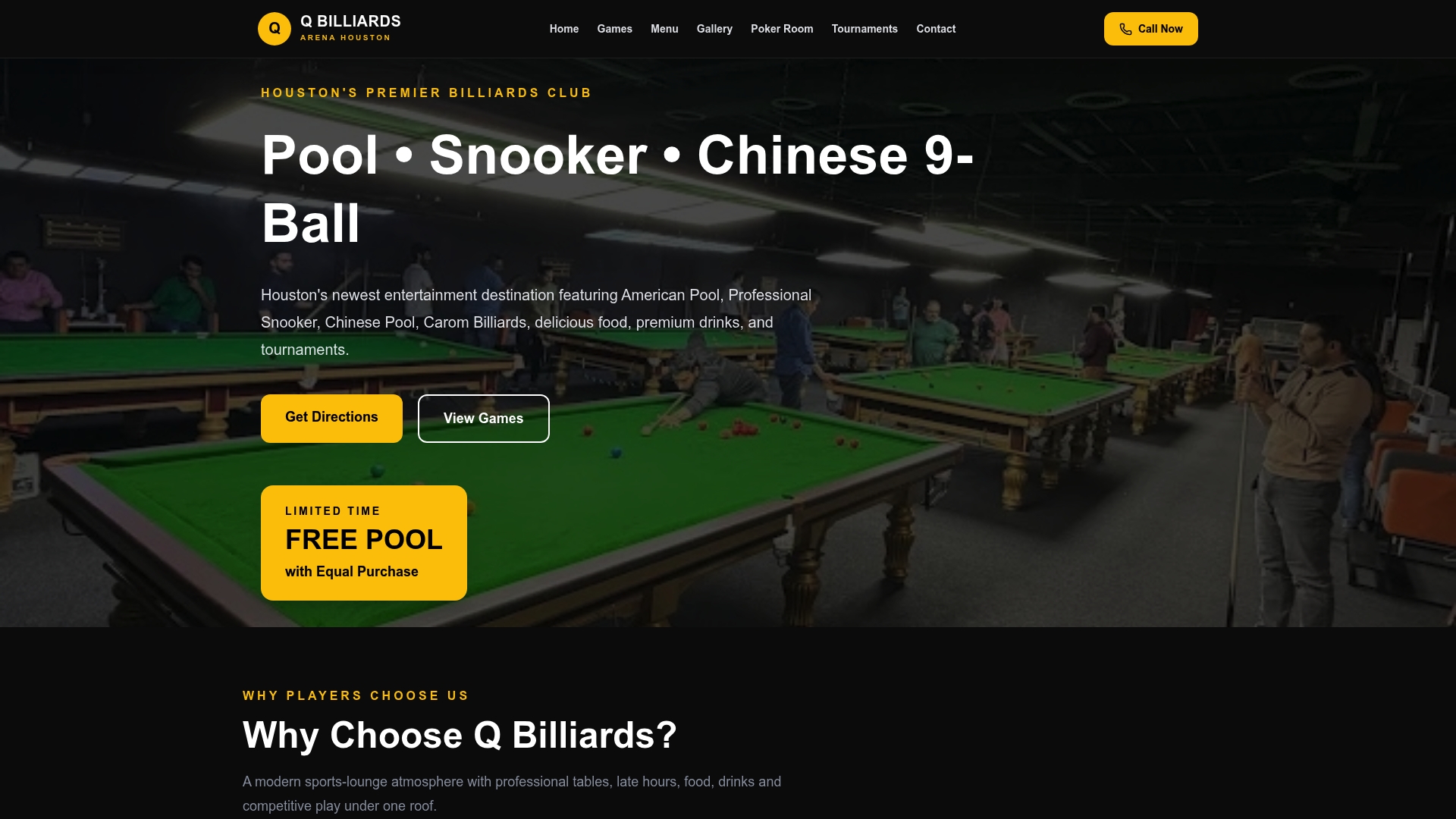
If the shopping list above sounds like more work than you want, A poker room venue may offer food and drink service, so you get the snack spread without buying, cooking, or holding any of it yourself.
- Book the poker room rental directly and skip the grocery run entirely.
- Order straight from the on-site food, snacks, and drink menu once your table's seated.
- Staff may handle warming and replenishment, so nobody has to step away from a hand to check a slow cooker.
Reserve the room ahead of your next game night and let the kitchen work be someone else's job for a change.
Sources
- Best Food, Drinks & Snacks For Your Poker Home Game | PokerNews
- Steps to keep food safe | FSIS / USDA
- Poker night party guide | Evite
- Game Night Snacks & Dinner Ideas - Good Cheap Eats
FAQ
What are good finger foods for game night?
Chips and dip, popcorn, pretzels, sliders, and fruit or caprese skewers all work well because they need no cutlery and hold up over a long session. Pair these with one filling main, like sliders or pizza, so grazing snacks don't leave anyone hungry.
What are some good food ideas for a casino night party?
Recognizable party food with light thematic touches, like poker-chip cookies or card-suit fruit arrangements, fits a casino theme without adding mess, according to Foodism. Stick to labels and presentation for the theme rather than complicated garnishes that make food harder to eat one-handed.
What is the cheapest finger food to feed a large group?
Low-prep staples like popcorn, pretzels, tortilla chips with salsa, carrots, and a simple dip form the cheapest base, with one filling casserole or bulk pizza order added instead of multiple small meat appetizers, per Good Cheap Eats. Buying these staples in bulk keeps the per-person cost down for a large group.
What are some good finger foods to serve at a gathering?
Dips served in small bowls with sturdy chips, warm handhelds like mini meatballs or pigs in a blanket, and skewered fruit or caprese bites all fit a general gathering. These categories match the shareable, low-cutlery pattern recommended for casual home entertaining by PokerNews.
How much food should I plan per guest for poker night?
For appetizer-only nights, plan 12 to 15 pieces per person over two hours and 18 to 20 pieces for sessions running three hours or more, according to a party food calculator. For nights with snacks plus one main, a few pieces in the first hour and fewer per hour after works well.