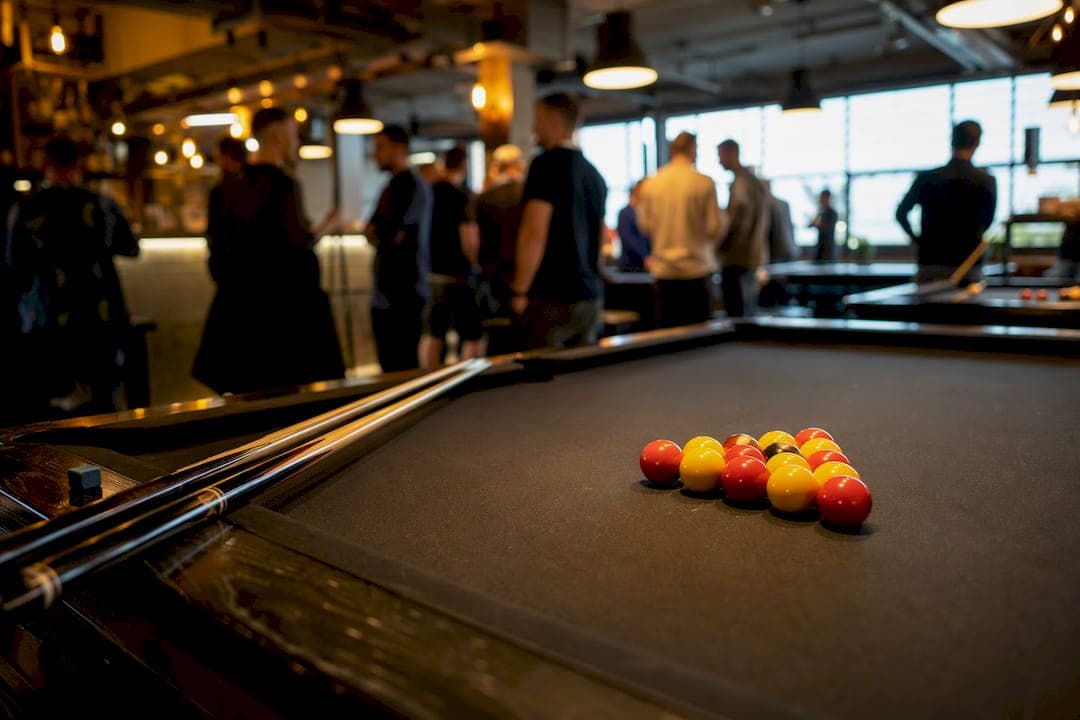
Yes, you can play snooker on a pool table for casual practice and genuine fun, but you're trading accuracy for accessibility. Larger pockets, a shorter table, and mismatched ball sizes all work against authentic snooker technique. The compromises are manageable once you know what to adjust, which is exactly what the setup and expectations sections below walk through.
TL;DR:
- Playing snooker on a pool table is suitable for casual practice and teaching beginners but not for tournament-level preparation due to size and pocket differences.
- The main deviations include shorter length, larger pockets, and bigger balls, which make long-range shots and safety play easier and less accurate.
- Using smaller balls, reducing red counts, and adding temporary pocket reducers can improve the playability and realism of snooker on a pool table.
- Long safety shots, precise positional play, and distance control are difficult to replicate on a pool table, limiting development for competitive players.
- Visiting a professional snooker venue provides a genuine experience where the game’s true skill and accuracy are properly challenged.
Table of Contents
- Can You Play Snooker on a Pool Table? When It Works and When It Doesn't
- How Different Are Snooker and Pool Tables, Really?
- How to Set Up and Play Snooker on a Pool Table
- What Playing Snooker on a Pool Table Actually Feels Like
- Where to Play Authentic Snooker Near You
- Getting the Most Out of Casual Snooker at Home
- Why the Real Skill Gap Isn't Where Most Players Think
- Play Real Snooker at Q Billiards Arena in Houston
- Sources
Can You Play Snooker on a Pool Table? When It Works and When It Doesn't
Whether a pool table makes sense for snooker depends entirely on what you're trying to get out of the session. A weekend hangout with friends is a completely different use case than training for a club tournament.
Casual, recreational play is where a pool table earns its keep. Budget-limited players and anyone short on space also benefit, since a full snooker table needs a room roughly 22 by 16 feet just to swing a cue comfortably.
Where it falls apart is competitive prep. If you're training for league play or trying to build the long-safety game snooker demands, a pool table teaches you the wrong lessons. Pockets that forgive sloppy aim don't build the precision that real snooker rewards, and shorter distances mean you never practice the long-range cueing that separates good players from great ones.
Here's how the fit breaks down in practice:
- Good fit: casual nights with friends, teaching beginners the basic pot-and-position idea, low-stakes practice when a real table isn't available.
- Poor fit: tournament preparation, refining safety play, anyone trying to build habits that transfer directly to a regulation table.
- Mixed results: solo practice on cue control, since a pool table sharpens stroke mechanics even if it inflates your potting confidence.
Know which category you're in before you rack up, and the compromises stop feeling like disappointments.
How Different Are Snooker and Pool Tables, Really?
The gap between a snooker table and a pool table isn't cosmetic. It's built into the dimensions, the pockets, the balls, and even the cloth, and each difference changes how the game plays.
A regulation snooker table runs 12 feet by 6 feet, while most home and bar pool tables measure 7, 8, or 9 feet long. That size difference alone shrinks every long pot and safety shot you'd normally practice, which is worth understanding before you invest in a table (our snooker table sizes guide breaks down room requirements if you're weighing a dedicated setup against your current pool table dimensions).
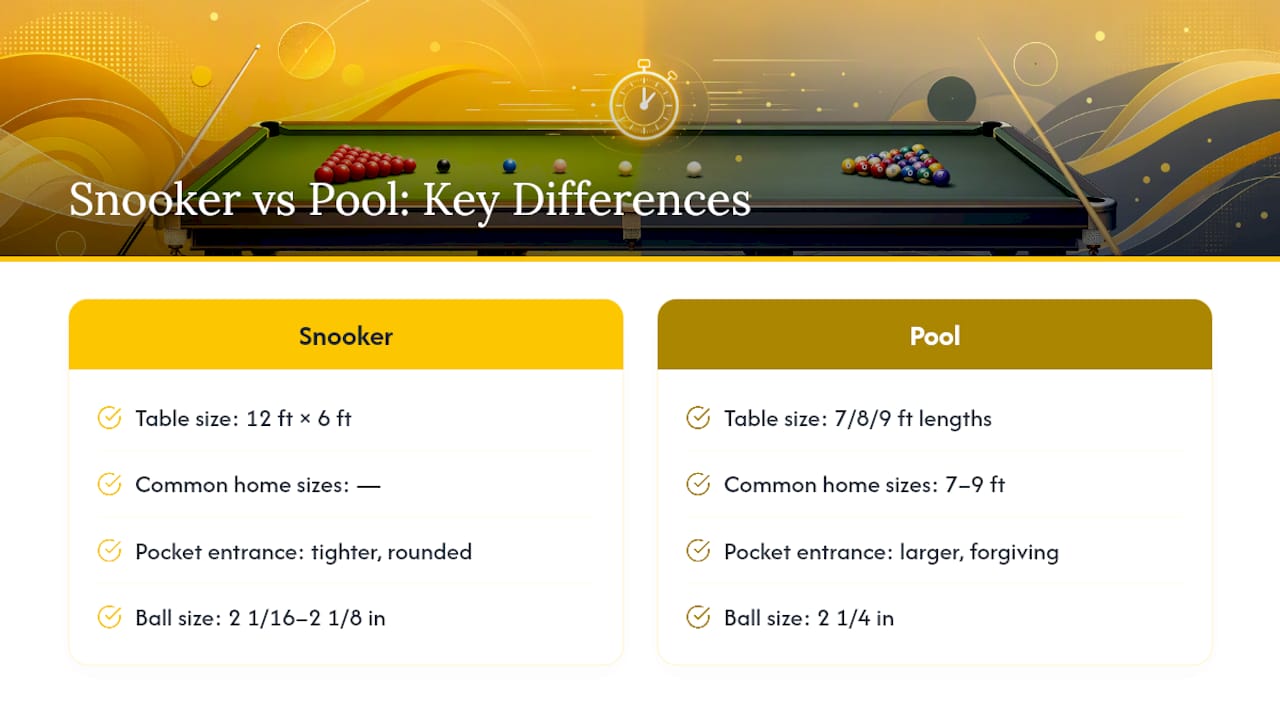
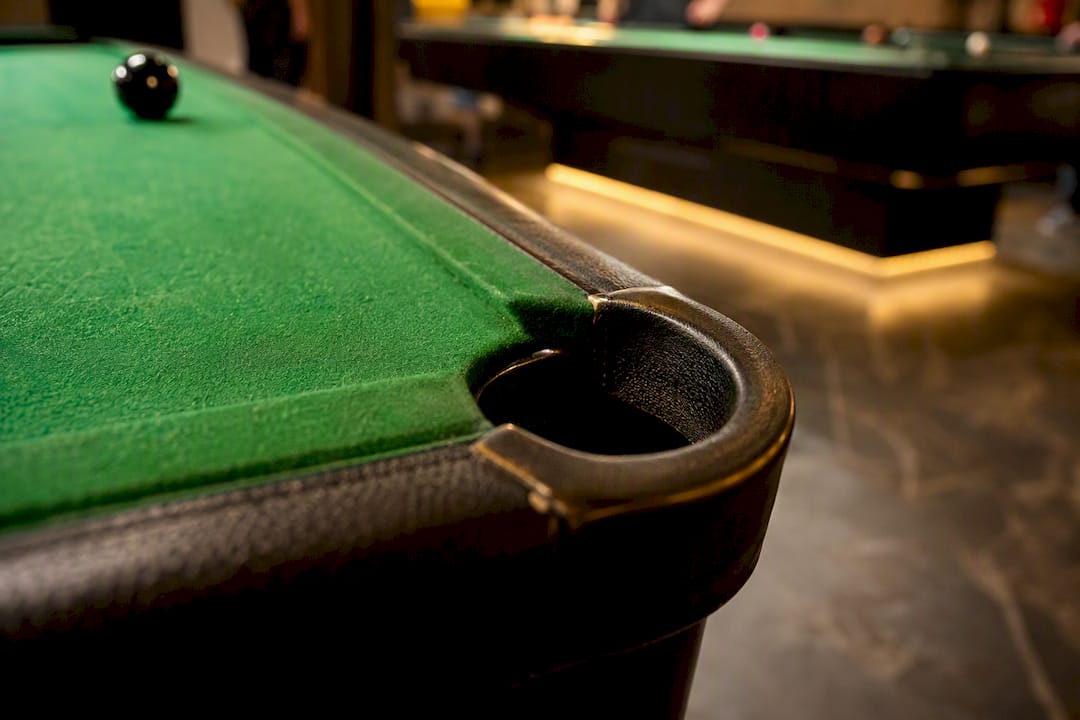
Pocket geometry matters even more than table length. Snooker pockets have a tighter, more rounded entrance designed to punish imprecise cueing, while pool tables typically ship with larger pockets and different cushion profiles that make potting noticeably easier. That forgiveness feels great in the moment and terrible for your long-term accuracy.
Ball size is the detail most players miss. Regulation snooker balls measure between 2 1/16 inches and 2 1/8 inches in diameter, while standard pool balls run 2 1/4 inches. That quarter-inch difference changes spacing on the rack, how tightly reds cluster, and how much cut angle you have on tricky pots.
A few other differences include snooker cloth being faster with directional nap, snooker cushions being lower and firmer for sharper rebounds, and rail height differences that affect cue ball banking angles.
How to Set Up and Play Snooker on a Pool Table
Getting a playable snooker on a pool table setup doesn't require permanent changes to your equipment. It takes the right ball set, a little tape, and a few rule adjustments.
- Pick your ball size based on table length. For a 7-foot or 8-foot table, a 2 1/16-inch set keeps spacing realistic. On a 9-foot table, balls around 2 1/16 inches in diameter work best. Player reports from smaller-table setups consistently favor the smaller sizes to avoid overcrowding the pack, though full 2 1/4-inch pool balls are the least authentic option and worth avoiding if you want any resemblance to real snooker.
- Decide your red count. Fifteen reds is standard for snooker, but using fewer reds such as ten or eight can help manage space on smaller tables and speed up casual games.
- Mark the D and the color spots. Use painter's tape or removable adhesive dots rather than anything permanent. Standard snooker layout places reds in a triangle behind the pink, with yellow, green, and brown on the baulk line and the D used for the opening break. Our racking guide walks through exact spot placement if you want it precise.
- Consider pocket reducers. Foam or rubber inserts that narrow the pocket mouth are widely recommended for making snooker playable on undersized tables without touching the table's actual construction. Always use temporary hardware that removes cleanly.
- Agree on rule tweaks before you start. Shorten frames to a fixed number of reds, decide how you'll handle re-spotting colors on a crowded table, and settle foul penalties in advance so nobody argues mid-frame.
Pro Tip: Keep a small kit of masking tape, adhesive dots, and your reduced ball set in a dedicated bag. Setup takes under five minutes once you've done it twice, and nothing damages a felt surface faster than improvised sticky notes or chalk marks.
What Playing Snooker on a Pool Table Actually Feels Like
Go in with the right expectations and this setup delivers real value. Go in expecting a scaled-down version of the World Championship, and you'll be disappointed by the second frame.
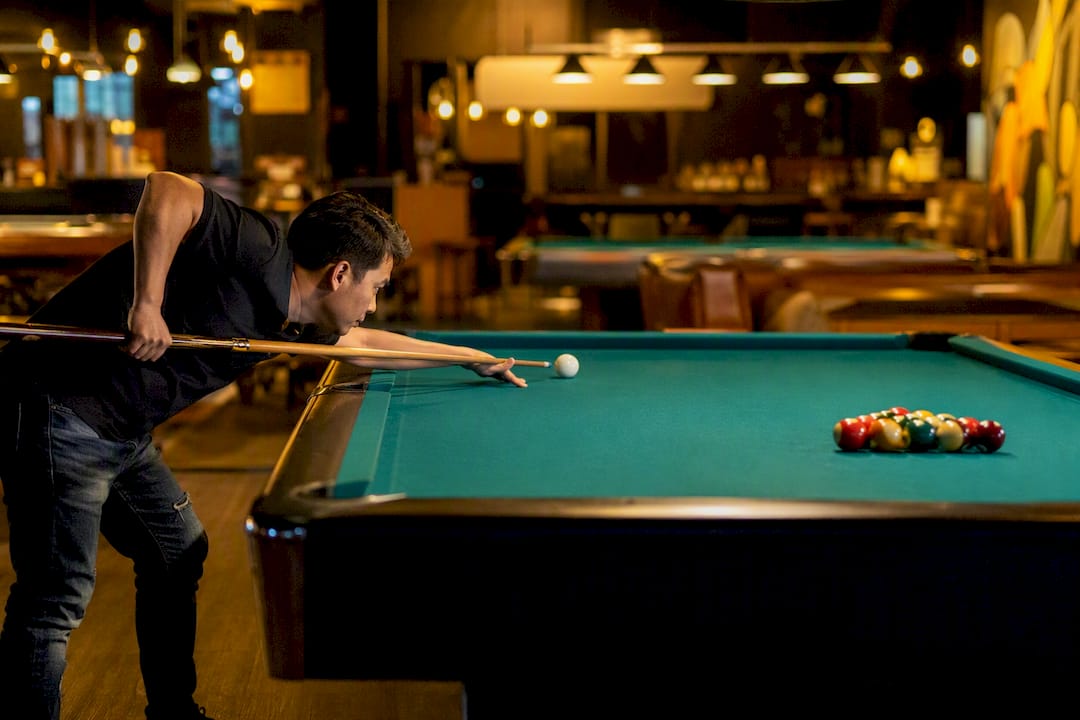
The genuine upside is cue control and tactical thinking. Reading angles, planning your next two shots, and learning to leave the cue ball safe all transfer reasonably well to a pool table. What doesn't transfer is anything involving distance: long safeties, precise positional play across six feet of cloth, and the patience that comes from a table that punishes every mistake.
Expect some friction along the way:
- Racks get crowded fast with 15 reds on a shorter table, which is why most casual groups drop to 8 or 10.
- Pots feel easier than they should, which can build false confidence about your actual accuracy.
- Bank shots behave differently off pool cushions, so don't trust your read until you've played a few racks.
Pro Tip: If a group keeps complaining the table feels "too easy," cut the red count to eight and add a house rule requiring a called safety every third shot. It restores some of the tactical pressure that a shorter table strips away.
Where to Play Authentic Snooker Near You
Nothing about a converted pool table replicates the feel of a real snooker table, and that gap shows up the moment you sit down at one. Heated slate keeps the cloth playing consistently fast all night, and tighter, more precisely angled pockets demand the kind of accuracy that a pool table's forgiving mouths never test.
That's exactly why a session on a professional table is worth the trip, even if you've built a solid casual setup at home. Q Billiards Arena runs professional-grade snooker tables alongside its American pool and Chinese 9-ball tables, giving you a direct way to check whether the habits you built at home actually hold up under real conditions.
A few ways to use a venue visit well:
- Test your long safety game on full table length, something no pool table setup can replicate.
- Compare your pot accuracy against tighter pockets to see if your home practice built real precision or false confidence.
- Check out the venue's game offerings and table availability before you go, especially if you want to combine a snooker session with league or tournament play.
Think of your pool table as the practice court and a proper venue as the real match. Both have a place, but only one tells you the truth about your game.
Getting the Most Out of Casual Snooker at Home
A few small habits turn a converted pool table from a novelty into a genuinely useful practice tool.
- Play safety-first, even casually. Call at least one safety shot per turn when you're not on an easy pot. It rebuilds the tactical thinking that easy pockets otherwise erase.
- Track scores properly even with fewer reds. Adjust your target score proportionally, since a frame with 8 reds tops out lower than one with 15 (our scoring breakdown covers the point values if you need a refresher).
- Run tight positional drills. Set up a red and a color three inches apart and practice controlled position on the color, since crowded shorter tables punish sloppy cue ball control just as much as long ones do.
- Check your gear after every session. Wipe down temporary adhesive spots, inspect pocket reducers for wear, and store your smaller ball set separately from your pool balls to avoid mixing sizes by accident.
Why the Real Skill Gap Isn't Where Most Players Think
Most advice on this topic focuses entirely on ball size and pocket dimensions, and while those matter, they're not the biggest thing separating casual pool-table snooker from the real game. The bigger gap is distance. Snooker rewards patience over six feet of cloth in a way that no amount of clever adaptation on a shorter table can replicate.
That's actually good news for anyone reading this to figure out whether a pool table is "good enough." It is, for what most people actually want: an entertaining night, a way to teach friends the game, low-pressure repetition on cue control. Where the conventional advice oversells itself is treating ball-size charts and pocket reducers as the whole solution, when the honest answer is that no amount of tape and adhesive dots will teach you a proper long safety.
Prioritize the fun first. Get the setup close enough to be recognizable, agree on fair rule tweaks with whoever you're playing, and treat a trip to a real table as the actual test of whether your game is improving.
— Q
Play Real Snooker at Q Billiards Arena in Houston
Once you've squeezed what you can out of a converted pool table, the next step is obvious: play on equipment built for the game. Q Billiards Arena gives Houston players access to professional-grade snooker tables, standard and heated, alongside American pool and Chinese 9-ball, all inside an 11,000 square-foot space designed for exactly the kind of casual-to-competitive range this guide has covered.
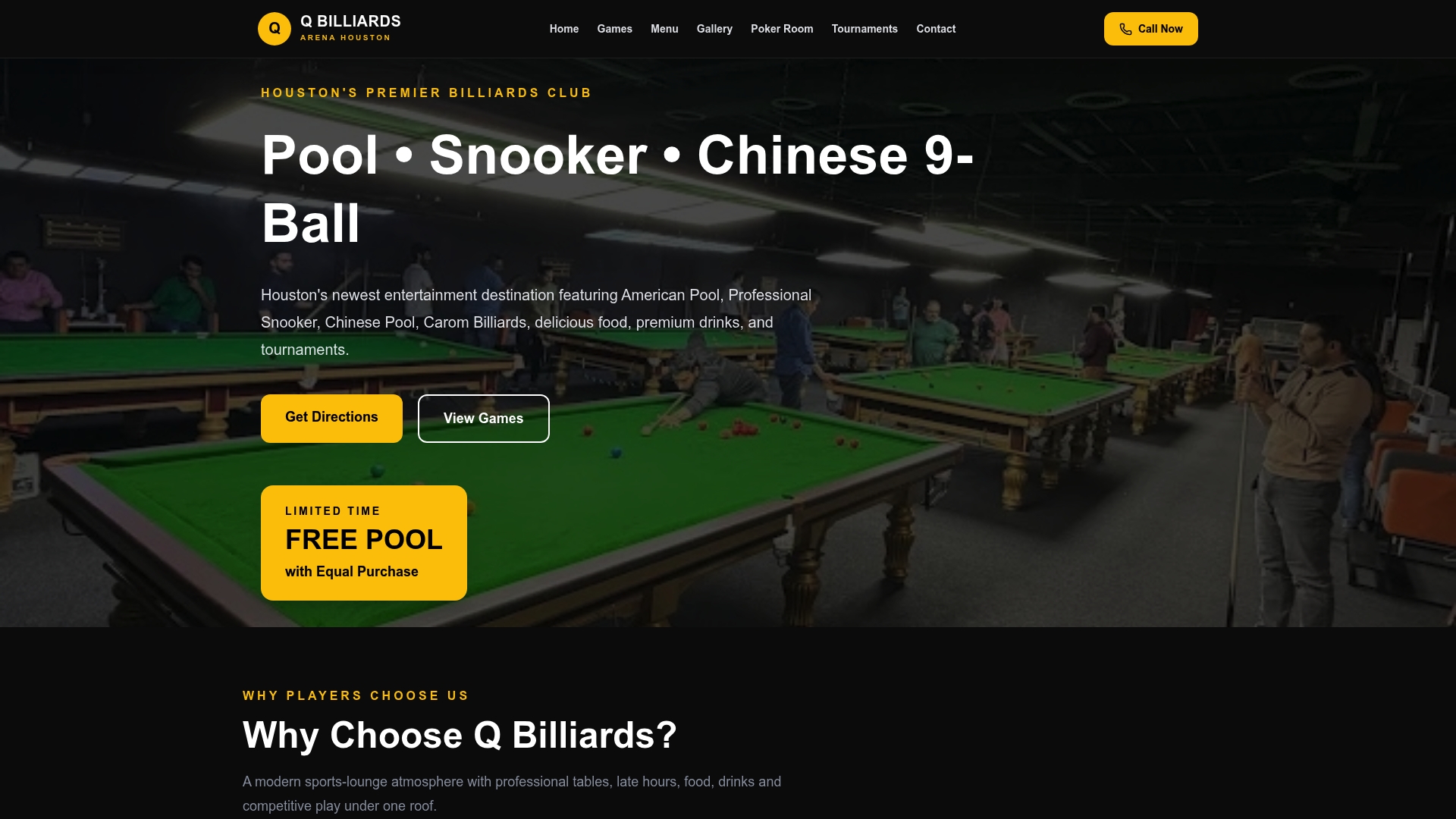
You get late hours, a full food and drink menu, and weekly tournaments across multiple cue sports, so a solo skill check can turn into a full night out without planning a second stop. If you've been testing rule tweaks and ball sizes at home, book a table and see how those adjustments hold up on tighter pockets and a full 12 by 6 foot layout. Check current games and pricing and reserve your table for this week.
Sources
- Can You Play Snooker on a Pool Table? — Home Leisure Direct
- Can You Play Snooker on a Pool Table? A Complete Guide — Sawyer Twain
- Playing snooker on a 9 footer — AzBilliards forums
- How is a snooker table set up? — BBC Sport