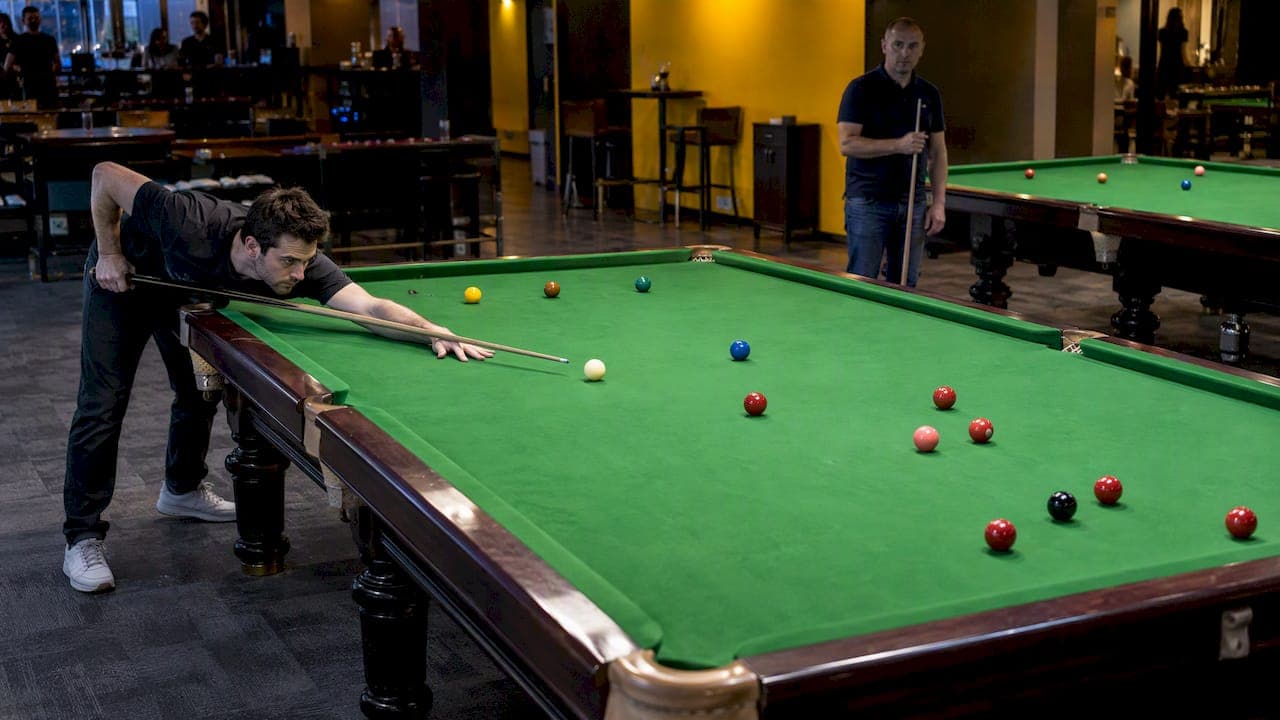
A snooker tournament format is the set of rules that decides how players advance, how matches are won, and how a field narrows down to one winner, and it generally falls into one of five families: knockout, round-robin, group plus knockout, plate or matrix, and league. Every match is built from frames, and matches are won by reaching a majority of a fixed, pre-announced number of frames. At the professional level, match length and session structure can stretch over days, with the World Snooker Championship as the clearest example of a long-format event.
TL;DR:
- Single-elimination is ideal for short, televised events but can eliminate top players with one loss and relies on fixed schedules.
- Round-robin and group-plus-knockout formats are better for fairness and smaller fields, needing clear tiebreak rules to prevent disputes.
- Match lengths increase in major tournaments like the World Snooker Championship, with finals reaching best-of-35 frames over four sessions.
- Rules for fouls, concessions, and conduct are governed by the WPBSA Rulebook, emphasizing integrity and consistent officiating across formats.
- Short formats like one-red or six-red snooker are practical for club nights, fitting within limited timeframes and maintaining game character.
Table of Contents
- Core concepts: frames, matches, and sessions
- Common formats explained: knockout, round-robin, and league play
- Match lengths and session examples from the World Snooker Championship
- Rules, governance, and player conduct in sanctioned events
- How to choose a format: a practical checklist for organizers
- Club and amateur variants: short formats you can run this week
- Glossary of terms organizers and players should know
- Running club snooker tournaments at Q Billiards Arena
- How Q Billiards Arena supports tournament organizers and players
- Sources
- FAQ
Core concepts: frames, matches, and sessions
A frame is a single rack of snooker, played from the break until the balls are cleared or conceded. A match is a set of frames played under a "best of" number: best-of-7 means the first player to win 4 frames takes the match, best-of-19 means the first to 10 wins. This majority rule is the backbone of every format discussed below, and it comes straight from the WPBSA Rulebook 2024-25, which defines frames and matches and governs how results are determined.
Sessions exist because long matches are hard on players and hard to broadcast in one sitting. A match gets split into sessions, each covering a set number of frames, with scheduled breaks for rest, meals, or a change in broadcast window. Some professional matches even extend across two calendar days. When play resumes, the score simply carries over: nothing resets between sessions.
A frame or match can end in more ways than a clean finish. Common scenarios organizers need rules for:
- A frame is won outright when one player clears the remaining balls or the opponent cannot catch up on points.
- A player concedes a frame or match, often when the remaining balls make a comeback mathematically impossible.
- A referee awards a frame following a foul that breaches the rules, under the authority set out in the WPBSA rulebook.
- A walkover is recorded when a player fails to appear, and a dead frame occurs if a match has already been decided before every frame is played.
For a deeper look at how points and breaks are counted inside a single frame, see our guide to snooker scoring and breaks.
Common formats explained: knockout, round-robin, and league play
Most tournaments you will encounter use one of five structures, and each one trades off fairness, playing time, and spectator appeal differently.
- Single-elimination (knockout): Players are drawn into a bracket, often with seeding to keep the strongest entrants apart early, and one loss ends the run. It suits time-limited events because the number of matches is fixed and small, but a single off night can eliminate a top player in round one.
- Plate or consolation knockout: Players who lose in the early rounds drop into a secondary "plate" bracket rather than going home. This gives everyone at least a second match and softens the sting of a bad early loss.
- Double-elimination: A player needs to lose twice before being eliminated, which increases total matches played but gives a stronger guarantee that the final reflects true form rather than a single bad session.
- Round-robin: Every player in a group plays every other player once, with standings decided by frames won, then tiebreakers. It works best for small fields or qualifying groups, since the match count grows quickly as the group gets larger.
- Group plus knockout: Players are split into round-robin groups, and the top finishers from each group advance to a knockout stage. This blends the fairness of round-robin play with the drama of a single-elimination finish, and it is common in team and invitational events.
- League or season play: Matches are spread across weeks or months, with points accumulated over a season rather than decided in one event. This format suits club calendars and lets players recover from a bad week without being eliminated.
- Matrix format: Software-driven scheduling guarantees every entrant plays a set number of rounds against different opponents, without the long schedule of a full round-robin, while still producing one clear winner. This is increasingly common for amateur tours where travel costs make a guaranteed amount of play important to entrants.
A clean round-robin needs a published tiebreak order before the first ball is struck: frames won, then head-to-head result, then frame difference, then highest break, a hierarchy drawn from how the World Snooker Championship format handles its own scheduling logic. Skipping this step is one of the most common sources of post-event disputes.
Quick summary of fit:
- Knockout suits televised events and weekend opens where the schedule is fixed.
- Round-robin and group-plus-knockout suit qualifiers and small fields where fairness matters more than speed.
- League play suits ongoing club membership and season-long engagement.
- Matrix formats suit amateur tours where guaranteeing play time per entrant outweighs crowning a winner quickly.
Match lengths and session examples from the World Snooker Championship
Match length is not fixed across a tournament. It typically grows as the rounds progress, and the World Snooker Championship is the clearest professional example of this pattern.
- First round: best-of-19 frames, played across two sessions.
- Second round and quarter-finals: best-of-25 frames, played across three sessions.
- Semi-finals: best-of-33 frames, played across four sessions.
- Final: best-of-35 (first to 18), also played across four sessions.
The final at the World Snooker Championship can run to a best-of-35 frame match, played over four sessions, according to SnookerHQ's breakdown of the tournament's structure. That length exists because longer matches reward consistency over a lucky run, and a bigger sample of frames produces a result less likely to hinge on a single fluke. The trade-off is scheduling: a four-session final needs a venue booked for multiple days, broadcast windows reserved well in advance, and players fit enough to compete across extended sessions.
The championship itself runs as a straight knockout of 32 players, split between the top 16 seeds and 16 qualifiers, staged over 17 days at the Crucible Theatre, according to ESPN's coverage of the 2026 event. That is a useful contrast with shorter professional events, many of which run best-of-5 or best-of-7 matches in early rounds before lengthening for the closing stages, a pattern also seen in Q Tour event formats, where early rounds run best-of-5 and later rounds move to best-of-7. Club events almost never need anything longer than best-of-3 or best-of-5 for early rounds, reserving best-of-7 for a final if time allows.

Rules, governance, and player conduct in sanctioned events
Format decides how a tournament is structured, but rules decide how it is refereed and enforced. The WPBSA Rulebook 2024-25 is the standard reference for frame and match definitions, foul penalties, and referee authority, and it is worth consulting directly before finalizing any format that will carry prize money or ranking points.
Conduct matters as much as structure. The WPBSA's conduct regulations require players to compete to the best of their ability throughout a match, and they treat intentional underperformance, premature conceding, or deliberate time wasting as breaches that can draw disciplinary action. That obligation exists to protect the integrity of every format on this list: a round-robin group is only fair if nobody has an incentive to lose on purpose to manipulate a later draw.
Organizers running club or amateur events can adapt rules locally, but a few points are worth publishing in writing before entry:
- State the exact match distance (best-of-X) for every round, not just the final.
- Clarify referee authority for close calls, fouls, and disputed shots.
- Note any local variations on standard conduct rules, such as shot clocks for weeknight play.
- Publish the tiebreak order for any group stage before the draw is made.
A referee's core job, whether paid official or a volunteer marker at a club night, is to apply the rules consistently so that format integrity holds up under pressure.
How to choose a format: a practical checklist for organizers
Choosing a format starts with constraints, not preferences. Work through these questions in order before locking anything in:
- How many players are entering, and is that number fixed or still growing?
- How many tables are available, and for how many total hours?
- Does the event need to produce a result by a hard deadline, or can it run across a season?
- How much does bracket luck matter to your entrants compared to guaranteed playing time?
- Is there a prize structure that depends on a clean, undisputed winner?
Time and fairness pull against each other. A weeknight club session with three tables and a hard 10 PM close almost always defaults to single-elimination with short matches, because there is no time for anything else. A weekend open with a full day and extra tables can afford a group stage before a knockout final. A televised invitational can run the long, multi-session format the World Championship uses, since broadcast slots are already built around it. An ongoing league sidesteps the time question entirely by spreading matches across weeks.
Seeding and qualifying rounds solve a different problem: keeping your strongest players from meeting too early. Rank entrants by known form or handicap, then seed the bracket so the top seeds are spread across different quarters.
Pro Tip: Build in 10 to 20% extra time beyond your planned session length to cover walkovers, appeals, and the odd frame that runs long on safety play.
Club and amateur variants: short formats you can run this week
Not every table needs a full 15 reds to run a good tournament. Several short formats make club nights faster without losing the character of the game.
- 1-red snooker removes most of the reds, speeding up frames dramatically while keeping the colors and potting sequence intact, which makes it a strong fit for weeknight events with a fixed closing time.
- Six-red snooker splits the difference, using six reds instead of fifteen for a shorter but still tactical frame.
- Single-frame deciders and timed matches work well for drop-in events where players arrive and leave on no fixed schedule.
- Plate events give early losers a second match in a consolation draw, which keeps a weeknight crowd engaged rather than sending half the field home after one loss.
Two sample schedules show the difference venue size makes. A 16-player weeknight event on 3 tables fits best as a single-elimination bracket with best-of-3 matches, running roughly four rounds across one evening. A 16-player weekend open on 8 tables can run group play of four groups of four, followed by a knockout quarter-final through final, since the extra tables let multiple matches run in parallel. For clubs setting up on pool tables rather than full-size equipment, our guide on setting up snooker on a pool table covers the practical adjustments needed.
Glossary of terms organizers and players should know
- Frame: a single rack, played from break to clearance or concession.
- Match: a set of frames decided by a best-of number.
- Best-of: the total frame count that determines the winning majority.
- Session: a scheduled block of frames within a longer match.
- Seeding: ranking entrants to control bracket placement.
- Plate: a consolation bracket for early losers.
- Walkover: a match awarded when an opponent fails to appear.
- Dead frame: a frame played after the match is already decided.
- Break: a sequence of scoring shots in one visit to the table, covered in more depth in our scoring breakdown.
- Main draw: the primary bracket, as opposed to qualifying or plate stages.
Running club snooker tournaments at Q Billiards Arena
Running a tournament night teaches you things a rulebook will not. Table rotation needs a clear plan before the first ball drops, markers need to know exactly how to call fouls consistently, and food and drink service has to keep moving without slowing down matches. The most common mistake we see is underestimating match length: a room full of best-of-5 matches can still run long once safety battles start, and understaffing the night makes every delay worse.
Our 1-Red Snooker Tournament runs on a short-format bracket built for exactly this kind of weeknight pacing, and our coaching camp gives newer players a chance to get comfortable with match pressure before they enter one. For club organizers weighing format against a real clock, those two lessons, plan for overruns and staff for the pace you actually expect, matter more than any bracket software.
— Q
How Q Billiards Arena supports tournament organizers and players
Whether you want to enter a tournament or build one of your own, our Houston venue is set up for both. We run a recurring 1-Red Snooker Tournament built around the short-format structure covered above, plus a coaching camp through our events page for players who want match reps before competing.
- Book a table across our full games lineup, including Standard Snooker, Heated Snooker, and Chinese 9-Ball.
- Enter the 1-Red Snooker Tournament for a fast, club-friendly format.
- Check the coaching camp schedule to sharpen your game before entry.
With 25 tables and food and drinks available throughout the night, there is room to run or join a tournament without the venue becoming the bottleneck. Check current availability on our games page to get started.

Sources
For the official rule text behind everything above, start with the WPBSA Rulebook 2024-25 and the WPBSA conduct regulations. For World Championship specifics, see SnookerHQ's format explainer and ESPN's 2026 coverage. For general event-organizing lessons that carry across table sports, see this guide to hosting tournaments.
- WPBSA Rulebook 2024-25
- How does the World Snooker Championship format work? | SnookerHQ
- World Snooker Championship 2026: Results, schedule, how to watch, prize money, winners, more - ESPN
FAQ
What is the most common snooker tournament format?
Single-elimination, or knockout, is the most common format for time-limited events because it produces a winner in a fixed number of rounds. Round-robin and group-plus-knockout formats are more common for qualifiers and small fields where fairness matters more than speed.
How long is a World Snooker Championship match?
Match length grows by round: the first round is best-of-19 (first to 10 frames) over two sessions, rising to best-of-35 (first to 18) over four sessions for the final. Early rounds use shorter matches to fit the overall 17-day schedule.
What is a 167 break in snooker?
A maximum break in snooker is normally the highest possible score from potting all reds with blacks followed by the colours in order. A total above that maximum is not possible under standard scoring rules, so a 167 break is not a recognized or achievable score in the sport.
Which is harder, billiards or snooker?
The two games test different skills: carom billiards demands precise cue-ball control with no pockets to aim for, while snooker demands pinpoint potting accuracy on a larger table with tighter pockets. Most players who have tried both describe snooker as the more physically demanding test of potting consistency, while billiards rewards a different kind of tactical cue-ball mastery.
What format should a small club tournament use?
For a weeknight field of 16 players on a few tables, single-elimination with short best-of-3 matches fits most clubs' time limits. Some venues run short-format events such as the 1-Red Snooker Tournament specifically to keep match length manageable on a fixed schedule.