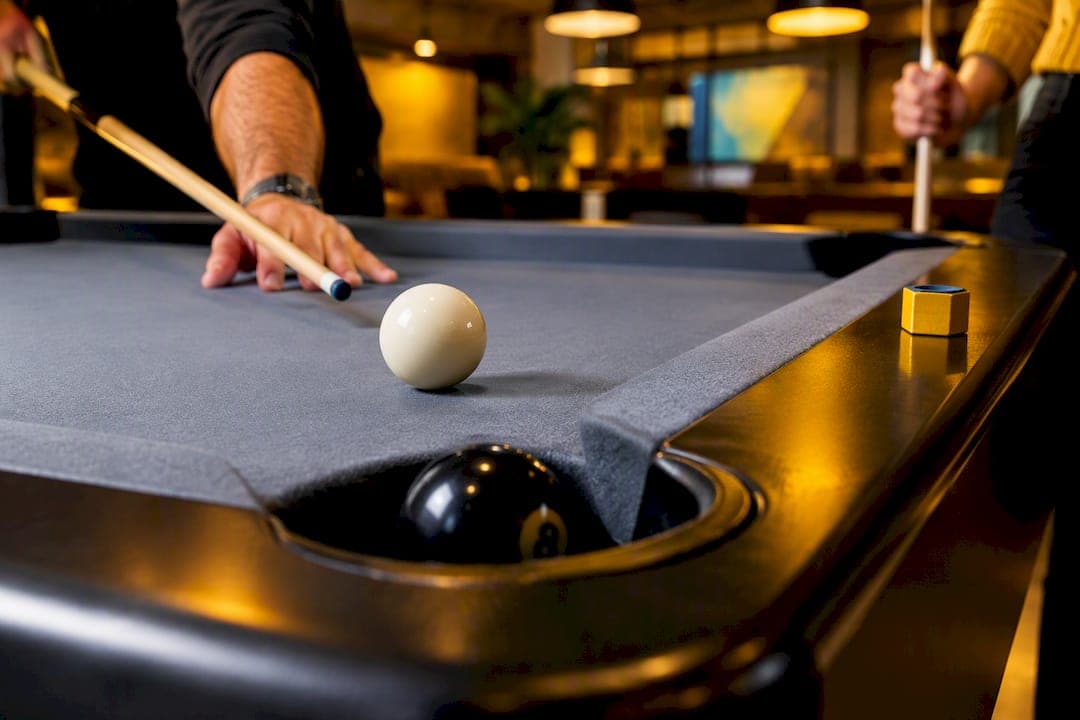
An 8-ball foul is any violation of legal shot requirements, from scratching the cue ball to hitting the wrong object ball first, and the standard penalty is ball-in-hand for your opponent. Some fouls carry harsher consequences: pocketing the 8-ball on a foul or before clearing your group ends the game outright. The BCA rules, WPA, and APA all recognize these categories, though the details vary by league.
TL;DR:
- Hitting the wrong object ball first or fouling on the 8-ball before clearing your group results in an immediate loss of game in most rulesets.
- Most fouls, including scratches or missing a rail after contact, give the opponent ball-in-hand anywhere on the table, except after a break foul where placement may be restricted.
- Three consecutive fouls by the same player can also trigger a loss, but enforcement varies depending on league rules.
- Confirm specific rules before playing, especially regarding break-scratch penalties and fouling on the 8-ball, to avoid disputes.
- Self-report fouls immediately and clearly communicate the foul call to maintain fairness and sportsmanship during the match.
Table of Contents
- 1. Common fouls you'll see in almost every match
- 2. 8-ball-specific fouls that end the game instantly
- 3. How penalties actually play out at the table
- 4. Calling fouls and keeping the game civil
- 5. Drills that fix the three fouls beginners make most
- 6. Rule differences worth confirming before you play
- 7. Why clear foul rules matter at billiards venues
- Practice, coaching, and league nights at Q Billiards Arena
- Primary rule documents and league pages to consult
- Sources
- FAQ
1. Common fouls you'll see in almost every match
Most fouls in 8-ball fall into a handful of repeat offenders. Learning to spot them, in your own game and your opponent's, cuts down on arguments and speeds up play.
A scratch happens when the cue ball drops into a pocket or flies off the table entirely. It's the most recognizable foul in pool, and under APA league rules, it hands the incoming player ball-in-hand anywhere on the table in most formats. A scratch can happen off the break, mid-rack, or on a defensive shot gone wrong, and the penalty is the same regardless of intent.
Hitting the wrong ball first is another frequent violation. If you're shooting solids and your cue ball contacts a stripe (or the 8-ball, before your group is cleared) before touching one of your own balls, that's a foul. This one trips up beginners constantly, especially in tight clusters where the intended ball isn't the closest one to the cue ball's path.
Failing to drive any ball to a rail or into a pocket after contact is often called the "no-rail" foul. Once the cue ball strikes an object ball, some ball, cue ball included, must reach a cushion or fall into a pocket. If everything stays put with no rail contact, the shot is illegal. This rule catches players who tap a ball just hard enough to nudge it a few inches without sending anything to a rail.
Push shots and double hits round out the mechanical fouls. A push shot occurs when the cue tip stays in contact with the cue ball for an extended fraction of a second, effectively guiding it rather than striking it, usually seen on shots where the object ball sits close to the cue ball. A double hit is similar: the cue strikes the ball, then strikes it again before it clears the tip. Both are difficult to call from a distance but are still fouls under standard rules.
Other fouls come from procedure rather than shot mechanics:
- Touching or moving any ball with your hand, clothing, or cue (other than the legal stroke) is a foul, even if it's accidental.
- Shooting while balls are still in motion from the previous shot is a foul, since the table must be fully at rest before the next shot begins.
- Playing out of turn, whether by mistake or gamesmanship, is a foul and typically hands the opponent ball-in-hand once discovered.
When a ball leaves the table entirely, most rule sets treat it as a standard foul, and the ball gets spotted back onto the table, usually on the long string near the foot spot, rather than returned to wherever it started. The WEPF rulebook outlines this spotting procedure in detail, and it's worth checking your league's specific version since spotting locations can differ slightly between organizations.
2. 8-ball-specific fouls that end the game instantly
Some fouls in 8-ball don't just cost you ball-in-hand, they cost you the entire game. These are the moments that separate 8-ball from other pool variants, and they're worth memorizing before you ever step up for a break.
Pocketing the 8-ball before you've legally cleared your group (all seven solids or all seven stripes) is an automatic loss of game. It doesn't matter how the 8-ball went in, whether it was a clean shot or a fluke off a combination. If your group isn't finished, sinking the 8 ends the rack in your opponent's favor.
Pocketing the 8-ball while simultaneously committing another foul is treated the same way. Say you clear your stripes, then on your shot at the 8-ball, you scratch the cue ball into a corner pocket at the same moment the 8 drops. According to the BCA rules document, that combination, 8-ball down plus a foul on the same shot, is a loss of game, not just ball-in-hand. The presence of a foul on that specific shot overrides the fact that you legally pocketed your last ball.

Pocketing the 8-ball in the wrong pocket, or an uncalled pocket in formats that require calling shots on the 8, is also a loss of game. This matters most in call-shot leagues and tournaments, where slop doesn't count on the money ball even if it's tolerated on earlier shots. Sink the 8 in a pocket you didn't declare, and the rack is over, no matter how clean the contact was.
Three consecutive fouls by the same player, across separate turns at the table, also results in loss of game in many league formats. This rule exists to prevent stalling or repeated safety fouls from dragging a match out indefinitely. The exact enforcement varies: some leagues require the player to be warned after the second foul, giving them a chance to avoid the third before the penalty kicks in. Understanding this rule matters more in league or tournament play than in a casual bar game, since casual matches rarely track fouls across turns with that level of precision. If you're building toward the endgame, it's worth reviewing how the 8-ball fits into overall strategy, since a single careless foul near the finish can undo an otherwise well-played rack.
3. How penalties actually play out at the table
Knowing that a foul results in "ball-in-hand" doesn't tell you much about what that actually looks like during a match. The placement rules, and the exceptions to them, change your options significantly.
On most fouls, the incoming player gets ball-in-hand anywhere on the table. That means you can place the cue ball literally anywhere, lined up for your easiest shot, blocking your opponent's next path, or setting up a break on a tough cluster. The APA's foul rules confirm this is the standard penalty across most tournament formats.
The break shot carries a notable exception. If the breaking player scratches on the opening break, many leagues, including formats governed by WPA guidance, require the incoming player to shoot from behind the head string rather than from anywhere on the table. This keeps a break-scratch from handing over an easy runout, since the cue ball's placement is restricted to the kitchen. Some bar and house rules go further, defaulting to "ball in kitchen" on any foul that follows a break, not just a scratch.
Self-reported foul disputes at casual tables often trace back to confusion over exactly where the cue ball can be placed after a break foul, according to community discussion threads among players comparing common bar rules. Confirming the placement rule before the match starts avoids most of that friction.
Balls that leave the table entirely get spotted, not placed at random. Standard procedure puts them on the long string, near the foot spot, and if that spot is occupied, the ball goes as close to it as possible without touching another ball. The shooter or referee typically handles this, though in casual games it's common courtesy for the person who knocked the ball off to spot it themselves and confirm placement with their opponent.
A few practical examples show why ball-in-hand matters strategically:
- If your opponent scratches while trying to break up a cluster, you can use ball-in-hand to attack the same cluster from a much better angle.
- If they foul while playing a safety, you can place the cue ball to shoot directly at your own group instead of the awkward position they left you.
- If a break-scratch restricts you to the kitchen, you may need to play a controlled shot rather than break out a tight rack immediately.
Three consecutive fouls, where enforced, typically requires the referee or scorekeeper to track fouls turn by turn rather than shot by shot within a single visit to the table. League play tends to formalize this tracking, while casual games rarely enforce it unless both players agree to count fouls beforehand. For more on cue-ball placement strategy after a foul, the cue-ball fouls guide covers positioning in more depth.
4. Calling fouls and keeping the game civil
Pool runs on an honor system more than most competitive games. Nobody wants a referee hovering over every shot at a casual table, so the responsibility for calling fouls mostly falls on the players themselves.
- Call your own foul the moment it happens, before the next shot is taken. Many league manuals, including the Team Manual and Rules Booklet, state that a foul not called before the next shot generally can't be claimed retroactively.
- Confirm ball-in-hand placement verbally with your opponent before touching the cue ball, especially near rails or clusters where positioning is debatable.
- In league matches, defer to the assigned referee or team captain for disputed calls rather than arguing it out mid-rack.
- At casual tables with no referee, agree on the rule set (tournament ball-in-hand versus house rules) before the first break, not after a dispute arises.
- If a call is genuinely unclear, replay the shot mentally with both players present rather than relying on memory after the fact.
Self-reporting isn't just etiquette, it's built into the rules. APA's etiquette guidance treats immediate self-calling as central to fair play, since it removes the incentive to hide a foul and hope nobody noticed.
Pro Tip: Say the foul out loud the instant it happens, even if you think your opponent might not have seen it. It builds trust and keeps casual games from turning into arguments.
5. Drills that fix the three fouls beginners make most
New players tend to repeat the same three mistakes: scratching, hitting the wrong ball, and failing to send anything to a rail. Coaching notes tied to WPA rule commentary point to these three as the fastest wins for anyone trying to clean up their game.
- Controlled-break drill. Set up a full rack and practice breaking with a stun shot, cue ball stops near center table instead of following through toward a pocket. Focus on speed control before power. Progress by aiming for a break that pockets a ball without sending the cue ball anywhere near a corner pocket.
- Alignment and aiming drill. Place three object balls in a loose cluster, mixing solids and stripes, and practice identifying your legal ball before every shot. Say the ball number out loud before you stroke. Progress by adding balls to the cluster as your first-ball accuracy improves.
- Frozen-ball rail drill. Place a ball frozen against a rail and practice driving it to another rail or pocket without fouling. Focus on contact angle rather than power. Progress to shots where the cue ball itself must reach a rail after contact, since frozen-ball situations are a common source of disputed calls.
Pro Tip: Run all three drills in a single 30-minute session, ten minutes each, rather than mastering one before moving to the next. Foul prevention is about habit, not isolated skill.
6. Rule differences worth confirming before you play
Not every table plays by the same rulebook, and assuming otherwise causes more disputes than any single foul does. WPA and BCA tournament rules generally award ball-in-hand anywhere on the table for standard fouls, which rewards aggressive, high-risk shot-making since a missed attempt rarely costs much strategic ground.
APA and TMRB league play carve out the break-scratch exception, restricting the incoming player to behind the head string, and often layer in local bylaws on top of the base ruleset. WEPF's foul categories, standard, non-standard, and loss-of-frame, add another layer, ranking fouls by severity when more than one occurs on a single shot.
House rules at bars and casual venues frequently default to "ball in kitchen" after any break foul, and many tables allow slop (unintentional pockets) on everything except the 8-ball, where calling the pocket is still required. Before racking up, confirm four things: which ruleset governs ball-in-hand placement, whether the break-scratch exception applies, whether slop counts on non-8 shots, and how fouls on the 8-ball itself are penalized.

7. Why clear foul rules matter at billiards venues
Ambiguous foul calls slow games down and sour otherwise good matches. We hold our tables, leagues, and coaching sessions to a consistent rule standard so players know exactly what to expect, whether they're in a casual rack or fighting for a spot in a Friday tournament. Clear rules mean faster play, fewer disputes, and a fairer shot for everyone at the table. Supervised coaching sessions can help sharpen your understanding of foul calls.
— Q
Practice, coaching, and league nights at Q Billiards Arena

Reading the rules is one thing. Playing enough racks to make them second nature is another. At Q Billiards Arena, you get access to 25 professional-grade tables across American Pool, Standard Snooker, Heated Snooker, and more, plus refereed tournament nights where foul calls are enforced consistently instead of argued over. Our Snooker Coaching Camp gives newer players direct feedback on the exact fouls covered here, scratches, wrong-ball hits, and rail-drive misses, so you build clean habits instead of table-side excuses.
- Practice foul-free shot selection during open table time on any of our 25 tables.
- Enter a Tuesday or Friday night tournament where fouls are called and enforced by the room, not by guesswork.
- Supervised coaching sessions can help fix common foul-related habits before they affect your game.
Renting tables by the hour and practicing with consistent foul enforcement helps improve your game.
Primary rule documents and league pages to consult
For tournament play, the official rulebooks carry the most weight. For casual and league games, check your specific organization's bylaws since local variations are common.
- BCA 8-ball rules document for the definitive loss-of-game conditions.
- APA's foul rules page for standard league foul definitions and ball-in-hand policy.
- WEPF's 2014 rulebook for foul categorization used in many international league formats.
- WPA's expert foul breakdown for break-scratch placement exceptions.
Sources
- 8-Ball rules (BCA document)
- Fouls - Pool Rules for APA League Play
- Pool fouls explained: WPA's complete expert list (2026)
- WEPF Rules (2014) — Fouls and penalties
FAQ
Is there a cheat in 8 ball pool?
There's no legitimate shortcut around the rules in physical 8-ball, every foul carries a real penalty regardless of skill level. Some digital versions of the game have been associated with third-party cheat tools, but that's a separate issue from table rules and isn't addressed by physical rulebooks like the BCA rules.
Does the three-foul rule apply in 8-ball?
Yes, many league formats enforce a loss of game after three consecutive fouls by the same player across separate turns. The exact enforcement, including whether a warning comes after the second foul, varies by league, so it's worth confirming with your specific organization before a match.
What are the common mistakes in an 8-ball pool?
The most frequent mistakes are scratching the cue ball, hitting the wrong object ball first, and failing to drive any ball to a rail after contact. Coaching guidance tied to WPA rule commentary identifies these three as the fastest fixes for improving foul avoidance.
What do fouls do in the pool?
A foul typically hands your opponent ball-in-hand, letting them place the cue ball anywhere on the table for their next shot. Certain 8-ball-specific fouls, like pocketing the 8 early or on the same shot as another foul, result in an immediate loss of game instead, according to the BCA rules.