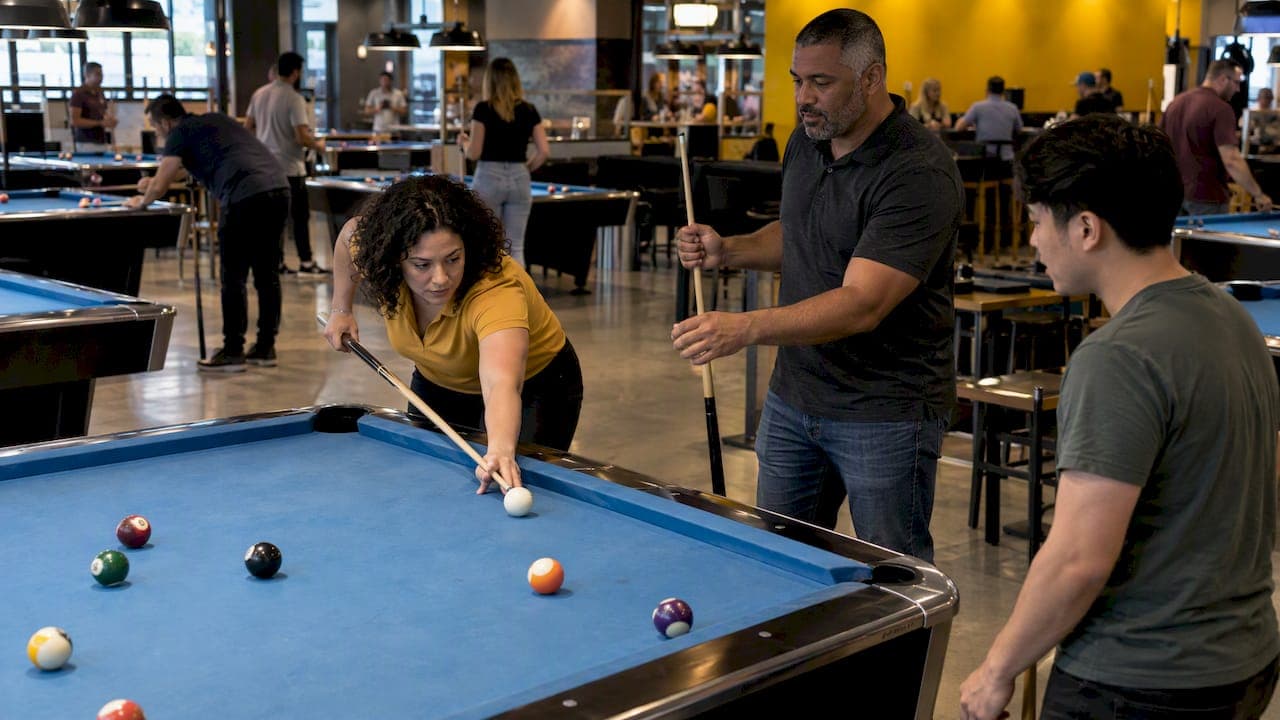
Yes, billiards works as a team-building activity when you pair it with a short rules clinic, mixed-skill teams, and a structured debrief at the end. A field experiment on workplace social events found that regular, subsidized gatherings strengthened collegiality and reduced short-run turnover, and venues like Q Billiards Arena in Houston already run the tournament infrastructure that makes this formula easy to execute.
TL;DR:
- A 60 minute session can fit 5 minutes for arrival, 10 for instruction, 30 for mixer rounds, 10 for finals, and 5 for a debrief.
- Pair beginners with confident players in Scotch doubles, mix skill levels across teams, and rotate players every 10 minutes when running parallel tables.
- Schedule a structured debrief before guests leave; research links a social closing conversation with stronger perceived team cohesion than play alone.
- At Q Billiards Arena, American Pool costs $10 per hour, Standard Snooker $15, and Heated Snooker $20; coaching and catering packages require a quote.
Table of Contents
- 1. Top Billiards Activities for Team Bonding
- 2. Sample Run Sheets and Tournament Formats That Work
- 3. Venue and Booking Checklist for Planners
- 4. Making the Event Inclusive: Briefing and Team Design
- 5. Customizable Event Packages and Pricing Options
- 6. Integrating Food and Beverage Service Into the Schedule
- 7. Corporate Add-Ons Worth Considering
- 8. Promoting the Event Internally
- 9. Keeping the Momentum After the Event
- Why Billiards Works as a Corporate Team Activity
- How to Book a Billiards Event at Q Billiards Arena
- FAQ
- Sources
1. Top Billiards Activities for Team Bonding
The right game depends on how much time you have and how competitive your group wants to get. Start light if your team has never played together, then build toward head-to-head formats once people loosen up.
- Scotch doubles: Partners alternate shots on the same ball; caps groups at 2 per table, runs 10 to 15 minutes per round, and forces communication since players cannot discuss strategy mid-shot.
- Nine-ball mixer: Players rotate partners every round so everyone meets new teammates; works for 8 to 24 people, 15 minutes per round, and builds rapport across departments.
- Ghost rotation: One player faces three teammates in sequence, each taking a few shots before passing the cue; ideal for small groups of 4 to 6 and takes about 20 minutes total.
- Blind draw bracket: Names go into a hat and pairings happen live, which removes any sense of rigged matchups; scales to larger groups over a moderate session.
- Relay pool: Teams of 3 to 4 take turns sinking balls in sequence against the clock, building trust since one missed shot affects the whole team's time.
- Call-your-shot challenge: Players must announce pocket and ball before shooting, which sharpens focus and gives beginners a forgiving way to learn without penalty for guessing.
- Snooker scramble: A simplified version of standard rules where teams split points for any legal pot, good for 4 to 8 players and about 20 minutes per frame.
- Chinese 9-ball shootout: Faster rack-and-break pace than American pool, suited to groups wanting more rounds in less time, roughly 10 minutes per game.
- Trick shot showcase: Teams get a short time to design and attempt a creative shot, judged by the room; this one is pure fun and works well as an icebreaker before serious play begins.
- Round-robin finals: Top scorers from earlier rounds face off while everyone watches, giving the event a visible climax and a moment to applaud.
For beginners, pair them with a confident player in a Scotch doubles format rather than putting them on the spot alone. For larger groups, run two or three tables in parallel and rotate every 10 minutes to keep wait times short. A quick note on safety and etiquette: cues and chalk are shared equipment, so remind players to rack carefully, keep drinks off the rail, and avoid leaning across another player's shot. Our pool hall etiquette guide covers the basics worth sharing before play starts, and our pool night group games roundup has more format ideas if you want additional variety.
2. Sample Run Sheets and Tournament Formats That Work
A 60-minute event, a half-day session, and a full afternoon each need a different shape. Build the schedule around how much time people actually spend playing versus waiting.
- 60 minutes: 5 minutes arrival and table assignment, 10 minutes rules clinic, 30 minutes mixer rounds across 3 to 4 tables, 10 minutes finals, 5 minutes debrief and close.
- 120 minutes: 10 minutes arrival, 15 minutes rules clinic with practice shots, 60 minutes round-robin mixer, 20 minutes mini-bracket for top scorers, 15 minutes finals and prize moment.
- 180 minutes: 15 minutes arrival and food service start, 20 minutes rules clinic plus skills stations, 90 minutes mixed rounds with a break, 30 minutes bracket finals, 25 minutes social close with food and drinks.
Three formats cover most needs: a round-robin mixer keeps everyone playing and rotating partners, which maximizes inclusion; a mini-bracket adds competitive energy for groups that want stakes and a clear winner; and a clinic-plus-play format front-loads instruction so newer players feel ready before matches start. Event professionals running similar tournament formats recommend assigning one person to run the scoreboard, keeping rounds short to cut waiting time, and making the final match visible to the whole group rather than tucked in a corner.
Pro Tip: Schedule the structured debrief before people start packing up, not after, since a late debrief tends to get skipped entirely.
A short closing conversation, even a brief one, helps convert the playful energy into something the team can reference later. Research on structured social activities found that a debrief or social closing after an intervention measurably improved perceived cohesion compared to play alone.
3. Venue and Booking Checklist for Planners
Before you book, confirm the venue can handle your group size without turning the event into a waiting game.
- Table count and type: confirm enough tables for your group, plus which games are available, such as American pool, snooker, or Chinese 9-ball.
- Private or semi-private space: ask whether a section can be reserved away from regular walk-in traffic.
- Staffing: check if someone is available to run brackets, keep score, or offer a quick coaching intro.
- Food and beverage minimums: ask whether catering is included, add-on, or requires a minimum spend.
- AV and scoreboard needs: confirm whether digital scoreboards or screens are available for brackets and standings.
Also ask about capacity limits, accessibility for players with mobility needs, cancellation policy, and whether the venue hosts other events at the same time that might crowd your space. Pricing typically falls into three shapes: hourly table rental, flat per-person event packages, or food and drink minimums in place of a rental fee. Our pool hall essentials guide breaks down table sizes and gear if you need that detail for your event brief, and our group activities booking guide walks through reserving tables and tournaments.
4. Making the Event Inclusive: Briefing and Team Design
Psychological safety matters as much as game rules. Nobody bonds over a game they feel embarrassed playing, so the briefing and team design decisions you make before the first shot carry more weight than the games themselves.
Field evidence on structured social activities points to the same lesson: a short debrief after play helps translate playful interaction into real communication gains, rather than leaving the experience as just a fun afternoon. Schedule a 15 to 30 minute beginner clinic before play starts, mix skill levels across every team so nobody's table is all-experts or all-beginners, use paired or relay formats to spread pressure across the group, and keep rounds short so energy stays high.
A sample clinic script: "We will cover three things, how to hold the cue, how to call your shot, and basic safety around the table. Nobody is expected to be good at this, the point is to play together." Follow play with three debrief prompts: What surprised you about a teammate today? What made a round feel easy or hard to coordinate? What's one thing from today you'd bring back to how we work together?
Pro Tip: Ask the quietest person in the room to call the first shot of the clinic, it sets the tone that everyone participates.
5. Customizable Event Packages and Pricing Options
Most billiards venues offer a few booking paths rather than one fixed price, which gives planners room to match the event to budget and group size. At Q Billiards Arena, American Pool runs $10 per hour, Standard Snooker runs $15 per hour, Heated Snooker runs $20 per hour, and Chinese 9-Ball and Carom Billiards both run $15 per hour, so a planner can mix game types across tables depending on what the group wants to play.
For tournament-style events, the Tuesday Night Pool Tournament and Friday Night Pool Tournament both carry a $10 one-off entry, while the 1-Red Snooker Tournament runs $20 one-off. These fixed entry fees make budgeting simple for a department outing or an inter-team bracket, since the per-person cost is set ahead of time regardless of how long matches run.
Packages that include coaching, private rooms, or catering do not carry a published flat rate, since they depend on group size and what you need included. For those, the practical move is to ask directly: request a quote through the events page and describe your group size, preferred format, and whether you want food service bundled in. This lets the venue build a package around your run sheet rather than forcing your event into a template that does not fit.
6. Integrating Food and Beverage Service Into the Schedule
Food service can either support the flow of a billiards event or compete with it. The fix is timing: serve food during natural breaks, not while matches are live, so nobody is holding a plate at the table.
A workable pattern is to open with light snacks during arrival and the rules clinic, when people are standing and mingling anyway, then hold a fuller spread for the break between the mixer rounds and the finals. Drinks work best served continuously rather than at fixed points, since players finish rounds at different times. Our venue's menu covers food, snacks, house special drinks, cold drinks, and hot drinks, which gives planners flexibility to pick a mix that fits arrival, mid-event, and closing moments without over-ordering.

Save the biggest food moment for the social close after finals. This is when people linger, talk about the games, and the structured debrief naturally folds into conversation over food rather than feeling like a separate agenda item.

7. Corporate Add-Ons Worth Considering
Beyond the core games, a few add-ons extend what a billiards event can do for a team. A Snooker Coaching Camp works well when you want to build real skill rather than just run a one-off social event, useful for teams that plan to make billiards nights a recurring thing rather than a single outing.
A Poker Room Rental gives planners a second activity track for guests who prefer cards to cues, or for events that want to split a larger group across two experiences running in parallel. This also solves a common problem: not every employee wants to shoot pool in front of colleagues, and offering a second room removes the pressure to force one activity on everyone.
If your event involves screens or live standings, a digital signage setup can display brackets and scores in real time rather than relying on a whiteboard. Partner solutions like interactive venue displays show how commercial-grade media players and scheduling tools can run scoreboards, trivia, or standings on a loop without needing someone to manually update a board between rounds.
8. Promoting the Event Internally
An event only builds cohesion if people actually show up wanting to be there, which means the internal promotion matters as much as the run sheet. Frame the invitation around the format, not just the venue: mention that no experience is required, that a rules clinic happens first, and that teams will be mixed so nobody needs to arrive with a partner.
Send the invite with a clear time commitment attached, since people can plan more easily around a defined start time and duration than an open-ended "team outing." A short follow-up reminder the day before, including what to wear and whether food is provided, reduces no-shows. If your company runs internal channels, posting a photo from a past event or a quick line about the format tends to draw more signups than a generic calendar invite. Keep the tone casual: this is a break from the regular workday, not another meeting with a different location.
9. Keeping the Momentum After the Event
The debrief at the end of the event is the first step, but cohesion fades if nothing follows it. A brief experiment on workplace social events found that regular, repeated gatherings, not isolated one-off events, were what reduced turnover and strengthened collegiality at the office level.
Translate that into a simple follow-up: share photos or final standings in a team channel soon after the event while the event is still fresh, and consider turning the debrief prompts into a short written recap that managers can reference later. Setting a recurring cadence, even quarterly, does more for long-term cohesion than a single standout event. If the first session went well, booking the next one before momentum fades is the most reliable way to keep the benefit compounding.
Why Billiards Works as a Corporate Team Activity
Billiards gets dismissed as a bar game rather than a real team-building tool, but that undersells what a well-run session does. The game forces short bursts of individual performance inside a team structure, which is a closer match to actual work dynamics than trust falls or scavenger hunts ever were.
What most planners underestimate is how much the format matters more than the game itself. A poorly run pool night with no clinic and no mixed teams will reinforce existing cliques rather than break them, since confident players dominate and quieter ones hang back. The three-part formula, a brief clinic, mixed-skill pairing, and a real debrief, is what separates a forgettable happy hour from something that actually shifts how a team talks to each other afterward.
— Q
How to Book a Billiards Event at Q Billiards Arena
We offer professional-grade tables and a venue in Houston, which gives planners enough room to run parallel rounds without long waits between games. Our late hours, weekly tournament schedule, and on-site food and drink menu mean an event can run from a rules clinic straight through to a social close without anyone needing to leave the building.
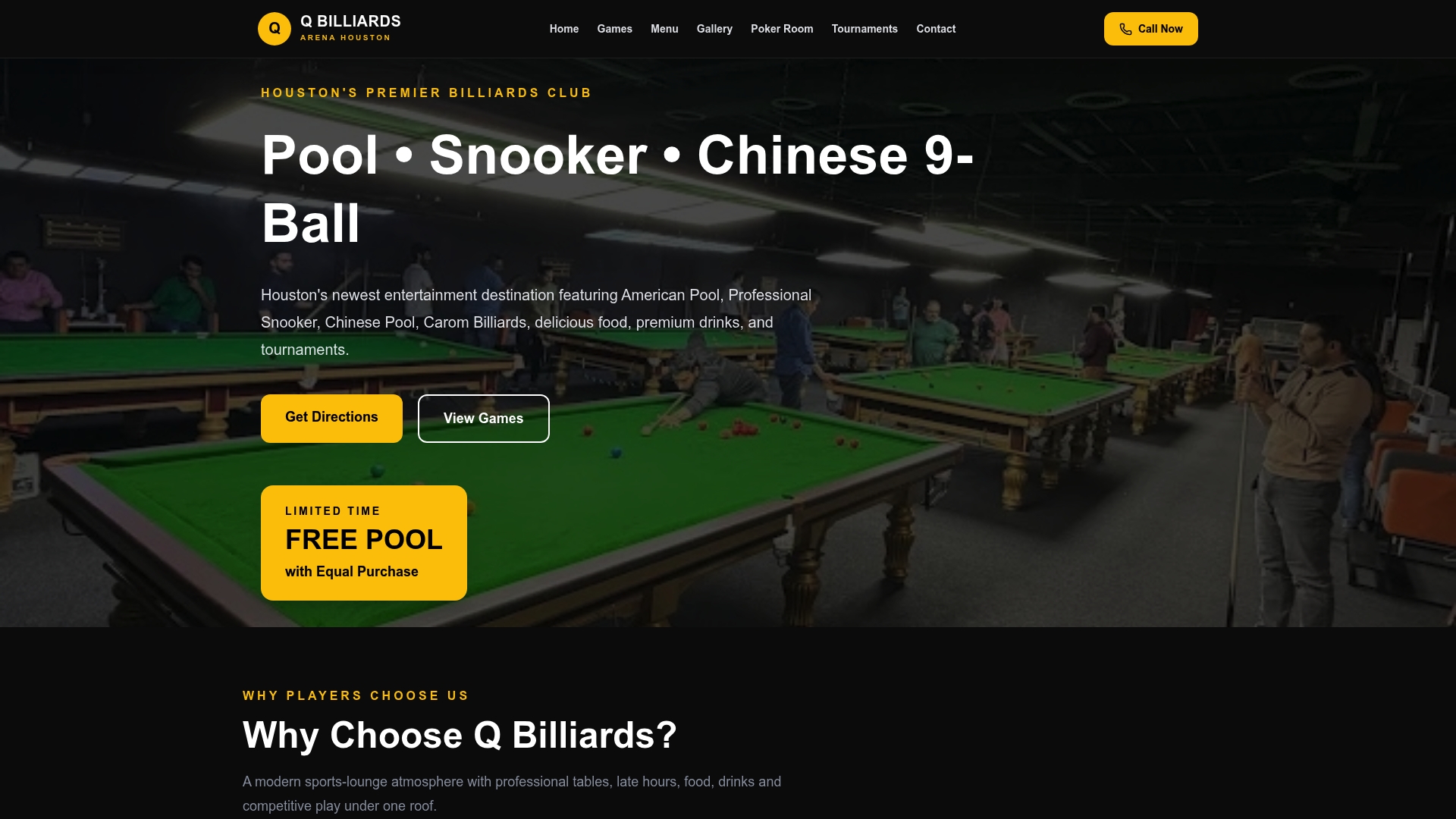
If you are ready to plan something, here is where to start:
- Visit our events page for package details and a contact form to describe your group size and format.
- Check our tournaments page to see how our scheduled tournaments run, useful if you want a similar bracket structure for your own event.
- Ask about on-site coaching, a private poker room, or a photo moment for finals when you reach out, since these get built into your package rather than offered as a fixed menu.
Reach out through our games page or contact us directly to request a proposal or schedule a quick site visit before you commit to a date.
FAQ
Is billiards a good team-building activity for mixed skill levels?
Yes, billiards works well across skill levels when teams are mixed deliberately and a short rules clinic runs before play starts. Formats like Scotch doubles or relay pool pair confident players with beginners so nobody feels singled out, and short rounds keep less experienced players engaged rather than overwhelmed.
What are some fun team-building games to play on a billiards table?
Nine-ball mixers, Scotch doubles, ghost rotation, and trick shot showcases all work well for group settings. Each targets a different skill: mixers build cross-team familiarity, Scotch doubles forces communication, and trick shot challenges work as a low-pressure icebreaker before serious rounds begin.
How long should a billiards team-building event run?
A 60-minute session works for a quick office outing, while 120 to 180 minutes allows for a rules clinic, multiple rounds, a bracket final, and a social close with food. Longer events give more room for a structured debrief, which research ties to stronger perceived team cohesion after the activity ends.
What should I ask a venue before booking a corporate billiards event?
Ask about table count and type, whether private or semi-private space is available, staffing for scoring or coaching, and whether food and drink minimums apply. It also helps to confirm cancellation policy and whether the venue runs other events concurrently that might affect your space.
How do I make a billiards event work for 15-minute time slots?
Short slots work best with a single fast format like a nine-ball mixer or relay pool, run in brief rounds. Skip the full rules clinic and instead give a verbal briefing, saving any debrief for a follow-up message rather than live time.
Sources
- Will We Hold the Mission Together? Enhancing Team Cohesion through Virtual Reality Interventions | Proceedings of the 2026 ACM International Conference on Interactive Media Experiences
- The Value of Bonding at Work: Evidence from a Field Experiment
- Corporate Pickleball Tournament Singapore | Cohesion