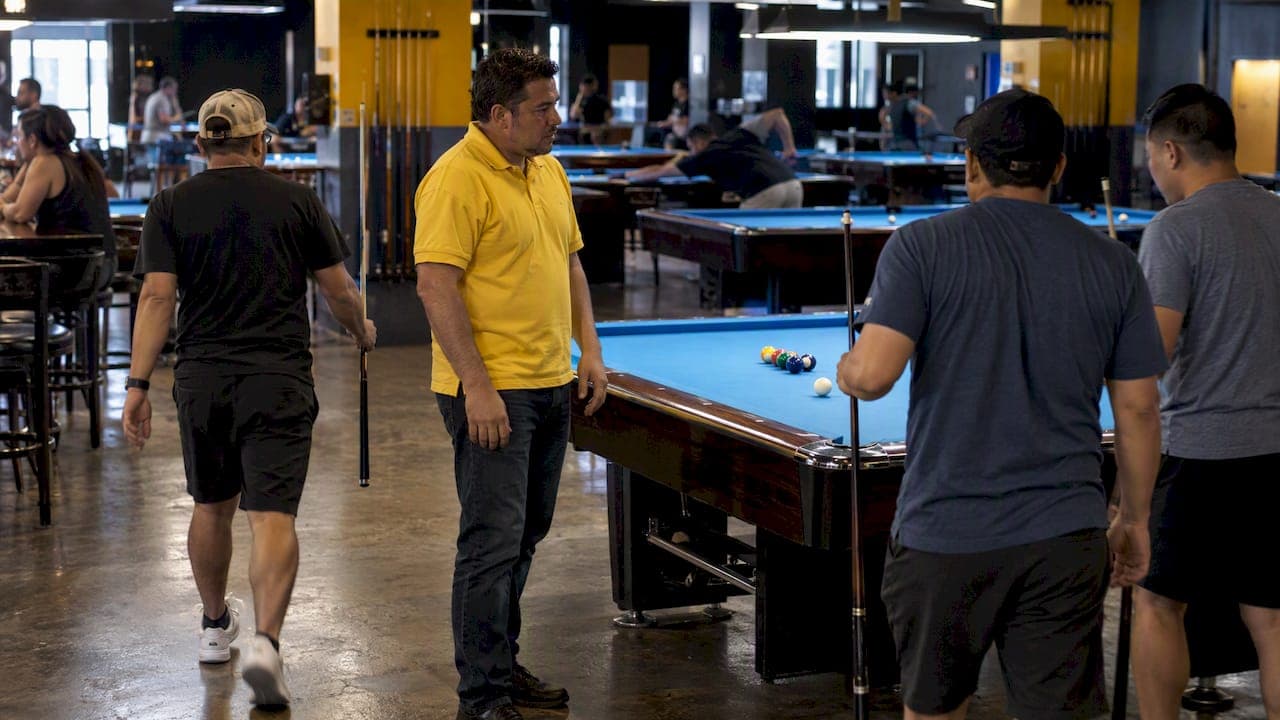
A solid pool tournament checklist covers six things: a format that fits your headcount, clear scoring and race-to rules, a match sheet or bracket you can track live, a schedule with tables assigned, referees or scorekeepers in place, and a player meeting that covers payouts and etiquette. For most small 8-ball events, double elimination or round robin beats single elimination for fairness, and a paper match sheet paired with one visible bracket keeps things moving. Budget a typical amount of time per table slot and plan for a tournament director plus one scorekeeper per table.
TL;DR:
- For 12 players, double elimination requires about 20 to 22 matches and typically takes 4 to 5 hours across 3 to 4 tables.
- Use round robin for guaranteed playing time in smaller groups; choose single elimination when table time is tight, since one loss ends a player's night.
- For events under 16 players, printed match sheets and a visible whiteboard bracket avoid setup demands; assign a scorekeeper at each table to confirm results.
- Tell players before registration how entry fees and payouts work, then announce break rules, fouls, and the 15 minute forfeit policy at the meeting.
- Pay prizes immediately after the final match, and record each recipient and amount in writing to prevent disputes at future events.
Table of Contents
- Choose a format: single elimination, double elimination, round robin, and hybrids
- Scorekeeping and live results: match-sheet template and simple tech options
- Scheduling and table management: timeline, roles, and turnover process
- Rules and etiquette to communicate at the player meeting (quick WPA references)
- Downloadable templates and venue-tested tips from Q Billiards
- Player communication and entry-fee and payout basics
- Venue setup and equipment checklist (tables, balls, cues, lighting, seating)
- Tournament promotion and player registration methods
- Prize structures and awarding procedures
- Safety and health protocols during tournaments
- Contingency plans for disruptions (e.g., player no-shows, equipment failure)
- Organizer perspective: prioritize clarity, consistent scoring, and one decision-maker
- How Q Billiards can help you run your next tournament
- FAQ
- Sources
Choose a format: single elimination, double elimination, round robin, and hybrids
Your format decision drives everything else on the checklist, so make it first. WPA rules list single elimination, double elimination, round robin, and group-to-single hybrids as acceptable tournament systems, and each one fits a different kind of night.

Single elimination is the fastest option: one loss and a player is out, which works well when you have limited table time or a large field. Double elimination gives players a second chance through a losers' bracket, which most small organizers prefer because one bad rack doesn't end someone's night. Round robin has everyone play everyone else in their group, which guarantees playing time but takes longer and suits smaller groups best. Hybrids combine round robin pool play with a single-elimination playoff bracket, which balances guaranteed matches with a quick finish.
Match counts and timing shift fast as your field grows:
- 8 players, single elimination: 7 total matches across 3 rounds; at a race-to-5 pace, plan for a few hours with one table, less with two or three tables running at once.
- 12 players, double elimination: expect around 20 to 22 matches total since losers get a second bracket run; spread across 3 to 4 tables, a 4-to-5 hour night is typical.
- 16 players, double elimination: around thirty matches; our 16-player format breakdown walks through the bracket math in detail if you're planning a bigger field.
For seeding, a random draw works fine for casual groups where skill levels are similar. When you have a mix of strong and weak players, a simple seeding system (ranking your known strongest players and spreading them across different bracket sections) keeps the final rounds competitive instead of lopsided.
Scorekeeping and live results: match-sheet template and simple tech options
Every match needs a sheet that captures the same fields every time, or you'll end up guessing who won what. Your match sheet should include:
- Player names and table number
- Round and race-to length (race-to-5, race-to-7, and so on)
- Winner and final score
- Rack-by-rack notes (who broke, who ran out, any safeties)
- Fouls and time-outs called during the match
- Referee or scorekeeper initials
- Start time and end time
For publishing results, you have three realistic options. Printed paper sheets paired with a whiteboard bracket work for events under 16 players and need zero technology. A shared Google Sheet lets remote spectators or players waiting their turn check the bracket from a phone. Free bracket apps add automatic advancement but require someone comfortable setting them up beforehand, so weigh that against the simplicity of paper for a first event.
Pro Tip: Assign one scorekeeper per table, have them confirm the winner out loud before the next match starts, and snap a photo of each finished sheet as a backup record.
Scheduling and table management: timeline, roles, and turnover process
A clean schedule depends on prep work finishing before the first ball drops. Before the event, confirm your player meeting time, post the bracket where everyone can see it, assign tables, set aside a short warm-up slot per player, print your match sheets and payout sheet, and stage spare equipment near the front.
Once play starts, a few rules keep things on track:
- Announce each match by table number and player names so nobody misses their turn.
- Enforce a 15-minute lateness rule: a player who hasn't checked in within 15 minutes of being called forfeits the match, a policy large WPA-sanctioned events also use.
- Allow one practice rack per table before each match starts, not before every rack.
- If a match runs long, give players a 5-minute warning before moving the next scheduled match to an open table instead of making everyone wait.
Three roles keep a small event running: a tournament director who makes final calls on disputes, a referee or scorekeeper at each active table, and a runner who checks players in, updates the bracket, and lets the director know when a table opens up.
Rules and etiquette to communicate at the player meeting (quick WPA references)
A short player meeting before the first match prevents most arguments later. Cover these points out loud, even if you've printed them:
- Break type (alternating break or winner breaks) and rack setup
- What counts as a foul, including scratches and illegal shots
- Time-out allowance per match, if any
- Dress and behavior expectations for the room
- The 15-minute lateness and forfeit policy
For formal wording on any of these, WPA rules serve as the final authority, and we've linked the full rulebook in our sources below for organizers who want exact language. For disputes in a small event, treat the player meeting's stated rules as binding and keep a one-page written protest form on hand so disagreements get resolved on paper instead of in an argument at the table.
Downloadable templates and venue-tested tips from Q Billiards
Printable templates save real setup time. Our blog offers a step-by-step hosting guide, payout templates, and a double-elimination breakdown with practical checklist items you can print and adapt.
Two tips we've seen cut down on confusion:
- Pre-print table assignments and post them at the registration table so players find their spot without asking staff.
- Schedule food service between rounds instead of during them, so players aren't holding up a table while they order.
To adapt any template for a different player count, just adjust the bracket size and reprint; the match sheet fields stay identical whether you're running 8 players or 32.
Player communication and entry-fee and payout basics
Decide your entry fee and payout split before you open registration, not after. A common structure splits the prize pool among the top two or three finishers, with the largest share going to first place. Whatever split you choose, write it down and hand it out at the player meeting so nobody is surprised at the end of the night.
Communicate three things clearly before players show up: the entry fee amount and what it covers, the payout structure if there's a prize pool, and how players will be notified of their match times (a posted bracket, a group text, or both). For a casual night, text reminders 30 minutes before a player's match works well if you've got a runner checking the bracket regularly.
If you're running recurring events like a Tuesday or Friday night series, keeping the same fee and payout structure week to week builds trust and keeps regulars coming back, since they know what to expect before they pay.
Venue setup and equipment checklist (tables, balls, cues, lighting, seating)
Walk the room before doors open and confirm every table has a full rack of balls, chalk, and a bridge available if your cues are short. Check that lighting is even across every table since a dim corner table slows games down and frustrates players trying to read position. Set up enough seating near each table for waiting players and spectators without crowding the shot lines, and refer to this Small Business Event Merch Checklist for organizing merchandise and staff apparel if you plan to sell event shirts or provide matching tournament gear.
Keep a small supplies box nearby with spare chalk, extra triangles, a tip tool, and a backup cue or two in case someone's equipment breaks mid-match. Our pool hall essentials guide covers table sizes and the basic gear players should bring themselves, which is worth sharing in your event invite so people show up prepared.
If you're hosting at a venue rather than a private space, confirm table count and condition with the venue ahead of time so your bracket size matches what's actually available on the night.

Tournament promotion and player registration methods
Promote early and keep registration simple. A sign-up sheet at the venue, a shared online form, or a group chat all work for casual events, but pick one method and stick to it so you're not cross-checking three lists on the night.
Give players a clear deadline for registering, ideally a day or two before the event, so you can finalize your bracket and print match sheets ahead of time instead of scrambling at check-in. If you're running a weekly series, a consistent day and time builds a habit for regular players, and word of mouth tends to fill a bracket faster than any flyer.
For any event that charges entry fees, decide upfront whether registration is first-come or requires prepayment, and communicate that clearly wherever you post the event.
Prize structures and awarding procedures
Keep your prize structure simple and posted before the first match. A straightforward split, most of the pool to first place with smaller shares to second and third, is easy for players to understand and easy for you to calculate on the fly.
Award prizes immediately after the final match while players are still in the room. Waiting even a day to pay out erodes trust fast, especially for a recurring event where the same players return weekly. If cash isn't practical, settle on a clear alternative (venue credit, gift cards) and state it at registration, not after the bracket is set.
Keep a simple written record of who won what and when, even for a casual night. It protects you if a payout question comes up later and makes next week's event easier to plan.
Safety and health protocols during tournaments
Keep walkways between tables clear so players and spectators aren't bumping into each other mid-shot, especially in a packed room. Make sure cue tips, chalk, and any spilled drinks get cleaned up right away since a wet floor near a table is a real slip hazard.
If your event runs late into the night, make sure exits stay clear and lighting in walkways and bathrooms stays on throughout. For events serving food and drinks, keep a basic first-aid kit on hand and know where the nearest exit and any venue staff are in case something comes up.
Small, practical habits (clear floors, good lighting, a first-aid kit within reach) cover most of what a casual tournament needs for a safe night without turning the event into a production.
Contingency plans for disruptions (e.g., player no-shows, equipment failure)
Plan for no-shows before they happen. If a registered player doesn't check in by the 15-minute mark, move to your forfeit rule and advance their opponent, then fill any open bracket slot with a waitlisted player if you kept one.
For equipment failure, a cracked cue tip or a torn felt corner shouldn't stall the whole bracket. Keep a backup cue and spare chalk in your supplies box, and if a table goes down entirely, shift that match to the next open table rather than waiting for a repair.
If your schedule starts slipping, don't try to catch up by rushing matches. Instead, trim warm-up time for the remaining rounds or run two matches on open tables at once if your staffing allows it. Having a tournament director who can make that call on the spot keeps the night from unraveling.
Organizer perspective: prioritize clarity, consistent scoring, and one decision-maker
For a small event, simple, consistent rules beat an elaborate format every time. Put one person in charge of final calls, keep your scoring method the same from round to round, and tell players what to expect before they pay. Predictable timing matters more to most players than bracket complexity.
— Q
How Q Billiards can help you run your next tournament
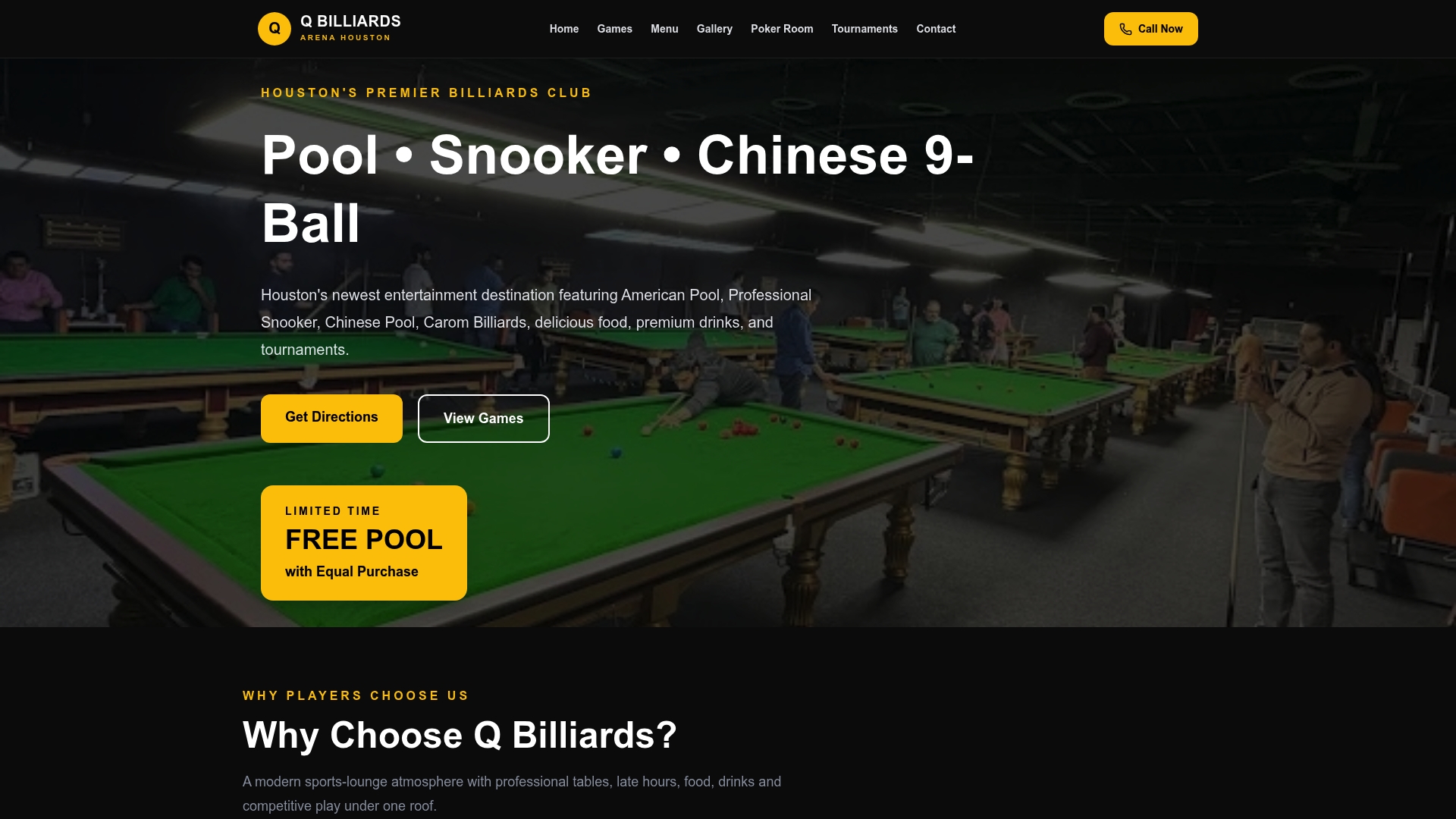
Running a tournament takes a venue that can handle real table turnover. We run recurring events like our Tuesday and Friday Night Pool Tournaments and a 1-Red Snooker Tournament, so organizers get a tested format and staff who know how to keep a bracket moving.
What you get when you book with us:
- Access to 25 professional-grade tables across American pool, snooker, and Chinese 9-ball
- Staff experienced with running tournament nights and managing table turnover
- Food and drink service available between rounds so players don't hold up a table
- A private poker room rental if your event needs a separate space for side games or sign-ups
If you're organizing in Houston and want a room, tables, and staff that already know how tournament night runs, check Tournaments & Events to see upcoming dates and book your table time.
FAQ
What are the keys to winning competitive pool tournaments?
Consistent shot selection, controlling the cue ball for position after each shot, and staying calm under a race-to format matter more than flashy breaks. Players who win consistently tend to play safe when a shot is risky rather than forcing a low-percentage attempt.
How do I structure a 12-team tournament?
A 12-player double-elimination bracket runs around 20 to 22 total matches, since every player gets a second chance in the losers' bracket before being eliminated. Spreading those matches across 3 to 4 tables keeps a 12-player night to roughly 4 to 5 hours; our format breakdown shows the bracket math for other player counts too.
What are some tips for preparing for a pool tournament?
Confirm your format and print your bracket and match sheets before the event, not the morning of. Hold a short player meeting to cover break rules, fouls, and the lateness policy, and keep spare equipment like chalk and a backup cue on hand in case something breaks mid-match.
What do organizers need that's similar to pickleball tournament prep?
Like pickleball events, pool tournaments need a clear bracket, a posted schedule, and someone assigned to settle disputes on the spot. The main difference is table turnover: pool tournaments need enough tables running at once to keep a bracket moving instead of a single court schedule.
What's the best format for a small 8-ball tournament?
Double elimination is a common choice for small 8-ball events because it gives every player a second chance after one loss, which keeps a casual night competitive. WPA rules list double elimination alongside single elimination, round robin, and hybrids as acceptable formats, so the right pick depends on your headcount and available table time.