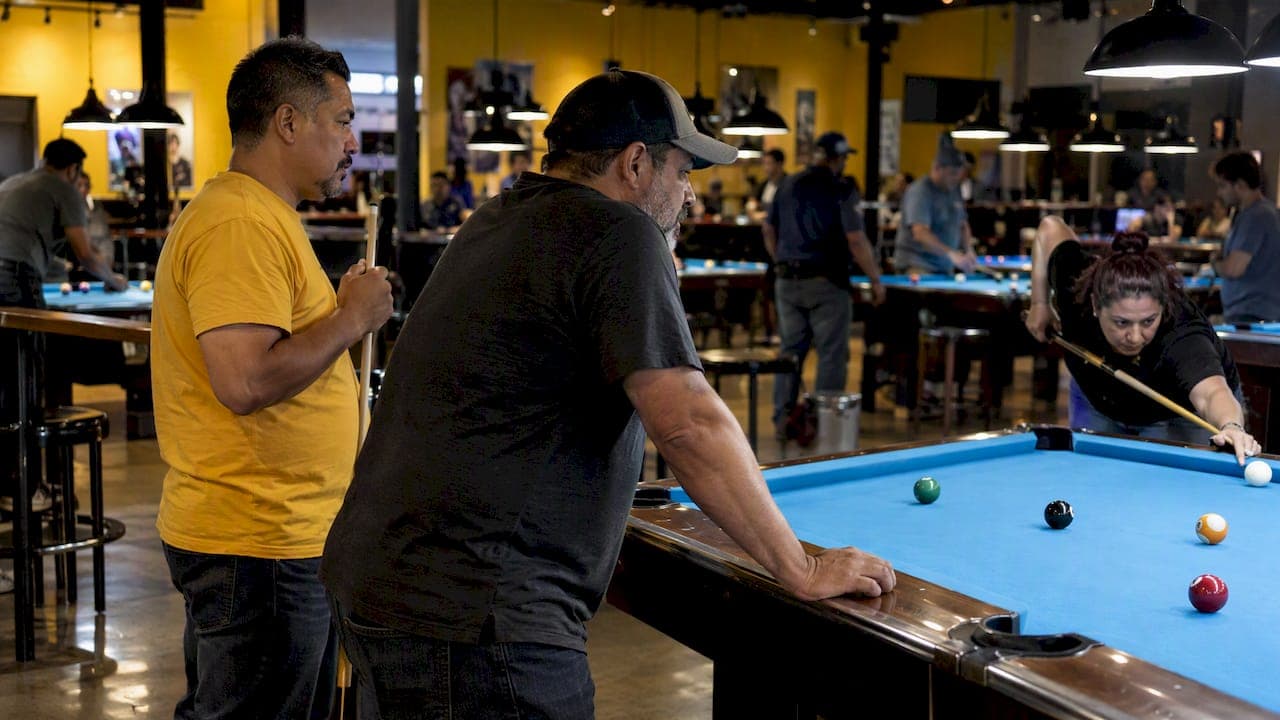
A weeknight pool league rewards the player who shows up early, brings reliable gear, keeps a steady pace and practices with a plan. Skill matters, but most lost matches on a Tuesday or Wednesday come from logistics: arriving late, a dirty tip, a slow shooter, a tired team at 11 PM. This guide covers what to do before, during and after league night, with the drills and rules that pay off most.
TL;DR
- Real time is league time. Be at the table, ready, before the previous match ends, because APA rules treat a player who isn't ready within 15 minutes as a forfeit.
- Plan for a long night. A full team match often runs 3 to 4 hours, so eat first, pace your drinks and keep your work night in mind.
- Own your cue, chalk and a tip you maintain before the match, not after you start missing.
- Practice with a plan: one match to find your leaks, two scored drill sessions on them, and one session against someone better.
- Learn the 30-degree and 90-degree rules. They solve most position problems for amateurs.
Table of Contents
- Plan the night before you chalk up
- Be early, and be ready
- Know the team rules before they surprise you
- Gear that keeps you consistent
- Shot-making rules that decide more matches than power
- Practice with a plan, not just more hours
- What we see from the Houston side of the table
- Fuel and pace for a late night
- Etiquette that makes you a good teammate
- A weeknight routine you can copy
- Where to practice and compete in Houston
- FAQ
- Sources
Plan the night before you chalk up
A league night is a commitment, not a casual game. According to the APA's own guidance, a standard team match is made of several head-to-head games that each commonly take 30 to 60 minutes, and a full match can run 3 to 4 hours. On a weeknight, that can stretch past midnight.
That changes how you prepare:
- Eat before you arrive. A hungry shooter at 10 PM misses easy shots. Have a real meal, then snack lightly during the match.
- Know your turn in the lineup. Ask your captain who plays when, so you can warm up before your name is called instead of after.
- Protect your sleep. If you have an early shift, tell your captain before the season, not at 11:30 PM. Teams can plan around it.
- Pack the night before. Cue, chalk, tip tool, a towel or glove if you use one, and cash for tournaments or tips.
If you are still choosing a league, our guide on how to join a pool league and start playing this season walks through the signup side.
Be early, and be ready
The most common beginner surprise is that the clock on your phone is not the league clock. APA rules say a team match becomes a forfeit if a player is not at the table and ready within 15 minutes of the appointed time, and that real time, not bar time, is the official league time.
Fifteen minutes sounds generous until traffic, parking and a slow lineup stack up. A few habits fix it:
- Arrive 15 to 20 minutes before the scheduled start.
- Grab a spot near the table you will play on, not at the far end of the room.
- When the match before yours is down to the last few games, put your cue together and chalk up.
- Keep your phone in your pocket during matches. Taking a call while your opponent waits is the quickest way to annoy a room.
The player who isn't ready when their name is called costs the whole team time and goodwill. Being the one who is always ready is a real competitive edge, and it costs nothing.
Know the team rules before they surprise you
League play is part shooting, part logistics. In APA-style formats, rosters are limited and most formats use a Team Skill Level Limit so one stacked team can't dominate. In practice, this means a captain has to balance a strong player against weaker teammates when setting a lineup, and you may sit out a match because of the math, not because of your play.
Two tips for the new player:
- Ask how your skill level is set. Handicaps change how many games you need to win. Our write-up on the pool handicap system for league players has charts, examples and night-of tips.
- Don't argue rules mid-match. The APA's emphasis on the spirit of the rules is clear: treat opponents respectfully and avoid slow play. Arguing a ruling rarely wins you anything on the table and often costs you standing in your local pool community. If something is truly in dispute, ask a neutral party or your captain, and move on.
The APA's etiquette guidelines boil down to this: treat your opponent the way you would like to be treated and pay attention to your match. Fouls like touching the cue ball also come up often in casual play; see our explainer on cue ball fouls and ball in hand so you know what costs you the table.
Gear that keeps you consistent
Your own cue and chalk
Shared house cues are fine for a casual game. For league play, the APA guidance the research points to is blunt: carry your own chalk, and a cue of your own is worth it for consistency even when you're new. You don't need an expensive one. You need one whose feel you know.
Pick a tip that needs little attention
Weeknight players don't want to fiddle with equipment. LeaguePool's tip guide recommends a medium-hardness layered tip for newer and casual league players, since layered tips hold their shape better and need less shaping and scuffing than classic single-layer tips.
Maintain the tip before the match
A mushroomed tip, where the leather spreads over the ferrule, or a glazed tip that won't hold chalk, causes miscues no matter how well you aim. The same guide says successful league players do basic upkeep (light scuffing and shaping) before or during the match, not only after they start losing. It takes minutes. Our 90-second cue tip maintenance routine gives the stroke counts for shaping and scuffing.
A simple pre-match checklist:
| Check | What you want | Fix |
|---|---|---|
| Tip shape | Slightly rounded, not flat or mushroomed | Shape lightly |
| Tip surface | Slightly rough, holds chalk | Scuff gently |
| Chalk | Yours, fresh | Carry a spare cube |
| Shaft | Clean and smooth | Wipe with a dry cloth |
| Cue tightness | Joint snug, no wobble | Retighten before you shoot |
Shot-making rules that decide more matches than power
Most weeknight matches are decided by position, not by pocketing spectacular shots. Two rules from Dr. Dave Alciatore, a physics-minded pool instructor, are worth learning properly.
- The 90-degree rule. On a stun shot, the cue ball leaves along the tangent line, perpendicular to the path of the object ball.
- The 30-degree rule. With normal rolling cue ball and a shot near a half-ball hit, the cue ball deflects roughly 30 degrees. The "peace sign" technique gives you a quick way to picture it at the table.
Why this helps in a league: it lets you predict where the cue ball will go, so you can avoid scratches and obstacles and open clusters. Dr. Dave's Billiards Digest piece on the 30-degree rule makes the same point about avoiding scratches and clusters.
To turn the rules into habit, work through our five drills for cue ball control. Before a match, take two or three practice shots if the room allows and check how the table plays. Every house has different cloth speed.
Practice with a plan, not just more hours
The biggest mistake league players make is aimless practice. Running balls you already pocket mostly repeats what you already do. LeaguePool's improvement guide argues that the fastest way to get better is to stop practicing what you're already good at.
A weekly cadence drawn from that guide fits a weeknight schedule well:
- One league match to find your leaks, meaning the technical or tactical weaknesses that cost games.
- Two practice sessions aimed squarely at those leaks, using drills you can score.
- One session against someone better than you, which exposes weaknesses a friendly game won't.
Treat practice like a lab. Write down your scores. Set up the shot you missed and repeat it until you make it consistently. If you can't measure it, you can't tell if you're improving.
The longest-standing advice in Dr. Dave's collection of tips is simply to practice, and one of the first fundamentals he lists is a session with a qualified instructor, which helps players at every level.
What we see from the Houston side of the table
We run Q Billiards Arena in Houston, a room with 25 professional-grade tables and late hours, and we watch players prepare for competition every week. Here is how we would approach a weeknight league season.
Warm up with a purpose. Players who walk in and play straight away tend to spend the first rack finding their stroke. Take ten minutes on an open table, hit a few straight-in shots and a few cut shots with position, and you start the match calibrated.

Practice where the pressure is real. Drills alone don't teach you to shoot when someone is watching. Our Tuesday and Friday night pool tournaments are a $10 entry each, which makes them a low-cost way to rehearse match nerves. Players who are working on a specific leak can test it against a field of opponents rather than a friend who goes easy on them.
Mix your games. Position and cue ball control transfer between cue sports. A session on a snooker table, with its longer shots and tighter pockets, or on Chinese 9-ball makes pool pockets feel generous. That isn't a promise of results, just what many of our regulars tell us after they switch.
Keep it social. Weeknight leagues last when they are fun. Good food, a calm table and a team that likes each other beat a perfect drill plan every time.
— Q
Fuel and pace for a late night
A 3 to 4 hour match means energy management. Heavy meals and sugary drinks right before you shoot can leave you flat. Stick to water between games and keep alcohol light if you want your stroke steady. If you want ideas, our post on pool night drinks that hold up at the table covers four options.
House rules vary from room to room, so ask your host venue what's allowed at the tables and what's not. Keep drinks off the rails, and wipe your hands if you're eating between turns, since chalk, grease and cloth don't mix.
Etiquette that makes you a good teammate
Teams invite back players who are easy to play with. The basics:
- Stay still and quiet while your opponent shoots.
- Don't coach beyond what the rules allow. The APA manual sets a one-minute coaching limit and a 20-second average shot time to keep the evening moving.
- Rack quickly and cleanly. Between matches on the same table, players need time to rack, lag and settle, so don't stall.
- Shake hands, win or lose.
- Avoid sharking, the small distractions that cross from competitive to rude. Our guide on pool hall etiquette and avoiding sharking goes through the common cases.
What you wear matters less than how you act, though some venues have expectations. Check our note on the pool hall dress code if you're unsure.
A weeknight routine you can copy
Here is a template for a typical league evening.
| When | What to do |
|---|---|
| Afternoon | Eat a balanced meal, pack your cue case, check chalk |
| 45 minutes before | Arrive, find your team, confirm the lineup |
| 30 minutes before | Shape and scuff the tip, warm up on an open table |
| During matches | Stay ready before your turn, keep to the shot clock, keep your phone away |
| Between games | Water, a light snack, watch your opponents' patterns |
| After | Jot down two misses and one thing that worked |
That last row feeds your practice sessions for the week. It is the habit that separates players who improve from players who just attend.
Where to practice and compete in Houston
If you want a place to work on these habits between league nights, Q Billiards Arena has American pool at $10 per hour and other tables, including standard snooker at $15 per hour, heated snooker at $20 per hour, Chinese 9-ball at $15 per hour and carom billiards at $15 per hour. We stay open late, until 2 to 4 AM, which suits players coming off a shift. Our Tuesday and Friday night pool tournaments cost $10 each to enter, and there's a full food and drink menu so you can refuel without leaving. We also run a free-pool-with-equal-purchase promotion, so ask at the front desk what applies when you visit. For more events, see our tournaments page.
Groups planning a team night can also look at our pool night group games for ways to keep a larger crowd busy between matches.
FAQ
How long does a weeknight pool league match take?
A full team match typically runs 3 to 4 hours, with individual games each lasting about 30 to 60 minutes, according to APA materials. On weeknights this can run past midnight, so plan food, transport and sleep around it.
What happens if I'm late to league night?
In APA-style play, a team match becomes a forfeit if a player isn't at the table and ready within 15 minutes of the appointed time, and real time is the official league time. Aim to arrive well ahead of the start, and tell your captain early if you're stuck.
Do I need my own cue for league?
It isn't mandatory everywhere, but it helps. Using the same cue every week gives you consistent feel and tip condition. Pair it with your own chalk and a medium layered tip if you want low maintenance.
What is the 30-degree rule in pool?
When a rolling cue ball hits an object ball near a half-ball hit, the cue ball deflects roughly 30 degrees, as Dr. Dave Alciatore explains. It helps you predict where the cue ball ends up so you can plan position and avoid scratches.
How should I practice between league nights?
Use a plan: play a match to find your weak spots, do two sessions of scored drills on them, and play one session against someone stronger. LeaguePool's guide stresses writing down your scores so you can tell whether you're actually improving.
Sources
- APA team and player manual
- APA forfeit rules
- APA Team Skill Level Limit rules
- LeaguePool: Best Pool Cue Tips
- LeaguePool: How to Get Better at Pool Fast
- Billiards Digest, January 2020: CB Control (Dr. Dave Alciatore)
- Dr. Dave Pool Info: 30° and 90° Rules
- Billiards Digest: Make Peace, Not War
- Dr. Dave Pool Info: Top 100 Tips, Tricks, Secrets, and Gems